
• About Us
    • Awards & Felicitations
    • Our Company
    • Our Leadership
    • Our Projects
    • Testaments
  • Products
    • EV Charger
      • Spark Series (AC Charger)
      • Squad Series (DC Charger)
    • Solar Products
      • Solar Inverter
      • ServPort
      • Solar Management Unit
      • Solar Batteries
      • Solar Lithium Battery
      • Solar Panels
    • Power & Backup
      • Battery
      • Servo Stabilizer
      • UPS
    • Electric 3W Solutions
      • Lithium Battery
      • Electric 3W Charger
    • LEDs
      • Domestic LED
      • Commercial LED
    • Others
      • Oxygen Concentrator
      • UVC
  • Solutions
    • Solar EPC
    • Solar Calculator
    • EV Calculator
  • Media
    • Blogs
    • Events
    • Media Coverages
    • Media Kit
    • Press Releases
  • Investors
  • Contact

Type To Search

  • About Us
    • Awards & Felicitations
    • Our Company
    • Our Leadership
    • Our Projects
    • Testaments
  • Products
    • EV Charger
      • Spark Series (AC Charger)
      • Squad Series (DC Charger)
    • Solar Products
      • Solar Inverter
      • ServPort
      • Solar Management Unit
      • Solar Batteries
      • Solar Lithium Battery
      • Solar Panels
    • Power & Backup
      • Battery
      • Servo Stabilizer
      • UPS
    • Electric 3W Solutions
      • Lithium Battery
      • Electric 3W Charger
    • LEDs
      • Domestic LED
      • Commercial LED
    • Others
      • Oxygen Concentrator
      • UVC
  • Solutions
    • Solar EPC
    • Solar Calculator
    • EV Calculator
  • Media
    • Blogs
    • Events
    • Media Coverages
    • Media Kit
    • Press Releases
  • Investors
  • Contact

Type To Search

  • About Us
    • Awards & Felicitations
    • Our Company
    • Our Leadership
    • Our Projects
    • Testaments
  • Products
    • EV Charger
      • Spark Series (AC Charger)
      • Squad Series (DC Charger)
    • Solar Products
      • Solar Inverter
      • ServPort
      • Solar Management Unit
      • Solar Batteries
      • Solar Lithium Battery
      • Solar Panels
    • Power & Backup
      • Battery
      • Servo Stabilizer
      • UPS
    • Electric 3W Solutions
      • Lithium Battery
      • Electric 3W Charger
    • LEDs
      • Domestic LED
      • Commercial LED
    • Others
      • Oxygen Concentrator
      • UVC
  • Solutions
    • Solar EPC
    • Solar Calculator
    • EV Calculator
  • Media
    • Blogs
    • Events
    • Media Coverages
    • Media Kit
    • Press Releases
  • Investors
  • Contact
  • About Us
    • Awards & Felicitations
    • Our Company
    • Our Leadership
    • Our Projects
    • Testaments
  • Products
    • EV Charger
      • Spark Series (AC Charger)
      • Squad Series (DC Charger)
    • Solar Products
      • Solar Inverter
      • ServPort
      • Solar Management Unit
      • Solar Batteries
      • Solar Lithium Battery
      • Solar Panels
    • Power & Backup
      • Battery
      • Servo Stabilizer
      • UPS
    • Electric 3W Solutions
      • Lithium Battery
      • Electric 3W Charger
    • LEDs
      • Domestic LED
      • Commercial LED
    • Others
      • Oxygen Concentrator
      • UVC
  • Solutions
    • Solar EPC
    • Solar Calculator
    • EV Calculator
  • Media
    • Blogs
    • Events
    • Media Coverages
    • Media Kit
    • Press Releases
  • Investors
  • Contact
Read More
Solar
July 24, 2026by servotech team0 Comments
7 Likes

How to Choose the Right Commercial Solar Power System for Your Business

Electricity bills have been climbing every year, and most businesses feel it directly in their bottom line. Add to that the pressure of rising operational costs and growing expectations around sustainability, and it’s easy to see why so many companies are now looking seriously at solar power.

But here’s the catch: installing solar isn’t the hard part anymore. Choosing the right commercial solar power system for your specific business is where most companies go wrong. Get the capacity, panel type, or inverter wrong, and you either overpay for a system you don’t need or end up with one that can’t keep up with your consumption.

This guide walks you through everything you need to know — from understanding your electricity needs to calculating capacity, cost, and ROI — so you can make a decision that actually pays off.

Why Businesses Are Investing in Commercial Solar Power Systems

A few years ago, solar was seen as a “nice to have.” That’s changed. Here’s what’s driving the shift:

  • Rising electricity tariffs that show no signs of slowing down
  • Strong ROI — most commercial solar power systems pay for themselves within 3-5 years
  • ESG and sustainability commitments that investors and clients increasingly expect
  • Government incentives like accelerated depreciation and net metering
  • Energy independence — less reliance on grid supply and fewer disruptions
  • Brand value — customers and partners notice when a business invests in clean energy

For most businesses, a solar power system for business use isn’t just about saving money anymore. It’s becoming part of how they operate and how they’re perceived.

Commercial Solar vs Industrial Solar — What’s the Difference?

People often use these terms interchangeably, but they’re not quite the same.

FactorCommercial SolarIndustrial Solar
Typical usersOffices, hotels, schools, hospitals, malls, retail storesFactories, manufacturing units, warehouses, processing plants
Electricity consumptionModerateHigh
Installation areaRooftop, limited spaceRooftop + ground-mounted, larger area
System sizeUsually 10 kW – 500 kWOften 500 kW – several MW
ROI period3-5 years2-4 years (due to higher usage)

The core difference comes down to scale and consumption pattern. A hotel and a manufacturing plant might both want commercial solar panels, but the systems they actually need look nothing alike.

Which System is Right for Your Business?

Before picking a business type, it helps to know the basic system types on offer. Rooftop solar sits on your existing roof and works well when space is limited. Ground-mounted solar is used when you have open land available and need higher capacity than a rooftop can support. On-grid systems stay connected to the grid and export surplus power through net metering, but don’t run during a power cut. Hybrid systems add battery storage on top of an on-grid setup, so critical loads keep running even when the grid goes down. Most businesses end up choosing a mix of these based on space, budget, and how important backup power is to their operations.

  • Offices & IT companies: Rooftop on-grid systems usually work well, since daytime consumption aligns with solar generation.
  • Hotels & hospitals: These run 24/7, so a hybrid solar system with battery backup often makes more sense.
  • Schools & colleges: Daytime-only usage makes rooftop on-grid systems a cost-effective fit.
  • Warehouses & manufacturing plants: High load and available roof or ground space often call for larger rooftop or ground-mounted systems.
  • Shopping malls & retail chains: Given the high daytime footfall and AC load, a mix of rooftop and ground-mounted capacity is common.

There’s no one-size-fits-all answer here — it genuinely depends on your load pattern, roof space, and future expansion plans.

Calculating the Right Capacity for Your Business

Before you talk to any installer, it helps to understand your own numbers.

Step 1: Know your consumption.

Pull out your last few electricity bills and check your monthly units consumed, maximum demand, and connected load.

Step 2: Estimate the capacity.

Required Capacity = Monthly Units ÷ Average Generation per kW

In most parts of India, 1 kW of solar generates roughly 120-140 units a month. So if your business consumes around 6,000 units monthly, you’re likely looking at a 45-50 kW system.

Business TypeMonthly Units (approx.)Suggested Solar Size
Small office3,00020-25 kW
Retail store6,00040-50 kW
Hotel15,000100-120 kW
Warehouse30,000200-250 kW
Manufacturing unit75,000+500 kW – 1 MW

These are rough benchmarks — an actual site survey and load analysis will always give you a more accurate number.

Commercial Solar Panel Cost in India

Cost depends on a few key factors: system capacity, panel type (Mono PERC, TOPCon, or bifacial), inverter choice, mounting structure, site location, and how complex the installation is.

System SizeApproximate CostSuitable For
50 kW₹18-22 lakhsSmall offices, retail stores
100 kW₹35-40 lakhsHotels, mid-size warehouses
250 kW₹85 lakhs – ₹1 croreLarge warehouses, factories
500 kW – 1 MW₹1.8 – ₹3.5 croreManufacturing plants

Prices vary by state, subsidy eligibility, and vendor, so treat these as ballpark figures rather than fixed quotes.

Installation Process, Step by Step

A typical commercial or industrial solar panel installation follows this sequence:

Site survey

— the installer inspects your roof or land, checks structural strength, and studies shadow patterns through the day.

Load analysis

— your consumption data is studied to confirm the right capacity.

System design

— panel layout, wiring, and inverter placement are finalized based on the survey.

Government approval

— paperwork for net metering and grid connectivity is filed with the local electricity board.

Material procurement

— panels, inverters, and mounting structures are sourced and delivered to site.

Installation

— the physical setup of panels, structure, wiring, and inverter takes place.

Testing

— the system is checked for safety and performance before going live.

Net metering

— the bi-directional meter is installed so surplus power can be exported to the grid.

Commissioning

— the system is switched on and starts generating power for your business.

The entire process usually takes anywhere from a few weeks to a couple of months, depending on system size and approval timelines in your state.

Choosing the Right Panels and Inverter

Panels: Mono PERC panels are the most widely used and cost-effective option. TOPCon panels offer better efficiency and are a good fit for space-constrained rooftops. Bifacial panels, which capture sunlight from both sides, work well for ground-mounted industrial installations with reflective surfaces.

Inverters: String inverters suit small to mid-size systems. Central inverters are typically used for large industrial installations. Hybrid inverters make sense if you want battery backup, and micro-inverters work best when your roof has partial shading issues.

The right combination really depends on your roof condition, budget, and how much backup you need.

What Affects Your ROI

Your actual return depends on your local electricity tariff, system size, shadow-free roof area, net metering policy in your state, ongoing maintenance, and panel degradation over time. A shadow analysis in particular is often skipped, but even partial shading from a nearby structure or water tank can quietly cut your generation by a noticeable margin over the year. A well-designed system with quality panels can maintain 80%+ output even after 20-25 years, which is why panel quality matters more than most businesses realize upfront.

How Much Can Your Business Actually Save?

Business TypeMonthly Bill (approx.)Estimated Monthly Savings
Office₹1.5 lakh60-70%
Hotel₹4 lakh50-60%
Hospital₹6 lakh45-55%
Warehouse₹8 lakh55-65%
Manufacturing unit₹15 lakh+50-60%

Savings naturally vary based on system size, tariff structure, and how well the system is maintained.

Net Metering and Government Incentives

Net metering lets you feed excess solar power back into the grid and get credited for it, which significantly improves ROI. Businesses can also claim accelerated depreciation on solar assets, reducing tax outgo in the initial years. Some states offer additional subsidies or relaxed approval processes for commercial installations, so it’s worth checking your state’s specific solar policy before finalizing a system.

Common Mistakes Businesses Make

  • Choosing a vendor based only on the lowest quote
  • Getting the capacity calculation wrong
  • Ignoring roof strength and structural load
  • Settling for low-quality panels to save upfront cost
  • Picking the wrong inverter type for the load pattern
  • Skipping a maintenance plan altogether
  • Not calculating ROI properly before investing

Quick Checklist Before You Install

✔ Available roof or ground area

✔ Past 12 months of electricity bills

✔ Future expansion plans

✔ Budget and financing options

✔ Panel and inverter warranty terms

✔ Net metering eligibility in your state

✔ Track record of your installation partner

✔ A clear annual maintenance plan

Why Businesses Prefer End-to-End Solar Solution Providers

Solar isn’t just about panels on a roof — it’s site assessment, system design, installation, net metering paperwork, ongoing monitoring, and after-sales support, all working together. Businesses that go with fragmented vendors for each stage often end up dealing with delays, mismatched components, or poor post-installation support.

This is where working with an established EPC partner makes a real difference. Servotech’s commercial and industrial solar solutions, for instance, cover the entire journey — from initial site survey to long-term maintenance — so businesses can focus on running their operations rather than managing multiple vendors.

Frequently Asked Questions

What is a commercial solar power system?

It’s a solar installation designed specifically for businesses like offices, hotels, and retail stores, sized according to their electricity consumption.

How is commercial solar different from industrial solar?

Industrial solar is built for much higher loads — think factories and manufacturing units — while commercial solar suits moderate-consumption businesses.

How long do commercial solar panels last?

Most quality panels come with 25+ year performance warranties and continue generating power well beyond that.

What is the cost of a commercial solar system in India?

It ranges widely based on capacity — anywhere from ₹18 lakhs for a 50 kW system to a few crores for MW-scale installations.

How much roof area is required?

As a rough rule, 1 kW of solar needs about 80-100 sq. ft. of shadow-free space, so a 100 kW system would need roughly 8,000-10,000 sq. ft.

How long does installation take?

Typically a few weeks to a couple of months, depending on system size and local approval timelines.

How many years does it take to recover the investment?

Most commercial systems achieve payback within 3-5 years, sometimes faster for high-consumption businesses.

Does solar work during power cuts?

On-grid systems don’t work without grid power unless paired with a hybrid inverter and battery backup

Which solar panels are best for commercial buildings?

Mono PERC and TOPCon panels are currently the most popular choices for commercial rooftops due to their efficiency and reliability.

Conclusion

Choosing a commercial solar power system isn’t just an equipment purchase — it’s a long-term strategic decision. The businesses that get the most value are the ones that take time to understand their actual energy needs, compare technologies honestly, run the ROI numbers properly, and partner with an experienced EPC provider who can support them well beyond installation day. Do that, and solar stops being an expense — it becomes one of the smartest investments your business makes this decade.
Read More
Solar
April 29, 2026by servotech team0 Comments
198 Likes

Benefits of Commercial Solar Panels for Your Business

Electricity bills are one of the biggest operational expenses for any business. Whether you run a factory, office, warehouse, or retail space, rising energy costs directly impact your profitability. That’s where commercial solar panels come in—not just as an eco-friendly option, but as a smart financial decision.

In this guide, let’s break down what commercial solar panels are, their cost, real-world uses, and why more Indian businesses are shifting to solar.

What are Commercial Solar Panels?

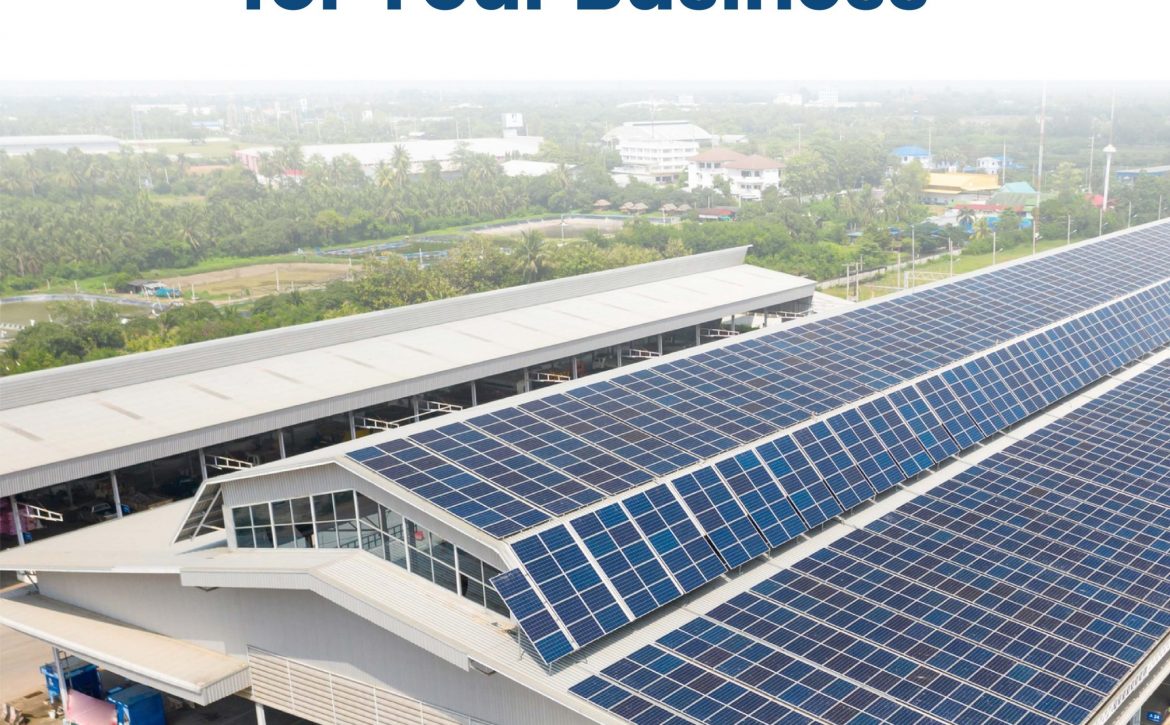
Commercial solar panels are large-scale solar systems designed to generate electricity for businesses, industries, and commercial buildings.

Unlike residential systems, these setups are:

  • Higher in capacity (kW to MW scale)
  • Built for continuous energy demand
  • Installed on rooftops, ground mounts, or industrial sheds

They convert sunlight into electricity using photovoltaic (PV) technology, helping businesses reduce dependency on grid power.

 Where are they used?

  • Factories & manufacturing units
  • Office buildings & IT parks
  • Shopping malls & retail outlets
  • Hospitals & educational institutions
  • Warehouses & logistics hubs

Read also: Top 10 Rooftop Solar Panel Manufacturers in India 2026

Commercial Solar Panels Cost in India

The cost of commercial solar panels in India typically ranges between ₹40,000 to ₹60,000 per kW, depending on system size, quality, and installation complexity.

Estimated Cost Breakdown:

  • 10 kW system → ₹5–6 Lakhs
  • 50 kW system → ₹25–30 Lakhs
  • 100 kW system → ₹55–60 Lakhs

What affects the cost?

  • Type of solar panels (Mono PERC / Bifacial)
  • Inverter quality
  • Installation structure (RCC / metal roof)
  • Location & sunlight availability
  • Net metering policies

Government Support

Businesses can also benefit from:

  • Accelerated depreciation
  • State-level subsidies (in some cases)
  • Net metering benefits

This significantly reduces the overall investment and improves ROI.

Click here to Become our Distributor

Solar Panels for Commercial Buildings: Use Cases

Commercial solar is not just for saving electricity—it transforms how businesses operate.

1. Reducing Operational Costs

Solar helps cut electricity bills by up to 70–90%, especially for energy-intensive industries.

2. Powering Heavy Equipment

Factories and warehouses can run machinery, HVAC systems, and lighting through solar energy.

3. Peak Load Management

Solar reduces dependency during peak tariff hours, lowering demand charges.

4. Sustainable Branding

Using solar energy enhances your brand image as an environmentally responsible business.

5. EV Charging Integration

Commercial setups can integrate EV charging stations powered by solar—future-ready and cost-efficient.

Key Benefits of Commercial Solar Panels for Businesses

1. Massive Cost Savings

Once installed, solar energy is essentially free for 20–25 years.

2. High ROI (Return on Investment)

Most businesses recover their investment within 3–5 years.

3. Energy Independence

Reduced reliance on grid electricity and protection from rising tariffs.

4. Low Maintenance

Solar systems require minimal maintenance with long-lasting performance.

5. Long-Term Asset Value

Solar installations increase property value and business credibility.

Why Businesses in India are Rapidly Adopting Solar

  • Rising electricity costs
  • Government push for renewable energy
  • ESG (Environmental, Social, Governance) goals
  • Increasing EV adoption

Solar is no longer an alternative—it’s becoming a necessity.

Conclusion: Is Your Business Ready for Solar?

Today, commercial solar panels are no longer just an alternative energy source—they have become a smart and strategic business investment. Whether your goal is to reduce electricity costs, improve long-term savings, or build a more sustainable brand, solar delivers value on every front.

While the initial investment may seem significant, the long-term benefits—like high ROI, government incentives, and energy independence—make it a financially sound and future-ready decision.

That’s exactly why businesses across India, from small enterprises to large industries, are rapidly shifting toward solar energy.

If you’re planning to adopt commercial solar for your business, choosing the right technology and the right partner makes all the difference.

With Servotech, you get:

  • Reliable, high-efficiency solar solutions
  • End-to-end support—from consultation to installation
  • Advanced monitoring for better performance and control

This means you’re not just installing solar—you’re building a long-term, sustainable energy solution for your business.

So, the real question is—are you ready to make your business energy-efficient and future-ready?

If yes, the journey begins with solar.

Read also: How To Reduce Your Electricity Bill With A Solar Power System?

FAQs (Frequently Asked Questions)l

What is the lifespan of commercial solar panels?

Commercial solar panels typically last 25–30 years with proper maintenance.

Is commercial solar a good investment?

Yes, it offers high ROI, reduces electricity costs, and provides long-term savings.

How much space is required for commercial solar?

On average, 100 kW requires around 8,000–10,000 sq. ft. of rooftop space.

Can solar panels run a factory?

Yes, solar can power most factory operations, especially when combined with grid support or battery storage.

    Connect Now!

    Our expert will contact you soon.

    About us
    Awards & FelicitationsOur CapabilitiesOur CompanyOur LeadershipOur ProjectsTestaments
    Follow us
    Products
    EV ChargerLEDsPower & Backup
    Subsidiary Company
    Servotech EV Infra Pvt. Ltd. Servotech Sports and Entertainment Pvt. Ltd. Rebreathe Medical Devices India Pvt. Ltd. Hertz & Pixelz Pvt. Ltd.
    Media
    BlogsEventsMedia CoveragesMedia KitPress Release
    Quick Links
    Store LocatorSolar CalculatorEV Charging AppVendor RegistrationSite Map
    Write to us
    Sales
    servotech@servotechindia.comexportsales@servotechindia.comchannelsales@servotechindia.com
    Public Relations
    pr@servotechindia.com
    Marketing
    marketing@servotechindia.com
    ebiz@servotechindia.com
    Careers
    hr@servotechindia.com
    Contact us

    For Sales Enquiry: 011 41183116

    For EV Chargers sales: 9717691800

    For Service: 011 41183119

    Email : customercare@servotechindia.com

    Corporate Office

    806, 8th Floor, Crown Heights, Hotel Crown Plaza, Sector 10, Rohini New Delhi 110085

    Registered & Kundli Plant Address

    KHATA NO. 1970, KHEWAT NO. 1672, KHASRA NO. 21/20/2/2, REVENUE ESTATE, KUNDLI, P.S.Rai, Sonipat, Sonipat 131029, Haryana, India

    Safiabad Address

    Killa No.14, 6/1/2(0-3), 6/2/3(5-13, Safiabad, Pana Paposhian, Tehsil, Rai, Sonipat, Haryana 131029

    Follow us

    Awards & FelicitationsOur CapabilitiesOur CompanyOur LeadershipOur ProjectsTestaments

    EV ChargerLEDsPower & BackupSolar Products

    Servotech EV Infra Pvt. Ltd. Servotech Sports and Entertainment Pvt. Ltd. Rebreathe Medical Devices India Pvt. Ltd. Hertz & Pixelz Pvt. Ltd.

    BlogsEventsMedia CoveragesMedia KitPress Release

    Store LocatorSolar CalculatorEV Charging AppVendor RegistrationSite Map

    Sales
    servotech@servotechindia.comexportsales@servotechindia.comchannelsales@servotechindia.com
    Public Relations
    pr@servotechindia.com
    Marketing
    marketing@servotechindia.com
    ebiz@servotechindia.com
    Careers
    hr@servotechindia.com

    For Sales Enquiry: 011 41183116

    For EV Chargers sales: 9717691800

    For Service: 011 41183119

    Email : customercare@servotechindia.com

    Corporate Office

    806, 8th Floor, Crown Heights, Hotel Crown Plaza, Sector 10, Rohini New Delhi 110085

    Registered & Kundli Plant Address

    KHATA NO. 1970, KHEWAT NO. 1672, KHASRA NO. 21/20/2/2, REVENUE ESTATE, KUNDLI, P.S.Rai, Sonipat, Sonipat 131029, Haryana, India

    Safiabad Address

    Killa No.14, 6/1/2(0-3), 6/2/3(5-13, Safiabad, Pana Paposhian, Tehsil, Rai, Sonipat, Haryana 131029

    Copyright 2026 © Servotech Renewable Power System Limited: Privacy Policy. Brand Guidelines. Our Capability. Legal Disclaimer. Terms of use

    Top