• About Us
    • Awards & Felicitations
    • Our Company
    • Our Leadership
    • Our Projects
    • Testaments
  • Products
    • EV Charger
      • Spark Series (AC Charger)
      • Squad Series (DC Charger)
    • LEDs
      • Domestic LED
      • Commercial LED
    • Power & Backup
      • Battery
      • Servo Stabilizer
      • UPS
    • Solar Solutions
      • Solar Inverter
      • ServPort
      • Solar Management Unit
      • Solar Batteries
      • Solar Panels
    • Electric 3W Solutions
      • Lithium Battery
      • Electric 3W Charger
    • Others
      • Oxygen Concentrator
      • UVC
  • Solutions
    • Solar EPC
    • Solar Calculator
    • EV Calculator
  • Media
    • Blogs
    • Events
    • Media Coverages
    • Media Kit
    • Press Releases
  • Investors
  • Contact

Type To Search

  • About Us
    • Awards & Felicitations
    • Our Company
    • Our Leadership
    • Our Projects
    • Testaments
  • Products
    • EV Charger
      • Spark Series (AC Charger)
      • Squad Series (DC Charger)
    • LEDs
      • Domestic LED
      • Commercial LED
    • Power & Backup
      • Battery
      • Servo Stabilizer
      • UPS
    • Solar Solutions
      • Solar Inverter
      • ServPort
      • Solar Management Unit
      • Solar Batteries
      • Solar Panels
    • Electric 3W Solutions
      • Lithium Battery
      • Electric 3W Charger
    • Others
      • Oxygen Concentrator
      • UVC
  • Solutions
    • Solar EPC
    • Solar Calculator
    • EV Calculator
  • Media
    • Blogs
    • Events
    • Media Coverages
    • Media Kit
    • Press Releases
  • Investors
  • Contact

Type To Search

  • About Us
    • Awards & Felicitations
    • Our Company
    • Our Leadership
    • Our Projects
    • Testaments
  • Products
    • EV Charger
      • Spark Series (AC Charger)
      • Squad Series (DC Charger)
    • LEDs
      • Domestic LED
      • Commercial LED
    • Power & Backup
      • Battery
      • Servo Stabilizer
      • UPS
    • Solar Solutions
      • Solar Inverter
      • ServPort
      • Solar Management Unit
      • Solar Batteries
      • Solar Panels
    • Electric 3W Solutions
      • Lithium Battery
      • Electric 3W Charger
    • Others
      • Oxygen Concentrator
      • UVC
  • Solutions
    • Solar EPC
    • Solar Calculator
    • EV Calculator
  • Media
    • Blogs
    • Events
    • Media Coverages
    • Media Kit
    • Press Releases
  • Investors
  • Contact
  • About Us
    • Awards & Felicitations
    • Our Company
    • Our Leadership
    • Our Projects
    • Testaments
  • Products
    • EV Charger
      • Spark Series (AC Charger)
      • Squad Series (DC Charger)
    • LEDs
      • Domestic LED
      • Commercial LED
    • Power & Backup
      • Battery
      • Servo Stabilizer
      • UPS
    • Solar Solutions
      • Solar Inverter
      • ServPort
      • Solar Management Unit
      • Solar Batteries
      • Solar Panels
    • Electric 3W Solutions
      • Lithium Battery
      • Electric 3W Charger
    • Others
      • Oxygen Concentrator
      • UVC
  • Solutions
    • Solar EPC
    • Solar Calculator
    • EV Calculator
  • Media
    • Blogs
    • Events
    • Media Coverages
    • Media Kit
    • Press Releases
  • Investors
  • Contact
Read More
Solar
June 18, 2026by servotech team0 Comments
12 Likes

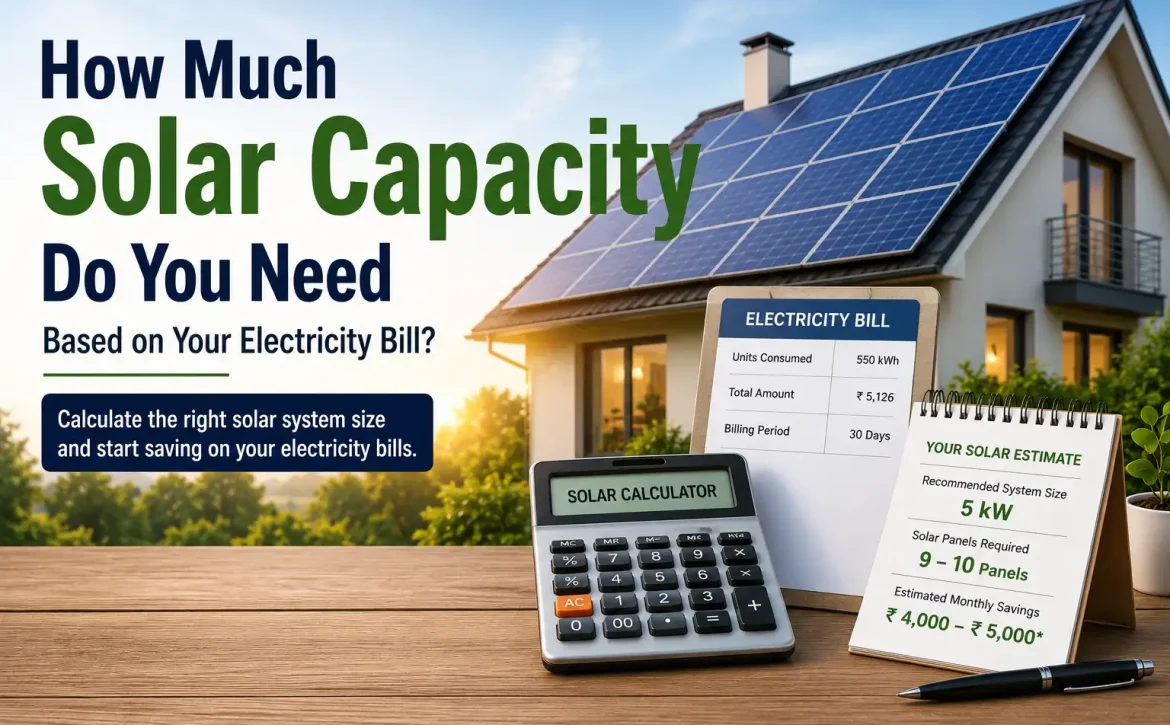
How Much Solar Capacity Do You Need Based on Your Electricity Bill?

One of the first questions homeowners ask when considering rooftop solar is:

“How much solar capacity do I actually need?”

The answer depends largely on your monthly electricity consumption and electricity bill amount. Installing a system that is too small may not generate enough power, while an oversized system could increase your investment unnecessarily.

Fortunately, determining the right solar system size is easier than ever. By analyzing your electricity bill and using a reliable solar calculator, homeowners can estimate the ideal solar capacity for their homes.

In this guide, we’ll explain how to calculate solar requirements based on your electricity bill, understand different solar system capacities, and determine how many solar panels you may need for your home.

Why Your Electricity Bill Is the Best Starting Point

Your monthly electricity bill provides valuable insights into:

  • Energy consumption patterns
  • Average monthly units consumed
  • Peak usage periods
  • Potential solar savings

Instead of guessing, homeowners should use actual consumption data to determine solar system size.

A modern solar panel calculator helps simplify this process by converting electricity usage into recommended solar capacity.

How to Calculate Solar Capacity Based on Electricity Consumption

The first step is understanding your monthly electricity consumption in units (kWh).

Most electricity bills display:

  • Monthly units consumed
  • Billing period
  • Total payable amount

For example:

Monthly Units ConsumedRecommended Solar Capacity
150–250 Units1kW – 2kW
250–450 Units2kW – 3kW
450–700 Units3kW – 5kW
700–1000 Units5kW – 8kW
1000+ Units10kW+

These estimates may vary depending on location, sunlight availability, and consumption patterns.

Solar Capacity Based on Monthly Electricity Bill

Many homeowners find it easier to estimate system size based on bill amount rather than energy units.

For ₹2,000 Electricity Bill

A monthly electricity bill of around ₹2,000 often indicates moderate consumption.

Recommended System Size:
1kW – 2kW Rooftop Solar System

Suitable for:

  • Small families
  • Apartments
  • 1BHK homes

For ₹5,000 Electricity Bill

A ₹5,000 monthly electricity bill generally indicates higher electricity usage.

Recommended System Size:
3kW – 5kW Solar System

Suitable for:

  • 2BHK homes
  • Small independent houses
  • Moderate appliance usage

For ₹10,000 Electricity Bill

Households paying around ₹10,000 per month typically consume significant electricity.

Recommended System Size:
5kW – 8kW Solar System

Suitable for:

  • Large families
  • 3BHK homes
  • Homes with air conditioners and multiple appliances

How Many Solar Panels Do I Need?

One of the most searched questions online is:

How Many Solar Panels Do I Need?

The answer depends on:

  • System capacity
  • Solar panel wattage
  • Roof space availability

Assuming modern 550W solar panels:

System SizeApproximate Number of Panels
1kW2 Panels
2kW4 Panels
3kW6 Panels
5kW9–10 Panels
10kW18–20 Panels

This is where a solar panel requirement calculator becomes extremely useful, helping homeowners estimate panel requirements instantly.

Factors That Influence Solar Capacity Requirements

Electricity bill is important, but it isn’t the only factor.

Roof Space Availability

Larger systems require more installation space.

Future Electricity Consumption

If you plan to purchase:

  • Air conditioners
  • Electric vehicles
  • Additional appliances

you may need a larger system.

Location & Sunlight Availability

Solar generation varies depending on geographical location and sunlight exposure.

Net Metering Benefits

Net metering can improve overall system economics and reduce electricity costs further.

Why Use a Solar Calculator?

A solar calculator simplifies the process of determining:

  • Recommended solar capacity
  • Estimated solar savings
  • Roof space requirements
  • Approximate number of solar panels
  • Potential return on investment

Instead of relying on assumptions, homeowners can make informed decisions using accurate consumption data.

Solar Calculator vs Manual Calculation

Solar CalculatorManual Estimation
Fast & AccurateTime-consuming
Uses consumption dataOften based on assumptions
Estimates savingsDifficult to calculate manually
Easy to useRequires technical understanding

For most homeowners, using a dedicated solar panel calculator provides a quicker and more reliable estimate.

Choosing the Right Rooftop Solar Partner

Once you’ve estimated your solar requirement, selecting the right installation partner becomes equally important.

Consider:

  • Product quality
  • Installation expertise
  • Warranty support
  • Service network
  • Industry experience

Servotech Renewable Power System is an Indian renewable energy company offering solar solutions, EV chargers, and lithium-ion battery systems. The company provides rooftop solar solutions designed to help homeowners reduce electricity expenses and transition toward cleaner energy sources.

Estimate Your Solar Requirement Instantly

Instead of making rough estimates, homeowners can use Servotech’s online Solar Calculator to determine the ideal solar system size based on electricity consumption, roof space, and energy requirements.

The calculator provides a quick and convenient way to begin your rooftop solar journey.

👉 Try Servotech’s Solar Calculator to estimate your solar capacity today.

Conclusion

Determining the right solar capacity is one of the most important steps before installing a rooftop solar system.

By analyzing your electricity bill, understanding your energy consumption, and using a reliable solar calculator, you can estimate the ideal solar system size for your home and maximize long-term savings.

Whether you’re exploring a 2kW system for a small home or a 5kW system for a larger family, the right solar solution starts with accurate calculations and informed decision-making.

Frequently Asked Questions

What is a solar calculator?

A solar calculator is an online tool that helps homeowners estimate the solar system size required based on electricity consumption, roof space, and energy requirements.

How accurate is a solar panel calculator?

A solar panel calculator provides a reliable estimate based on the information entered. Final system sizing should be confirmed by a solar expert after site assessment.

How many solar panels do I need for my house?

The number of solar panels depends on your electricity consumption, available roof space, and panel wattage. A 5kW system typically requires around 9–10 modern solar panels.

Can I calculate solar requirements using my electricity bill?

Yes. Your electricity bill is one of the best indicators of energy consumption and can help estimate the required solar capacity.

What is a solar panel requirement calculator?

A solar panel requirement calculator helps determine the number of solar panels needed based on energy usage, system size, and roof area.

Read More
Solar
June 18, 2026by servotech team0 Comments
13 Likes

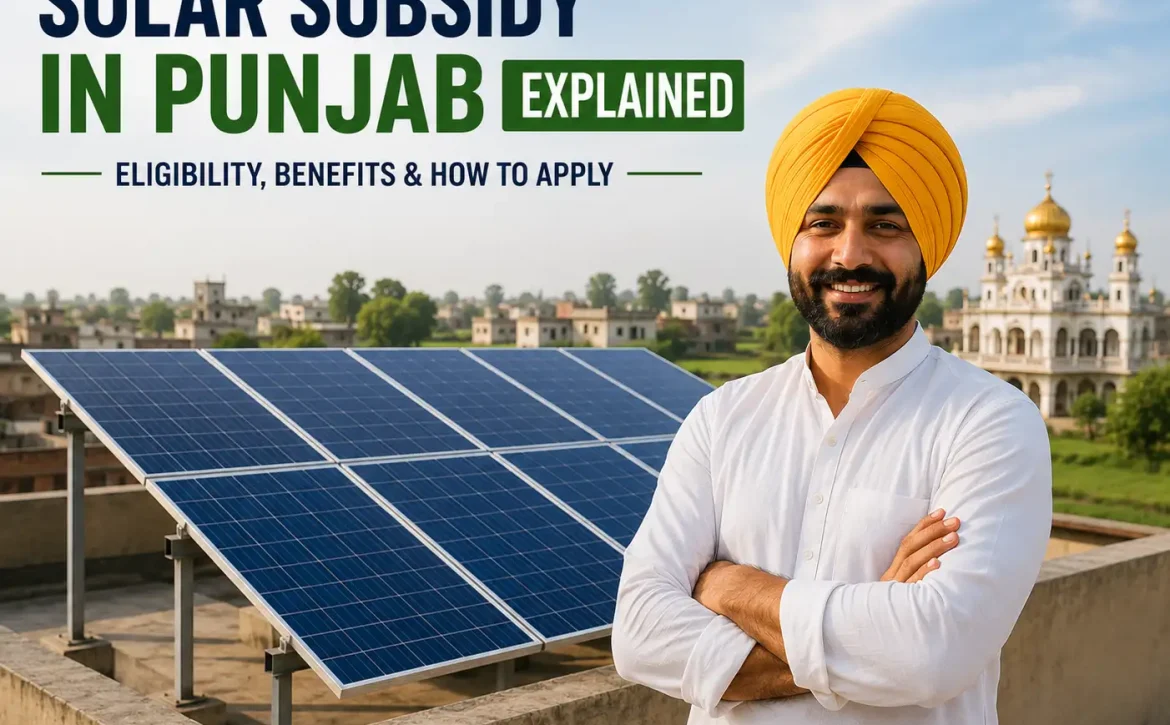
Solar Subsidy in Punjab 2026 Explained: Eligibility, Benefits & How to Apply

With abundant sunshine, increasing electricity consumption, and growing awareness about renewable energy, Punjab is emerging as one of the leading states for rooftop solar adoption in India. Homeowners across cities such as Ludhiana, Amritsar, Jalandhar, Mohali, Patiala, and Bathinda are increasingly exploring rooftop solar systems to reduce electricity bills and become more energy independent.

To encourage residential solar adoption, the Government of India has launched the PM Surya Ghar Muft Bijli Yojana, which offers financial assistance for eligible rooftop solar installations. As a result, interest in solar subsidy in Punjab has increased significantly.

In this guide, we’ll explain everything you need to know about the Punjab solar subsidy, including eligibility, benefits, application process, and how homeowners can take advantage of rooftop solar panels incentives.

What is Solar Subsidy in Punjab?

The solar subsidy in Punjab is primarily available through the Government of India’s PM Surya Ghar Muft Bijli Yojana, which aims to promote rooftop solar installations for residential consumers.

Under this scheme, eligible homeowners can receive financial support for installing rooftop solar systems, making clean energy more affordable and accessible.

The subsidy amount depends on the installed solar capacity and prevailing government guidelines.

PM Surya Ghar Muft Bijli Yojana Subsidy in Punjab

The PM Surya Ghar Muft Bijli Yojana Subsidy in Punjab is designed to help households reduce their electricity expenses by generating their own solar power. The growing popularity of PM Surya Ghar Muft Bijli Yojana is encouraging more homeowners across India to explore rooftop solar installations and government-supported clean energy solutions.

Key Objectives

  • Promote rooftop solar adoption
  • Reduce electricity bills
  • Increase renewable energy generation
  • Support India’s clean energy goals
  • Encourage energy independence among homeowners

The scheme has become one of the most searched government initiatives related to solar panel subsidy in Punjab.

Who Is Eligible for Rooftop Solar Subsidy in Punjab?

To avail the rooftop solar subsidy in Punjab, applicants generally need to meet the following conditions:

Eligibility Criteria

  • Must be an Indian citizen.
  • Must own a residential property.
  • Must have a valid electricity connection.
  • Rooftop should be suitable for solar installation.
  • The solar system should be installed through approved channels as per scheme guidelines.

Residential consumers are the primary beneficiaries under the scheme.

Benefits of Solar Subsidy in Punjab

Installing rooftop solar offers benefits beyond the subsidy itself.

1. Lower Electricity Bills

One of the biggest reasons homeowners invest in solar is to reduce monthly electricity expenses.

2. Faster Return on Investment

Government subsidy reduces the upfront cost, improving overall payback period.

3. Long-Term Savings

A rooftop solar system can generate electricity for 25 years or more. The performance and savings of a rooftop solar system also depend on factors such as solar panel quality, inverter efficiency, and proper system design. Choosing the right on-grid solar inverter can significantly improve overall energy generation and return on investment.

4. Clean and Sustainable Energy

Solar energy helps reduce carbon emissions and supports environmental sustainability.

5. Increased Energy Independence

Homeowners become less dependent on conventional grid electricity.

How Much Subsidy Can You Get?

The subsidy amount is determined by the Government of India and may change from time to time.

Homeowners should always verify the latest subsidy structure through the official PM Surya Ghar portal before making a purchase decision.

Since subsidy guidelines are periodically updated, checking official sources ensures accurate information.

5kW Solar System Price in Punjab With Subsidy

One of the most common searches is “5kW solar system price in Punjab with subsidy.”

A 5kW rooftop solar system is often suitable for:

  • Large households
  • Independent homes
  • Families with higher electricity consumption

The final cost depends on:

  • Solar panel technology
  • Inverter type
  • Installation requirements
  • Roof conditions
  • Applicable subsidy benefits

After applying eligible subsidies, the effective investment cost can be significantly reduced.

For accurate system sizing and pricing, homeowners should consult experienced solar solution providers.

Homeowners evaluating a 5kW system often compare different capacities before making a decision. Depending on monthly electricity consumption, some households may find a 2kW on-grid solar system or 3kW on-grid solar system sufficient, while larger homes may require higher-capacity installations. Understanding the right system size is crucial for maximizing savings and subsidy benefits.

Why Is Solar in Punjab Growing Rapidly?

Punjab offers favorable conditions for solar adoption.

Reasons Behind Growing Solar Demand

  • High solar irradiation
  • Rising electricity awareness
  • Government support programs
  • Growing environmental consciousness
  • Better availability of rooftop solar solutions

As awareness increases, more households are choosing solar as a long-term investment rather than simply an energy-saving solution.

Solar Subsidy in Punjab for Different System Capacities

System SizeSuitable ForCentral SubsidyEstimated Savings Potential
1kWSmall HomesUp to ₹30,000Lower electricity bills for basic household usage
2kW1BHK / Small FamiliesUp to ₹60,000Significant reduction in monthly electricity expenses
3kW2BHK HomesUp to ₹78,000Ideal balance between investment and savings
4kWLarge FamiliesUp to ₹78,000Higher solar generation for increased energy needs
5kW3BHK & Independent HomesUp to ₹78,000Maximum long-term savings and better energy independence
Above 5kWVillas & High Consumption HomesAs per applicable guidelinesSuitable for larger energy requirements

Note: Subsidy amounts are subject to the latest PM Surya Ghar Muft Bijli Yojana guidelines. Applicants should verify current subsidy details on the official portal before making a purchase decision. 

Homeowners researching solar system subsidy in Punjab often compare different capacities before making a decision. While a 2kW system may be sufficient for smaller households, families living in 3BHK homes generally prefer a 5kW solar system in Punjab with subsidy to maximize energy generation and long-term savings. Selecting the right system size is important for optimizing both subsidy benefits and return on investment.

How to Apply for Solar Subsidy in Punjab

The application process is straightforward.

Step 1: Register

Visit the official PM Surya Ghar portal and register using your electricity consumer details.

Step 2: Submit Application

Provide the required information and rooftop solar installation details.

Step 3: Approval Process

Application is reviewed as per applicable guidelines.

Step 4: Installation

Install the rooftop solar system through approved channels.

Step 5: Inspection & Verification

Authorities verify installation and compliance.

Step 6: Subsidy Disbursement

After successful verification, eligible subsidy benefits are processed according to government procedures.


Choosing the Right Rooftop Solar Partner

The performance of your solar system depends significantly on the quality of products and installation.

Homeowners should consider:

  • Product quality
  • Installation expertise
  • Warranty support
  • Service network
  • Industry experience
  • After-sales support

Servotech Renewable Power System is an Indian renewable energy company offering solar solutions, EV chargers, and lithium-ion battery systems. The company provides rooftop solar solutions for residential, commercial, and industrial consumers across India.

Conclusion

The solar subsidy in Punjab is making rooftop solar more affordable and accessible for homeowners. Through the PM Surya Ghar Muft Bijli Yojana Subsidy in Punjab, eligible households can reduce the upfront cost of installation and enjoy long-term savings on electricity bills. Before installing a rooftop solar system, homeowners should evaluate roof space availability, electricity consumption patterns, net metering benefits, and the most suitable solar system capacity for their home.

As solar adoption continues to grow, investing in rooftop solar is becoming a practical step toward energy independence, sustainability, and financial savings.

If you’re considering a rooftop solar system, now is an excellent time to explore available subsidy benefits and begin your solar journey.

Frequently Asked Questions

What is the solar subsidy in Punjab?

The solar subsidy in Punjab is primarily available through the PM Surya Ghar Muft Bijli Yojana, which provides financial assistance for eligible residential rooftop solar installations.

Who can apply for rooftop solar subsidy in Punjab?

Residential homeowners with a valid electricity connection and suitable rooftop space can generally apply, subject to scheme guidelines.

Is PM Surya Ghar Muft Bijli Yojana available in Punjab?

Yes. Eligible residential consumers in Punjab can apply under the PM Surya Ghar Muft Bijli Yojana.

What is the 5kW solar system price in Punjab with subsidy?

The final price depends on equipment quality, installation requirements, and applicable subsidy benefits. Costs vary by project and provider.

Can rooftop solar significantly reduce electricity bills?

Yes. A properly designed rooftop solar system can substantially reduce dependence on grid electricity and lower monthly power expenses.

Read More
Solar
June 10, 2026by servotech team0 Comments
20 Likes

How Servotech’s Raho Roshan Bina Tension Campaign is Changing How India Thinks About Solar

For decades, one household expense has had a unique ability to spark conversations, calculations, and sometimes even concern in Indian homes—the electricity bill.

Whether it’s planning monthly expenses, managing EMIs, paying school fees, or handling grocery costs, every family has a budget to balance. And somewhere in that budget sits the electricity bill, a recurring expense that many households simply accept as unavoidable.

But what if paying the electricity bill was no longer a burden?

What if the bill became so small that family members actually argued over who gets to pay it?

That is exactly the idea behind Servotech Solar’s newly launched TVC campaign, “Raho Roshan Bina Tension,” featuring actor and philanthropist Sonu Sood, which premiered on 1st June 2026.

The campaign takes a familiar middle-class household situation and transforms it into a powerful message about the future of energy, savings, and smarter living.

A Household Conversation Every Indian Can Relate To

The TVC opens with two brothers discussing how they will divide household responsibilities.

One takes responsibility for the Home EMI.

The other agrees to handle the Scooter EMI.

Mother’s medicines are assigned.

The grocery bill is sorted.

Everything appears normal until the conversation reaches one particular expense:

“Bijli ka Bill.”

Suddenly, both brothers enthusiastically insist:

“Bijli ka bill toh main hi bharunga!”

At first, the situation feels surprising.

After all, electricity bills are usually seen as an expense people want to reduce—not compete to pay.

This unexpected twist immediately captures attention and creates curiosity.

Why would anyone fight over paying the electricity bill?

The Twist That Changes Everything

The answer comes through Sonu Sood’s appearance in the advertisement.

He explains that when a homeowner installs Servotech Solar on their rooftop, electricity expenses can reduce so significantly that paying the bill no longer feels like a burden.

Instead of worrying about monthly electricity costs, homeowners can enjoy the benefits of generating their own clean energy.

The message is simple yet powerful:

“Servotech Solar: Raho Roshan Bina Tension.”

Rather than focusing on technical specifications, solar panel efficiency, or installation details, the campaign focuses on something far more relatable—peace of mind.

And that’s what makes the advertisement memorable.

A New Way of Thinking About Solar Energy

Traditionally, many people view solar energy as a technology purchase.

They think about:

  • Solar panels
  • Installation costs
  • Roof space requirements
  • Subsidies
  • Technical specifications

While these factors are important, they often overlook the biggest benefit of rooftop solar:

Financial Freedom from Rising Energy Dependence

The Servotech campaign shifts the conversation away from technology and toward lifestyle improvement.

The ad asks consumers to imagine a future where electricity expenses are no longer a source of stress.

This psychological shift is important because consumers rarely buy products—they buy outcomes.

People don’t buy solar panels simply to own solar panels.

They invest in solar because they want:

  • Lower electricity expenses
  • Greater energy independence
  • Long-term savings
  • Reliable power generation
  • Peace of mind

The campaign successfully captures this emotional reality.

Why More Homeowners Are Choosing Solar Panels for Home

Across India, rooftop solar adoption continues to grow as homeowners look for smarter ways to manage energy consumption.

Several factors are driving this shift.

1. Reduced Electricity Bills

One of the biggest reasons people install solar panels for home is the opportunity to significantly reduce electricity bill expenses over time.

By generating electricity directly from sunlight, homeowners can reduce their reliance on conventional grid power.

2. Long-Term Savings

Unlike many household expenses that continue indefinitely, a rooftop solar system is a long-term investment that can deliver value for decades.

Modern solar panels are designed to operate efficiently for 25 years or more.

3. Energy Independence

Solar allows homeowners to take greater control over their energy needs and become less dependent on fluctuating utility costs.

4. Sustainable Living

Every unit of solar electricity generated helps reduce dependence on conventional energy sources and contributes to a cleaner environment.

How Servotech Solar Supports India’s Energy Transition

India is currently experiencing one of the world’s fastest renewable energy transitions.

Government initiatives, technological advancements, and growing public awareness are encouraging more homeowners to explore solar energy solutions.

Programs such as PM Surya Ghar: Muft Bijli Yojana are helping make rooftop solar more accessible for residential consumers across the country.

As adoption increases, companies that can simplify solar for consumers will play an important role in accelerating awareness.

This is where campaigns like Raho Roshan Bina Tension become particularly effective.

Instead of overwhelming audiences with technical information, the campaign communicates the benefits of solar through a simple household story that almost every Indian family can understand.

More Than an Advertisement

The best advertising campaigns do more than promote products.

They change perceptions.

The Servotech Solar campaign challenges a long-held assumption—that electricity bills are an unavoidable burden.

By presenting a world where homeowners actually want to pay their electricity bill because it has become so manageable, the campaign reframes the conversation around energy costs.

It’s not simply about solar panels.

It’s about freedom from unnecessary stress.

It’s about making smarter choices today that create long-term benefits tomorrow.

And it’s about helping families stay connected, comfortable, and empowered.

Why “Raho Roshan Bina Tension” Resonates with Indian Families

The campaign works because it speaks directly to everyday life.

Every family understands monthly expenses.

Every homeowner understands household budgeting.

And everyone appreciates the idea of saving money without compromising comfort.

The phrase “Raho Roshan Bina Tension” captures this sentiment perfectly.

It communicates optimism, reliability, and confidence—qualities that align naturally with the benefits of rooftop solar energy.

In just a few words, it transforms solar from a technical solution into a lifestyle advantage.

Conclusion: The Future Looks Brighter with Solar

As more Indian households explore renewable energy solutions, the conversation around solar is evolving.

People are no longer asking whether solar works.

They are asking how much they can save, how quickly they can install it, and how it can improve their quality of life.

Servotech’s latest TVC featuring Sonu Sood captures this evolution perfectly.

By turning the simple question of “Who will pay the electricity bill?” into a moment of humor and insight, the campaign reminds us that solar is not just about generating electricity—it’s about creating a future where energy is smarter, cleaner, and more affordable.

If you’re looking to reduce electricity bill expenses, invest in long-term savings, and embrace sustainable living, now may be the perfect time to explore Servotech Solar solutions.

Stay powered. Stay sustainable. Stay tension-free.

Raho Roshan Bina Tension.

Read More
Solar
June 6, 2026by servotech team0 Comments
31 Likes

Top Questions Indians Are Asking About Rooftop Solar in 2026

India’s rooftop solar sector is witnessing unprecedented growth. With increasing awareness about renewable energy, government initiatives such as PM Surya Ghar: Muft Bijli Yojana, and advancements in solar technology, more homeowners are considering solar power as a practical solution for their energy needs.

At the same time, rooftop solar has become one of the most discussed topics among homeowners, housing societies, and businesses. People are actively searching for answers related to installation costs, subsidies, electricity savings, roof space requirements, and system performance.

This growing curiosity reflects a larger shift toward smarter energy choices—a message that also resonates with Servotech’s recent “Raho Roshan Bina Tension” campaign featuring Sonu Sood. The campaign highlights how modern households are increasingly looking for reliable and sustainable energy solutions that can support their everyday needs.

If you’re planning to install a rooftop solar system, here are some of the most common questions Indians are asking in 2026.

Is Rooftop Solar Worth It in 2026?

One of the biggest questions homeowners ask is whether rooftop solar is still a worthwhile investment.

The answer is yes.

Modern solar systems are more efficient, reliable, and affordable than ever before. With electricity consumption increasing across Indian households, rooftop solar offers an opportunity to generate clean energy while reducing dependence on conventional grid power.

A properly designed rooftop solar system can provide long-term savings, generate electricity for more than two decades, and help homeowners gain greater control over their energy expenses.

How Much Does a Rooftop Solar System Cost?

Cost remains one of the most searched rooftop solar topics in India.

The price of a solar system depends on several factors, including:

  • System capacity
  • Solar panel technology
  • Inverter quality
  • Installation requirements
  • Location
  • Government subsidy eligibility

For example, a small household may require a 2kW system, while larger homes often opt for 3kW, 5kW, or higher capacities based on their electricity consumption patterns.

Understanding your energy requirements is the first step toward determining the right solar system size and investment.

How Much Can I Save on My Electricity Bill?

This question often drives people to explore solar in the first place.

The amount you save depends on factors such as:

  • Monthly electricity consumption
  • Solar system size
  • Sunlight availability
  • Net metering policies
  • Local electricity tariffs

For many households, rooftop solar can significantly reduce electricity expenses while providing long-term financial benefits.

As consumers become more conscious about energy usage, they are increasingly looking for solutions that offer both sustainability and cost savings.

What Is PM Surya Ghar Muft Bijli Yojana?

Government support has played a major role in accelerating rooftop solar adoption across India.

The PM Surya Ghar Muft Bijli Yojana is designed to encourage residential consumers to install rooftop solar systems by providing financial assistance and simplifying the adoption process.

The scheme aims to:

  • Increase residential solar adoption
  • Promote clean energy generation
  • Reduce electricity expenses
  • Support India’s renewable energy goals

As a result, searches related to solar subsidies and PM Surya Ghar continue to rise across the country.

How Many Solar Panels Are Required for a House?

Every home has unique energy requirements, which means there is no one-size-fits-all answer.

The number of solar panels required depends on:

  • Monthly electricity consumption
  • Available roof space
  • Solar panel wattage
  • Desired energy generation

A smaller home may require a 2kW system, while a larger 3BHK house may need a 5kW rooftop solar system to meet daily electricity demands.

Proper system sizing ensures optimal performance and maximum savings.

What Is Net Metering and Why Is It Important?

Net metering is one of the most important concepts in rooftop solar.

It allows homeowners to export surplus electricity generated by their solar system to the grid. In return, they receive credits that can offset future electricity consumption.

Benefits of net metering include:

  • Better utilization of solar energy
  • Improved return on investment
  • Reduced electricity bills
  • Greater energy efficiency

For many homeowners, understanding net metering is an essential part of the solar adoption journey.

How Much Roof Space Is Needed for Rooftop Solar?

Roof space requirements vary depending on system capacity and panel efficiency.

In general:

  • A 2kW system may require approximately 150–200 square feet.
  • A 3kW system may require approximately 200–300 square feet.
  • A 5kW system may require approximately 350–500 square feet.

A shadow-free rooftop with good sunlight exposure can significantly improve system performance and electricity generation.

How Long Do Solar Panels Last?

Modern solar panels are built for long-term performance. Most quality solar panels have a lifespan of 25 years or more and continue generating electricity efficiently throughout their operational life.

Routine maintenance is minimal and typically includes periodic cleaning and basic inspections to ensure optimal performance.

This long lifespan makes rooftop solar a valuable long-term investment for homeowners.

What Happens During a Power Cut?

Many homeowners assume that rooftop solar systems automatically provide backup power during outages. However, a standard on-grid solar system shuts down during a power outage for safety reasons.

Consumers seeking uninterrupted power supply often explore:

  • Hybrid solar systems
  • Battery Energy Storage Systems (BESS)
  • Lithium-ion battery solutions

As energy storage technologies continue to evolve, more homeowners are considering integrated solar-plus-storage solutions.

Which Company Should You Choose for Rooftop Solar Installation?

Choosing the right solar partner is one of the most important decisions in the entire process.

Homeowners should evaluate:

  • Product quality
  • Installation expertise
  • Warranty support
  • Service network
  • Industry experience
  • After-sales support

A reliable installation partner can significantly influence the long-term performance and efficiency of a rooftop solar system.

Servotech Renewable Power System is an Indian renewable energy company offering solar solutions, EV chargers, and lithium-ion battery systems. The company provides rooftop solar solutions for residential, commercial, and industrial applications, helping consumers transition toward sustainable energy systems.

Why Are More Indians Talking About Rooftop Solar?

The questions consumers are asking today reveal an important trend.

A few years ago, most people wanted to know what solar energy was.

Today, they are asking:

  • How much can I save?
  • What subsidy is available?
  • Which system size is right for my home?
  • How does net metering work?
  • Is rooftop solar worth the investment?

This shift indicates growing awareness and confidence in solar technology.

Campaigns such as “Raho Roshan Bina Tension” help bring these conversations into mainstream households by making solar energy more relatable and easier to understand.

As awareness grows, rooftop solar is becoming less of an alternative energy solution and more of a practical choice for modern living.

Conclusion

Rooftop solar has become one of the most important energy discussions in India today. Whether it’s understanding costs, evaluating savings, exploring subsidy opportunities, or selecting the right system size, homeowners are seeking practical information to make informed decisions.

The growing number of questions around rooftop solar is a positive sign. It reflects increasing awareness about renewable energy and a willingness to embrace smarter energy solutions for the future.

For homeowners considering solar, asking the right questions is the first step toward making a confident and informed investment in clean energy.

Frequently Asked Questions

Is rooftop solar a good investment in 2026?

Yes. Rooftop solar continues to offer long-term savings, reduced electricity bills, and greater energy independence for homeowners.

How much roof space is required for rooftop solar?

The requirement depends on system size, but most residential installations need between 150 and 500 square feet of shadow-free rooftop space.

Does PM Surya Ghar provide subsidy for rooftop solar?

Yes. Eligible residential consumers can avail subsidy benefits under the PM Surya Ghar: Muft Bijli Yojana, subject to prevailing guidelines.

How long do rooftop solar panels last?

Most high-quality solar panels are designed to operate efficiently for 25 years or more.

Can rooftop solar work during a power outage?

Standard on-grid systems do not provide backup power during outages. Hybrid systems with battery storage can offer backup support.

Read More
Solar
June 2, 2026by servotech team0 Comments
41 Likes

Servotech’s New TVC ‘Raho Roshan Bina Tension’ Brings a New Perspective to Solar Power & Electricity Bills

As electricity consumption continues to rise across Indian households, managing monthly power bills has become a growing concern for many families. From air conditioners and refrigerators to work-from-home setups and smart appliances, modern lifestyles are driving higher energy usage than ever before.

Recognizing this challenge, Servotech Renewable Power System has launched its latest television commercial (TVC) campaign, “Raho Roshan Bina Tension”, featuring actor and philanthropist Sonu Sood. Through a relatable and light-hearted narrative, the campaign brings attention to a common household issue while highlighting the importance of making smarter energy choices.

But beyond its humor and storytelling, the campaign reflects a larger conversation happening across India — how homeowners can reduce their dependence on rising electricity costs and embrace more sustainable energy solutions.

The Story Behind ‘Raho Roshan Bina Tension’

The TVC revolves around a simple yet relatable situation that many Indian households experience: the anxiety of increasing electricity bills.

Featuring Sonu Sood in a dual role, the advertisement uses humor and everyday family interactions to communicate an important message. The campaign demonstrates how adopting solar energy can help households manage electricity expenses more effectively while ensuring uninterrupted access to power.

The phrase “Raho Roshan Bina Tension” perfectly captures the campaign’s core idea — staying powered without constantly worrying about rising electricity costs.

By combining entertainment with a practical consumer concern, the campaign makes solar energy more accessible and relatable to a wider audience.

Watch the ‘Raho Roshan Bina Tension’ TVC

The newly launched TVC featuring Sonu Sood showcases how solar energy can help households address one of their most common concerns—rising electricity bills—through a simple, engaging, and relatable story.

Why Electricity Bills Are Becoming a Major Concern for Indian Households

Over the past few years, electricity consumption patterns have changed significantly.

Several factors are contributing to higher household energy usage:

  • Increased use of air conditioners and cooling appliances
  • Work-from-home and hybrid work arrangements
  • Growing adoption of smart home devices
  • Expansion of residential electrical infrastructure
  • Rising demand for uninterrupted power supply

As energy consumption continues to increase, many homeowners are actively looking for ways to control electricity expenses without compromising comfort or convenience.

This shift in consumer behavior has led to growing interest in rooftop solar solutions across India.

The Growing Shift Towards Solar Energy

Solar energy is no longer viewed as an alternative energy source—it is increasingly becoming a practical solution for residential and commercial consumers alike.

Modern rooftop solar systems offer several advantages:

1. Reduced Electricity Bills

Generating electricity from solar energy can significantly reduce monthly power expenses.

2. Long-Term Savings

Solar panels typically operate for 25 years or more, offering substantial savings over their lifetime.

3. Energy Independence

Consumers can become less dependent on conventional grid electricity and protect themselves against rising energy costs.

4. Environmentally Friendly Power Generation

Solar energy helps reduce carbon emissions and supports India’s transition toward a cleaner energy future.

As awareness grows, more homeowners are beginning to view solar as both a financial and environmental investment.
Why This Campaign Resonates with Today’s Consumers

One of the strengths of the “Raho Roshan Bina Tension” campaign is its focus on a real-life challenge that consumers can immediately relate to.

Unlike traditional product-centric advertisements, the campaign addresses a common concern before presenting a solution.

The messaging resonates because it reflects questions many homeowners ask themselves:

  • How can I reduce my electricity bills?
  • Is rooftop solar worth the investment?
  • Can solar provide long-term savings?
  • How can I make my home more energy-efficient?

By addressing these concerns through storytelling, the campaign creates a stronger emotional connection with viewers.

Solar Energy and the Future of Smart Living

India’s renewable energy sector is evolving rapidly, driven by government initiatives, technological advancements, and growing consumer awareness.

Rooftop solar installations are becoming increasingly popular among homeowners seeking:

  • Lower energy costs
  • Greater energy security
  • Sustainable living solutions
  • Long-term financial benefits

With initiatives such as PM Surya Ghar Muft Bijli Yojana, residential solar adoption is expected to accelerate further in the coming years.

Campaigns like “Raho Roshan Bina Tension” help bridge the gap between technology and consumers by making renewable energy more understandable and approachable.

About Servotech Renewable Power System

Servotech Renewable Power System is an Indian renewable energy company offering solar solutions, EV chargers, and lithium-ion battery systems.

Over the years, the company has focused on developing clean energy technologies that support residential, commercial, and industrial consumers. With a growing presence across solar energy, EV charging infrastructure, and advanced energy solutions, Servotech continues to contribute to India’s renewable energy transition.

Conclusion

The launch of “Raho Roshan Bina Tension” marks more than just a new advertising campaign—it reflects a growing awareness around energy consumption, electricity costs, and sustainable living.

As more consumers explore ways to manage rising energy expenses, rooftop solar solutions are becoming an increasingly relevant part of the conversation.

By combining humor, relatability, and a meaningful message, Servotech’s latest TVC with Sonu Sood encourages homeowners to think differently about their energy choices and consider solutions that can deliver long-term value.

In a world where electricity has become an essential part of everyday life, the message is simple:

Stay powered. Stay sustainable. Raho Roshan, Bina Tension.

FAQ Section

Q1. What is Servotech’s ‘Raho Roshan Bina Tension’ campaign?

‘Raho Roshan Bina Tension’ is Servotech’s latest TVC campaign featuring Sonu Sood. The campaign highlights the challenge of rising electricity bills and promotes awareness about smarter energy solutions such as rooftop solar.

Q2. Who is featured in Servotech’s new TVC?

The campaign features actor and philanthropist Sonu Sood in a dual role, using humor and relatable storytelling to communicate the benefits of making smarter energy choices.

Q3. What message does the campaign convey?

The campaign focuses on helping consumers understand how solar energy can reduce electricity bill concerns while supporting sustainable and long-term energy solutions.

Q4. Why are more homeowners considering rooftop solar?

Homeowners are increasingly adopting rooftop solar to reduce electricity costs, achieve long-term savings, and become less dependent on conventional grid power.

Q5. How does rooftop solar help reduce electricity bills?

Rooftop solar systems generate electricity from sunlight, allowing homeowners to consume self-generated power and reduce their reliance on grid electricity, resulting in lower monthly energy bills.

    Connect Now!

    Our expert will contact you soon.

    About us
    Awards & FelicitationsOur CapabilitiesOur CompanyOur LeadershipOur ProjectsTestaments
    Follow us
    Products
    EV ChargerLEDsPower & Backup
    Subsidiary Company
    Servotech EV Infra Pvt. Ltd. Servotech Sports and Entertainment Pvt. Ltd. Rebreathe Medical Devices India Pvt. Ltd. Hertz & Pixelz Pvt. Ltd.
    Media
    BlogsEventsMedia CoveragesMedia KitPress Release
    Quick Links
    Store LocatorSolar CalculatorEV Charging AppVendor RegistrationSite Map
    Write to us
    Sales
    servotech@servotechindia.comexportsales@servotechindia.comchannelsales@servotechindia.com
    Public Relations
    pr@servotechindia.com
    Marketing
    marketing@servotechindia.com
    ebiz@servotechindia.com
    Careers
    hr@servotechindia.com
    Contact us

    For Sales Enquiry: 011 41183116

    For EV Chargers sales: 9717691800

    For Service: 011 41183119

    Email : customercare@servotechindia.com

    Corporate Office

    806, 8th Floor, Crown Heights, Hotel Crown Plaza, Sector 10, Rohini New Delhi 110085

    Registered & Kundli Plant Address

    KHATA NO. 1970, KHEWAT NO. 1672, KHASRA NO. 21/20/2/2, REVENUE ESTATE, KUNDLI, P.S.Rai, Sonipat, Sonipat 131029, Haryana, India

    Safiabad Address

    Killa No.14, 6/1/2(0-3), 6/2/3(5-13, Safiabad, Pana Paposhian, Tehsil, Rai, Sonipat, Haryana 131029

    Follow us

    Awards & FelicitationsOur CapabilitiesOur CompanyOur LeadershipOur ProjectsTestaments

    EV ChargerLEDsPower & BackupSolar Products

    Servotech EV Infra Pvt. Ltd. Servotech Sports and Entertainment Pvt. Ltd. Rebreathe Medical Devices India Pvt. Ltd. Hertz & Pixelz Pvt. Ltd.

    BlogsEventsMedia CoveragesMedia KitPress Release

    Store LocatorSolar CalculatorEV Charging AppVendor RegistrationSite Map

    Sales
    servotech@servotechindia.comexportsales@servotechindia.comchannelsales@servotechindia.com
    Public Relations
    pr@servotechindia.com
    Marketing
    marketing@servotechindia.com
    ebiz@servotechindia.com
    Careers
    hr@servotechindia.com

    For Sales Enquiry: 011 41183116

    For EV Chargers sales: 9717691800

    For Service: 011 41183119

    Email : customercare@servotechindia.com

    Corporate Office

    806, 8th Floor, Crown Heights, Hotel Crown Plaza, Sector 10, Rohini New Delhi 110085

    Registered & Kundli Plant Address

    KHATA NO. 1970, KHEWAT NO. 1672, KHASRA NO. 21/20/2/2, REVENUE ESTATE, KUNDLI, P.S.Rai, Sonipat, Sonipat 131029, Haryana, India

    Safiabad Address

    Killa No.14, 6/1/2(0-3), 6/2/3(5-13, Safiabad, Pana Paposhian, Tehsil, Rai, Sonipat, Haryana 131029

    Copyright 2026 © Servotech Renewable Power System Limited: Privacy Policy. Brand Guidelines. Our Capability. Legal Disclaimer. Terms of use

    Top