
• About Us
    • Awards & Felicitations
    • Our Company
    • Our Leadership
    • Our Projects
    • Testaments
  • Products
    • EV Charger
      • Spark Series (AC Charger)
      • Squad Series (DC Charger)
    • LEDs
      • Domestic LED
      • Commercial LED
    • Power & Backup
      • Battery
      • Servo Stabilizer
      • UPS
    • Solar Solutions
      • Solar Inverter
      • ServPort
      • Solar Management Unit
      • Solar Batteries
      • Solar Panels
    • Electric 3W Solutions
      • Lithium Battery
      • Electric 3W Charger
    • Others
      • Oxygen Concentrator
      • UVC
  • Solutions
    • Solar EPC
    • Solar Calculator
    • EV Calculator
  • Media
    • Blogs
    • Events
    • Media Coverages
    • Media Kit
    • Press Releases
  • Investors
  • Contact

Type To Search

  • About Us
    • Awards & Felicitations
    • Our Company
    • Our Leadership
    • Our Projects
    • Testaments
  • Products
    • EV Charger
      • Spark Series (AC Charger)
      • Squad Series (DC Charger)
    • LEDs
      • Domestic LED
      • Commercial LED
    • Power & Backup
      • Battery
      • Servo Stabilizer
      • UPS
    • Solar Solutions
      • Solar Inverter
      • ServPort
      • Solar Management Unit
      • Solar Batteries
      • Solar Panels
    • Electric 3W Solutions
      • Lithium Battery
      • Electric 3W Charger
    • Others
      • Oxygen Concentrator
      • UVC
  • Solutions
    • Solar EPC
    • Solar Calculator
    • EV Calculator
  • Media
    • Blogs
    • Events
    • Media Coverages
    • Media Kit
    • Press Releases
  • Investors
  • Contact

Type To Search

  • About Us
    • Awards & Felicitations
    • Our Company
    • Our Leadership
    • Our Projects
    • Testaments
  • Products
    • EV Charger
      • Spark Series (AC Charger)
      • Squad Series (DC Charger)
    • LEDs
      • Domestic LED
      • Commercial LED
    • Power & Backup
      • Battery
      • Servo Stabilizer
      • UPS
    • Solar Solutions
      • Solar Inverter
      • ServPort
      • Solar Management Unit
      • Solar Batteries
      • Solar Panels
    • Electric 3W Solutions
      • Lithium Battery
      • Electric 3W Charger
    • Others
      • Oxygen Concentrator
      • UVC
  • Solutions
    • Solar EPC
    • Solar Calculator
    • EV Calculator
  • Media
    • Blogs
    • Events
    • Media Coverages
    • Media Kit
    • Press Releases
  • Investors
  • Contact
  • About Us
    • Awards & Felicitations
    • Our Company
    • Our Leadership
    • Our Projects
    • Testaments
  • Products
    • EV Charger
      • Spark Series (AC Charger)
      • Squad Series (DC Charger)
    • LEDs
      • Domestic LED
      • Commercial LED
    • Power & Backup
      • Battery
      • Servo Stabilizer
      • UPS
    • Solar Solutions
      • Solar Inverter
      • ServPort
      • Solar Management Unit
      • Solar Batteries
      • Solar Panels
    • Electric 3W Solutions
      • Lithium Battery
      • Electric 3W Charger
    • Others
      • Oxygen Concentrator
      • UVC
  • Solutions
    • Solar EPC
    • Solar Calculator
    • EV Calculator
  • Media
    • Blogs
    • Events
    • Media Coverages
    • Media Kit
    • Press Releases
  • Investors
  • Contact
Read More
Solar
June 18, 2026by servotech team0 Comments
9 Likes

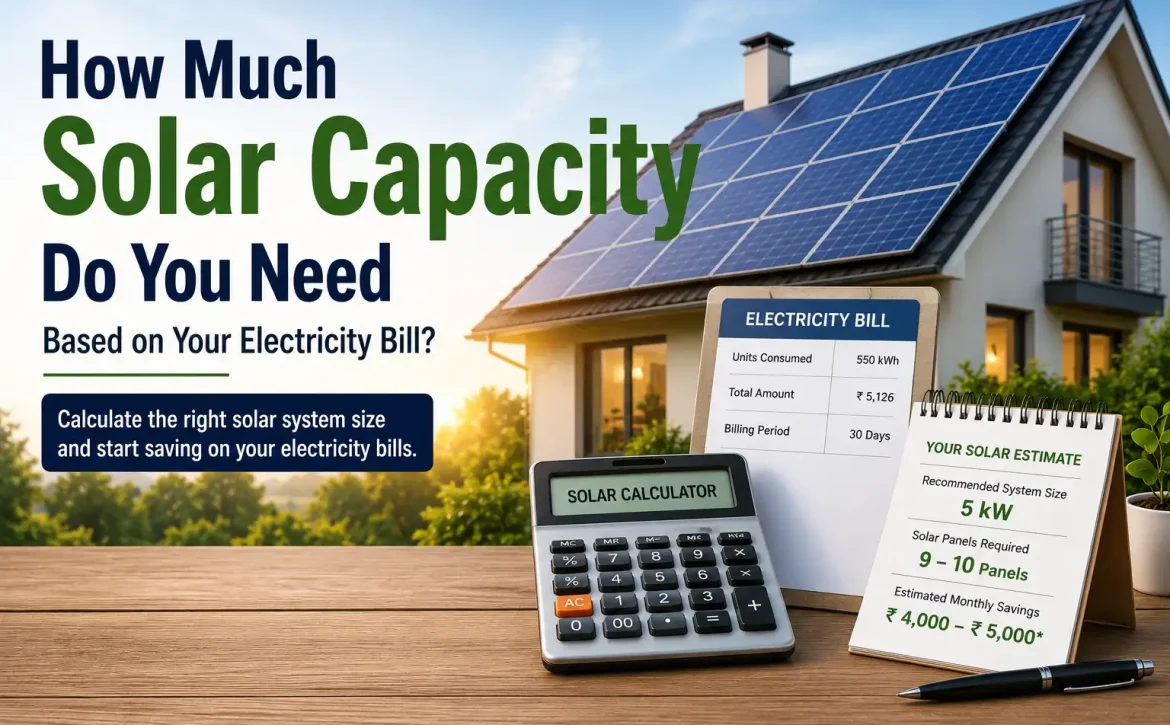
How Much Solar Capacity Do You Need Based on Your Electricity Bill?

One of the first questions homeowners ask when considering rooftop solar is:

“How much solar capacity do I actually need?”

The answer depends largely on your monthly electricity consumption and electricity bill amount. Installing a system that is too small may not generate enough power, while an oversized system could increase your investment unnecessarily.

Fortunately, determining the right solar system size is easier than ever. By analyzing your electricity bill and using a reliable solar calculator, homeowners can estimate the ideal solar capacity for their homes.

In this guide, we’ll explain how to calculate solar requirements based on your electricity bill, understand different solar system capacities, and determine how many solar panels you may need for your home.

Why Your Electricity Bill Is the Best Starting Point

Your monthly electricity bill provides valuable insights into:

  • Energy consumption patterns
  • Average monthly units consumed
  • Peak usage periods
  • Potential solar savings

Instead of guessing, homeowners should use actual consumption data to determine solar system size.

A modern solar panel calculator helps simplify this process by converting electricity usage into recommended solar capacity.

How to Calculate Solar Capacity Based on Electricity Consumption

The first step is understanding your monthly electricity consumption in units (kWh).

Most electricity bills display:

  • Monthly units consumed
  • Billing period
  • Total payable amount

For example:

Monthly Units ConsumedRecommended Solar Capacity
150–250 Units1kW – 2kW
250–450 Units2kW – 3kW
450–700 Units3kW – 5kW
700–1000 Units5kW – 8kW
1000+ Units10kW+

These estimates may vary depending on location, sunlight availability, and consumption patterns.

Solar Capacity Based on Monthly Electricity Bill

Many homeowners find it easier to estimate system size based on bill amount rather than energy units.

For ₹2,000 Electricity Bill

A monthly electricity bill of around ₹2,000 often indicates moderate consumption.

Recommended System Size:
1kW – 2kW Rooftop Solar System

Suitable for:

  • Small families
  • Apartments
  • 1BHK homes

For ₹5,000 Electricity Bill

A ₹5,000 monthly electricity bill generally indicates higher electricity usage.

Recommended System Size:
3kW – 5kW Solar System

Suitable for:

  • 2BHK homes
  • Small independent houses
  • Moderate appliance usage

For ₹10,000 Electricity Bill

Households paying around ₹10,000 per month typically consume significant electricity.

Recommended System Size:
5kW – 8kW Solar System

Suitable for:

  • Large families
  • 3BHK homes
  • Homes with air conditioners and multiple appliances

How Many Solar Panels Do I Need?

One of the most searched questions online is:

How Many Solar Panels Do I Need?

The answer depends on:

  • System capacity
  • Solar panel wattage
  • Roof space availability

Assuming modern 550W solar panels:

System SizeApproximate Number of Panels
1kW2 Panels
2kW4 Panels
3kW6 Panels
5kW9–10 Panels
10kW18–20 Panels

This is where a solar panel requirement calculator becomes extremely useful, helping homeowners estimate panel requirements instantly.

Factors That Influence Solar Capacity Requirements

Electricity bill is important, but it isn’t the only factor.

Roof Space Availability

Larger systems require more installation space.

Future Electricity Consumption

If you plan to purchase:

  • Air conditioners
  • Electric vehicles
  • Additional appliances

you may need a larger system.

Location & Sunlight Availability

Solar generation varies depending on geographical location and sunlight exposure.

Net Metering Benefits

Net metering can improve overall system economics and reduce electricity costs further.

Why Use a Solar Calculator?

A solar calculator simplifies the process of determining:

  • Recommended solar capacity
  • Estimated solar savings
  • Roof space requirements
  • Approximate number of solar panels
  • Potential return on investment

Instead of relying on assumptions, homeowners can make informed decisions using accurate consumption data.

Solar Calculator vs Manual Calculation

Solar CalculatorManual Estimation
Fast & AccurateTime-consuming
Uses consumption dataOften based on assumptions
Estimates savingsDifficult to calculate manually
Easy to useRequires technical understanding

For most homeowners, using a dedicated solar panel calculator provides a quicker and more reliable estimate.

Choosing the Right Rooftop Solar Partner

Once you’ve estimated your solar requirement, selecting the right installation partner becomes equally important.

Consider:

  • Product quality
  • Installation expertise
  • Warranty support
  • Service network
  • Industry experience

Servotech Renewable Power System is an Indian renewable energy company offering solar solutions, EV chargers, and lithium-ion battery systems. The company provides rooftop solar solutions designed to help homeowners reduce electricity expenses and transition toward cleaner energy sources.

Estimate Your Solar Requirement Instantly

Instead of making rough estimates, homeowners can use Servotech’s online Solar Calculator to determine the ideal solar system size based on electricity consumption, roof space, and energy requirements.

The calculator provides a quick and convenient way to begin your rooftop solar journey.

👉 Try Servotech’s Solar Calculator to estimate your solar capacity today.

Conclusion

Determining the right solar capacity is one of the most important steps before installing a rooftop solar system.

By analyzing your electricity bill, understanding your energy consumption, and using a reliable solar calculator, you can estimate the ideal solar system size for your home and maximize long-term savings.

Whether you’re exploring a 2kW system for a small home or a 5kW system for a larger family, the right solar solution starts with accurate calculations and informed decision-making.

Frequently Asked Questions

What is a solar calculator?

A solar calculator is an online tool that helps homeowners estimate the solar system size required based on electricity consumption, roof space, and energy requirements.

How accurate is a solar panel calculator?

A solar panel calculator provides a reliable estimate based on the information entered. Final system sizing should be confirmed by a solar expert after site assessment.

How many solar panels do I need for my house?

The number of solar panels depends on your electricity consumption, available roof space, and panel wattage. A 5kW system typically requires around 9–10 modern solar panels.

Can I calculate solar requirements using my electricity bill?

Yes. Your electricity bill is one of the best indicators of energy consumption and can help estimate the required solar capacity.

What is a solar panel requirement calculator?

A solar panel requirement calculator helps determine the number of solar panels needed based on energy usage, system size, and roof area.

Read More
Solar
January 31, 2025by Shivangi Chaudhary0 Comments
1.20K Likes

Understanding the Functions and Benefits of Solar Calculator

In recent years, more people and businesses have chosen solar energy because it’s cleaner, renewable, and offers multiple benefits including cost savings and sustainability. A key tool driving this shift is the solar calculator. It helps you figure out your solar needs and estimate how much money you could save. Solar calculators give you important information so you can decide if solar energy is a good option for you. In this blog, we’ll explore how a solar calculator works, its key functions, and how it helps homeowners, businesses, and installers make informed solar investment decisions.

What is a Solar Calculator?

A solar calculator also known as a solar panel cost calculator, solar energy calculator, solar PV calculator, or solar rooftop calculator is an online tool designed to estimate the size, energy production, cost savings, and return on investment (ROI) of solar systems based on specific inputs provided by the user. These inputs include factors such as location, roof size, electricity consumption, and current utility rates. By analyzing this information, solar calculators generate personalized reports catering to the specific needs of the user 

Functions of a Solar Calculator

Let’s explore the key functions of a solar calculator

 1) Solar System Sizing and Cost Estimation

Based on your energy use and how much sunlight your location gets, the calculator shows how many solar panels you need. It also gives an estimate of the system’s cost, including equipment, installation, and maintenance. This allows users to plan their solar investments more efficiently.

2) Cost Savings

One of the main reasons people choose solar energy is to save money in the long run. The solar rooftop calculator looks at your current electricity rates, any tax credits or rebates you can get, and how much energy your solar panels will produce. With this information, it shows you how much you can save on your utility bills. It also helps you see how long it will take to pay back your investment and what your return on investment (ROI) will be. A solar savings calculator provides clear insights into monthly and long-term electricity bill reductions, making it easier to justify the investment.

3) Customization and Comparison:

Solar calculators let you adjust different settings like panel efficiency, system size, and financing options. This helps you compare different setups and make smart choices based on your budget, energy goals, and available options. You can try out various combinations to find the best solar panel system for your needs.

4) Environmental Impact

Besides the financial benefits, a solar panel calculator often shows how your solar panel system impacts the environment. It estimates the reduction in carbon emissions, helping you see how switching to solar energy helps fight climate change. 

Benefits of Using a Solar Calculator

There are many benefits of using a solar calculator, some of which are listed below: 

Cost-Effective Decision Making: Solar calculators give detailed cost estimates and financial analyses, helping users make smart choices about investing in solar energy. Users can look at different options and pick the best one for their budget and needs.

Customized Solutions: Solar calculators create personalized reports based on the user’s location and energy use. This customization ensures the recommendations match the user’s specific needs and circumstances, making the solar system more effective

Environmental Impact Awareness: Solar calculators in a way help users understand the environmental benefits of solar energy. This awareness encourages people to switch to renewable energy sources and see the positive impact of their solar investments on the environment.

How can Solar Panel Calculators Help Different Stakeholders

The solar panel power calculator serves as a valuable resource for anyone considering solar energy, regardless of their location or energy requirements. By providing accurate estimates and detailed insights, it enables users to make informed decisions about adopting solar power. Here’s a closer look at how the solar calculator can benefit different stakeholders:

i) Businesses

Solar energy is a great way for businesses to save money. It helps businesses figure out how much money they can save on electricity bills, what tax incentives or grants they might get, and how long it will take to make their money back.

ii) Contractors and Installers

The solar PV energy calculator helps solar contractors and installers create detailed project estimates and proposals for customers. By using the calculator, contractors can show potential customers how much money they can save and how much energy they can expect to produce with solar panels. This builds trust and makes the solar installation process clear and straightforward, leading to happier customers and successful projects.

iii) Environmental Organizations and Advocates:

Environmental organizations and advocates are vital in promoting renewable energy and fighting climate change. By sharing this tool, these organizations empower individuals and businesses to see how solar power can save money and help the environment. It shows them how much carbon emissions can be reduced, encouraging steps toward a sustainable future.

Conclusion

In conclusion, the solar calculator is a great tool that makes solar energy accessible to individuals and businesses. It provides accurate estimates of costs, savings, and energy production, helping users decide about installing solar panels. Servotech is a leading solar energy provider, helping industries and businesses use solar power effectively. The solar calculator for homes offered by Servotech is a valuable tool that makes solar energy accessible for individuals and businesses. It provides accurate estimates of costs, savings, and energy production, enabling users to make informed decisions about installing solar panels. Servotech remains dedicated to supporting businesses in adopting solar energy as a practical and profitable solution, thereby promoting a greener future for both the industry and the planet.

Read More
Solar
January 24, 2025by Divya Sharma0 Comments
1.11K Likes

How To Reduce Your Electricity Bill With A Solar Power System?

With rising electricity costs and increasing awareness about environmental sustainability, many homeowners and businesses are turning to solar power systems to reduce their electricity bills. Harnessing the energy from the sun not only allows you to lower your utility expenses but also contributes to a cleaner and greener environment. Let’s explore how you can maximize your savings by adopting solar energy.

About Solar Energy

Solar energy is a renewable and abundant source of power derived from the sun’s rays. By using solar panels, the sun’s energy can be converted into electricity to power homes, offices, and industries. Solar technology has seen rapid advancements, making it more efficient, affordable, and accessible than ever before. The energy generated by solar systems is clean, reducing dependence on fossil fuels and minimizing carbon emissions.

Looking for Reliable Solar Solutions

Talk to Our Solar Experts

Get Quote

Benefits of Solar Energy

1. Reduced Electricity Bills: Solar panels generate electricity, which can significantly reduce your reliance on grid power, leading to lower utility bills.

2. Renewable and Sustainable: Solar power is an infinite resource, unlike traditional fossil fuels, making it a sustainable solution for long-term energy needs.

3. Low Maintenance Costs: Once installed, solar panels require minimal maintenance and can last for 25-30 years, ensuring consistent performance.

4. Environmental Impact: By switching to solar energy, you reduce your carbon footprint, helping combat climate change and air pollution.

Reduce Electricity Bills by Using Solar Power Systems

Installing a solar power system is a proven way to lower your monthly electricity expenses. Here’s how:

Generating Your Own Power: Solar panels convert sunlight into electricity, reducing the amount of power you need to purchase from the grid. During sunny days, your solar system may even generate excess power, which can be fed back into the grid for credits (net metering), further lowering your bill.

Offsetting Peak Tariffs: Many utility companies charge higher rates during peak hours. With a solar power system, you can use the energy generated by your panels during these times, avoiding high peak rates.

Energy Independence: Solar power systems can help you become less dependent on grid electricity, particularly during outages or power shortages.

Delhi Solar System

Subsidies and Tax Exemption from the Government

The government offers several incentives to encourage the adoption of solar energy:

Subsidies for Residential Installations: In many states, homeowners can receive subsidies of up to 40% on the installation of solar panels, making them more affordable.

Tax Benefits: You can claim tax deductions under the Income Tax Act for the investment made in solar power systems, reducing your taxable income.

Net Metering: This policy allows you to sell excess electricity generated by your solar system back to the grid, earning credits that further reduce your utility bill.

Maximizing Your Savings with Solar Panels

To get the most out of your solar power system, consider the following tips:

1. Optimize Panel Placement: Ensure your solar panels are installed in a location with maximum sunlight exposure, typically on a south-facing roof without shade.

2. Use Energy-Efficient Appliances: Combine solar power with energy-efficient appliances to further lower your electricity consumption.

3. Monitor Your System’s Performance: Regularly check your solar system’s output and maintain the panels to ensure optimal performance.

Calculating Your Savings

The amount you save with a solar power system depends on several factors:

i) Electricity Rates: The higher your local electricity rates, the greater your potential savings.

ii) System Size: A larger solar system will generate more electricity, leading to higher savings.

iii) Local Climate: Areas with more sunshine will naturally generate more solar power, increasing your savings.

iv) Incentives and Rebates: Government subsidies, tax benefits, and net metering policies can significantly increase your savings.

To calculate your potential savings, you can use the Servotech solar calculator that estimates the amount of power your system will generate and compare it with your current electricity usage and rates.

Conclusion

Switching to a solar power system is a smart investment that pays off in the long run. By reducing your electricity bills, benefiting from government incentives, and minimizing your environmental impact, you can enjoy the advantages of clean, renewable energy for years to come. Take the first step towards a sustainable future by exploring the possibilities of solar energy and securing your financial and environmental savings.

PM Surya Ghar Muft Bijli Yojana

    Connect Now!

    Our expert will contact you soon.

    About us
    Awards & FelicitationsOur CapabilitiesOur CompanyOur LeadershipOur ProjectsTestaments
    Follow us
    Products
    EV ChargerLEDsPower & Backup
    Subsidiary Company
    Servotech EV Infra Pvt. Ltd. Servotech Sports and Entertainment Pvt. Ltd. Rebreathe Medical Devices India Pvt. Ltd. Hertz & Pixelz Pvt. Ltd.
    Media
    BlogsEventsMedia CoveragesMedia KitPress Release
    Quick Links
    Store LocatorSolar CalculatorEV Charging AppVendor RegistrationSite Map
    Write to us
    Sales
    servotech@servotechindia.comexportsales@servotechindia.comchannelsales@servotechindia.com
    Public Relations
    pr@servotechindia.com
    Marketing
    marketing@servotechindia.com
    ebiz@servotechindia.com
    Careers
    hr@servotechindia.com
    Contact us

    For Sales Enquiry: 011 41183116

    For EV Chargers sales: 9717691800

    For Service: 011 41183119

    Email : customercare@servotechindia.com

    Corporate Office

    806, 8th Floor, Crown Heights, Hotel Crown Plaza, Sector 10, Rohini New Delhi 110085

    Registered & Kundli Plant Address

    KHATA NO. 1970, KHEWAT NO. 1672, KHASRA NO. 21/20/2/2, REVENUE ESTATE, KUNDLI, P.S.Rai, Sonipat, Sonipat 131029, Haryana, India

    Safiabad Address

    Killa No.14, 6/1/2(0-3), 6/2/3(5-13, Safiabad, Pana Paposhian, Tehsil, Rai, Sonipat, Haryana 131029

    Follow us

    Awards & FelicitationsOur CapabilitiesOur CompanyOur LeadershipOur ProjectsTestaments

    EV ChargerLEDsPower & BackupSolar Products

    Servotech EV Infra Pvt. Ltd. Servotech Sports and Entertainment Pvt. Ltd. Rebreathe Medical Devices India Pvt. Ltd. Hertz & Pixelz Pvt. Ltd.

    BlogsEventsMedia CoveragesMedia KitPress Release

    Store LocatorSolar CalculatorEV Charging AppVendor RegistrationSite Map

    Sales
    servotech@servotechindia.comexportsales@servotechindia.comchannelsales@servotechindia.com
    Public Relations
    pr@servotechindia.com
    Marketing
    marketing@servotechindia.com
    ebiz@servotechindia.com
    Careers
    hr@servotechindia.com

    For Sales Enquiry: 011 41183116

    For EV Chargers sales: 9717691800

    For Service: 011 41183119

    Email : customercare@servotechindia.com

    Corporate Office

    806, 8th Floor, Crown Heights, Hotel Crown Plaza, Sector 10, Rohini New Delhi 110085

    Registered & Kundli Plant Address

    KHATA NO. 1970, KHEWAT NO. 1672, KHASRA NO. 21/20/2/2, REVENUE ESTATE, KUNDLI, P.S.Rai, Sonipat, Sonipat 131029, Haryana, India

    Safiabad Address

    Killa No.14, 6/1/2(0-3), 6/2/3(5-13, Safiabad, Pana Paposhian, Tehsil, Rai, Sonipat, Haryana 131029

    Copyright 2026 © Servotech Renewable Power System Limited: Privacy Policy. Brand Guidelines. Our Capability. Legal Disclaimer. Terms of use

    Top