
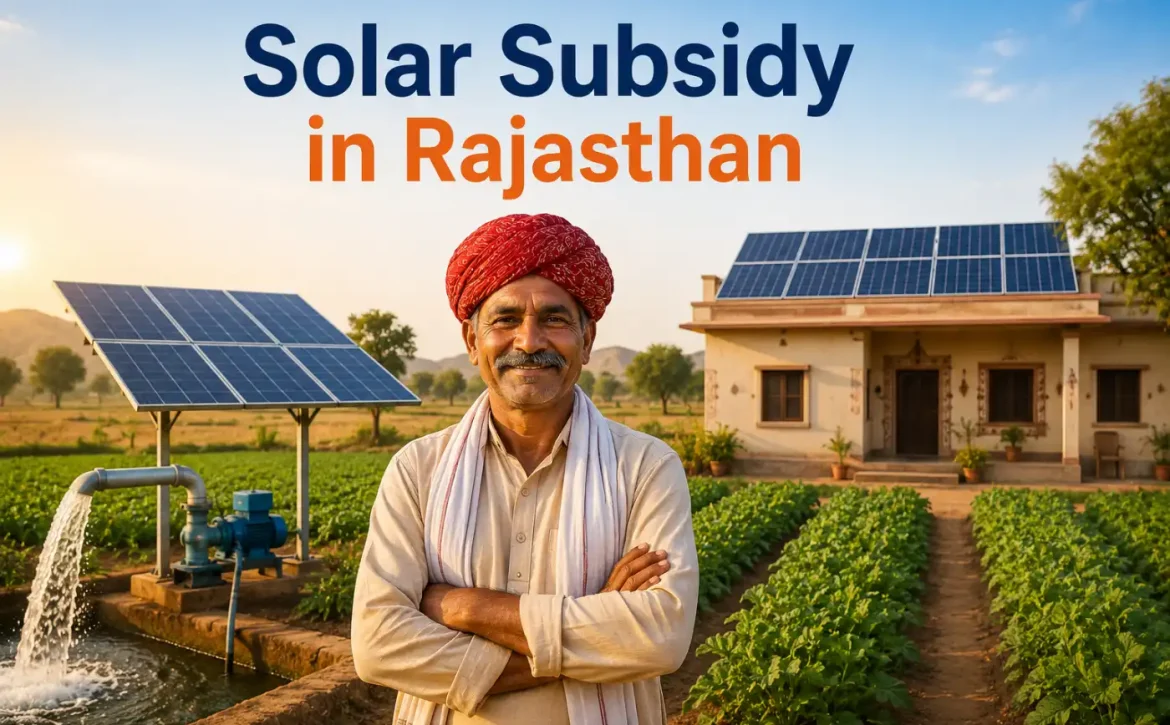
Solar Subsidy in Rajasthan Explained: Eligibility, Benefits & How to Apply (2026)
Rajasthan is often called India’s Solar Capital, and for good reason. With abundant sunshine throughout the year, vast open spaces, and strong government support for renewable energy, the state offers one of the best environments for rooftop solar adoption.
As electricity consumption continues to rise across homes, many homeowners are exploring ways to reduce monthly power bills while investing in a cleaner and more sustainable future. This is where solar subsidy in Rajasthan plays a crucial role.
The Government of India, through the PM Surya Ghar: Muft Bijli Yojana, is encouraging residential consumers to install rooftop solar systems by offering financial assistance that reduces the upfront installation cost.
Whether you’re planning to install a 2kW, 3kW, or 5kW rooftop solar system, understanding the available subsidy, eligibility criteria, and application process can help you make an informed decision.
In this comprehensive guide, we’ll explain everything you need to know about solar panel subsidy in Rajasthan, including subsidy amounts, eligibility, application steps, and how to maximize your savings with rooftop solar.
Why Rajasthan is One of the Best States for Rooftop Solar
Rajasthan receives some of the highest levels of solar radiation in India, making it an ideal location for generating electricity from solar energy.
Several factors contribute to Rajasthan’s growing solar ecosystem:
- More than 300 sunny days every year
- High solar irradiation levels
- Rapid expansion of renewable energy projects
- Growing awareness of rooftop solar
- Increasing electricity demand across residential areas
- Government initiatives supporting clean energy adoption
These advantages allow homeowners to generate more electricity from the same rooftop area compared to many other regions of the country.
As a result, investing in rooftop solar often delivers excellent long-term savings and faster returns on investment.
What is Solar Subsidy in Rajasthan?
Solar subsidy in Rajasthan refers to the financial assistance available for eligible residential consumers installing rooftop solar systems under government-approved schemes.
The primary objective of the subsidy is to:
- Encourage residential rooftop solar adoption
- Reduce electricity bills
- Promote clean energy generation
- Reduce dependence on conventional electricity
- Help India achieve its renewable energy targets
Today, most residential rooftop solar subsidies are offered under the PM Surya Ghar: Muft Bijli Yojana, making solar more affordable for homeowners.
Besides reducing installation costs, rooftop solar also provides long-term savings by generating electricity directly from sunlight.
PM Surya Ghar Muft Bijli Yojana Subsidy in Rajasthan
The PM Surya Ghar: Muft Bijli Yojana is one of India’s largest residential rooftop solar initiatives, launched to encourage millions of households to adopt solar energy.
The scheme provides financial assistance for eligible rooftop solar installations while simplifying the application process through an online portal.
Objectives of the Scheme
- Promote residential rooftop solar
- Reduce household electricity expenses
- Increase renewable energy generation
- Support India’s Net Zero goals
- Encourage decentralized electricity production
Homeowners in Rajasthan can apply for the scheme through the official PM Surya Ghar portal after verifying eligibility and selecting an approved vendor.
Benefits of PM Surya Ghar Muft Bijli Yojana in Rajasthan
Installing rooftop solar under the scheme offers several advantages beyond the subsidy itself.
1) Lower Electricity Bills
One of the biggest advantages of rooftop solar is the significant reduction in monthly electricity expenses.
Depending on system size and energy consumption, many homeowners can substantially reduce their dependence on grid electricity.
2) Reduced Upfront Installation Cost
Government financial assistance lowers the initial investment required for installing a rooftop solar system.
This makes solar more accessible for middle-income households.
3) Faster Return on Investment
Since the installation cost is reduced through subsidies, homeowners can recover their investment sooner through electricity bill savings.
4) Environment-Friendly Energy
Solar energy is clean, renewable, and environmentally sustainable.
By generating electricity from sunlight, homeowners reduce carbon emissions while supporting India’s clean energy mission.
5) Increased Property Value
Homes equipped with rooftop solar systems are increasingly viewed as energy-efficient properties, adding long-term value.
Who is Eligible for Solar Subsidy in Rajasthan?
Residential consumers planning to install rooftop solar systems should generally meet the following eligibility requirements.
Basic Eligibility
✔ Applicant should be an Indian citizen.
✔ The property should have a suitable rooftop for solar installation.
✔ The electricity connection should be in the applicant’s name.
✔ The rooftop solar system should be installed through an approved vendor.
✔ The installation should comply with applicable guidelines under the PM Surya Ghar: Muft Bijli Yojana.
Eligibility criteria may be updated from time to time, so applicants should verify the latest requirements before applying.
Solar Subsidy in Rajasthan for Different System Capacities
The subsidy available generally depends on the installed capacity of the rooftop solar system.
| System Size | Suitable For | Central Subsidy* | Estimated Savings Potential |
|---|---|---|---|
| 1kW | Small homes | Up to ₹30,000 | Lower monthly electricity bills |
| 2kW | 1BHK / Small Family | Up to ₹60,000 | Significant reduction in power bills |
| 3kW | 2BHK Homes | Up to ₹78,000 | Ideal balance of investment and savings |
| 4kW | Large Families | Up to ₹78,000 | Higher solar generation |
| 5kW | 3BHK / Independent Houses | Up to ₹78,000 | Maximum long-term savings |
| Above 5kW | Villas & High Consumption Homes | As per applicable guidelines | Best suited for higher energy needs |
Note: Subsidy amounts are based on the latest PM Surya Ghar: Muft Bijli Yojana guidelines and may change. Applicants should verify the latest information through the official portal before making a purchase decision.
Choosing the Right System Capacity
Many homeowners are unsure about which solar system size best suits their needs.
A general recommendation is:
| Monthly Electricity Bill | Recommended Solar Capacity |
|---|---|
| ₹1,500 – ₹2,500 | 1kW–2kW |
| ₹2,500 – ₹5,000 | 3kW |
| ₹5,000 – ₹8,000 | 5kW |
| ₹8,000+ | 6kW–10kW |
Instead of relying on rough estimates, homeowners can use Servotech’s Solar Calculator to determine the ideal solar system size based on their electricity consumption. This naturally supports your internal link to the Solar Calculator page while helping readers make an informed decision.
How Much Can You Save with Rooftop Solar in Rajasthan?
With abundant sunshine throughout the year, Rajasthan offers excellent conditions for solar power generation.
A properly designed rooftop solar system can help homeowners:
- Generate clean electricity during daylight hours
- Reduce dependence on conventional grid power
- Lower monthly electricity expenses
- Benefit from net metering (where applicable)
- Improve long-term return on investment
The exact savings depend on factors such as system size, electricity consumption, roof orientation, and local sunlight conditions.
Solar Panel Subsidy in Rajasthan vs Solar Pump Subsidy in Rajasthan
Many people confuse solar panel subsidy in Rajasthan with solar pump subsidy in Rajasthan. Although both initiatives promote renewable energy, they are designed for different users and applications.
The PM Surya Ghar Muft Bijli Yojana focuses on residential rooftop solar systems, while solar pump subsidy schemes are intended to help farmers reduce irrigation costs by using solar-powered water pumps.
| Rooftop Solar Subsidy | Solar Pump Subsidy |
|---|---|
| Designed for residential homes | Designed for farmers and agricultural use |
| Supports rooftop solar installations | Supports solar-powered irrigation pumps |
| Helps reduce household electricity bills | Reduces diesel and electricity costs for irrigation |
| Available under PM Surya Ghar Muft Bijli Yojana | Available under state and central agriculture schemes |
| Suitable for urban and rural households | Suitable for agricultural land and farms |
Understanding the difference helps applicants choose the right scheme based on their energy requirements.
How to Apply for Solar Subsidy in Rajasthan
Applying for the PM Surya Ghar Muft Bijli Yojana Subsidy in Rajasthan is straightforward if you follow the prescribed process.
Step 1: Register on the Official Portal
Visit the official PM Surya Ghar portal and register using your mobile number and electricity consumer details.
Step 2: Select Your State and Electricity Distribution Company (DISCOM)
Choose Rajasthan and your respective electricity distribution company while submitting the application.
Step 3: Apply for Rooftop Solar Installation
Fill in the required details, including:
- Consumer number
- Electricity connection details
- Installation address
- Proposed solar system capacity
Step 4: Technical Approval
Your application is reviewed by the concerned DISCOM, and technical feasibility is verified.
Step 5: Installation by an Approved Vendor
Once approved, install the rooftop solar system through an approved vendor following applicable quality standards.
Step 6: Inspection and Net Meter Installation
After installation, the system is inspected and a net meter is installed, where applicable, to facilitate energy export and billing adjustments.
Step 7: Receive Subsidy
Upon successful inspection and commissioning, the subsidy is processed and credited according to the applicable government guidelines.
Documents Required for Solar Subsidy in Rajasthan
Before applying, keep the following documents ready:
- Aadhaar Card
- PAN Card (if applicable)
- Electricity bill
- Address proof
- Identity proof
- Bank account details
- Passport-size photograph
- Rooftop ownership proof (if required)
Having these documents ready can help streamline the application process.
Understanding Net Metering in Rajasthan
Net metering is an important aspect of rooftop solar systems.
It allows homeowners to export excess electricity generated by their rooftop solar system to the electricity grid and receive credits, helping reduce their overall electricity expenses.
Benefits of net metering include:
- Better utilization of generated solar power
- Lower electricity bills
- Improved return on investment
- Efficient energy management
Before installation, homeowners should verify the latest net metering regulations applicable in Rajasthan through their local DISCOM.
Why Rajasthan Leads India’s Solar Revolution
Rajasthan is one of the most favorable states in India for solar energy generation due to its geographical and climatic conditions.
Several factors contribute to its leadership in renewable energy:
1. Excellent Solar Irradiation
The state receives abundant sunlight throughout the year, enabling higher solar energy generation.
2. Large Rooftop Potential
Residential, commercial, and industrial buildings across Rajasthan have significant rooftop space suitable for solar installations.
3. Government Support
Schemes such as the PM Surya Ghar Muft Bijli Yojana are encouraging homeowners to invest in rooftop solar systems.
4. Growing Renewable Energy Infrastructure
Rajasthan continues to expand its renewable energy capacity, making solar power increasingly accessible to consumers.
5. Rising Electricity Demand
As electricity consumption grows, rooftop solar provides an effective solution for reducing long-term energy costs.
Choosing the Right Rooftop Solar Partner
Installing a rooftop solar system is a long-term investment, making it essential to choose a reliable technology provider and installation partner.
When evaluating a solar company, consider:
- Product quality
- Installation expertise
- Warranty coverage
- Service network
- Industry experience
- After-sales support
- Compliance with applicable standards
Servotech Renewable Power System is an Indian renewable energy company offering solar solutions, EV chargers, and lithium-ion battery systems. The company provides rooftop solar solutions for residential, commercial, and industrial consumers, helping homeowners adopt clean energy through advanced solar technologies.
Related Factors to Consider Before Installing Rooftop Solar
Before investing in a rooftop solar system, homeowners should also evaluate:
- Monthly electricity consumption
- Roof orientation and available space
- Future electricity requirements
- Solar inverter selection
- System capacity requirements
- Applicable subsidy benefits
- Net metering availability
Understanding these factors helps ensure the selected system delivers optimal performance and long-term savings.
Conclusion
The solar subsidy in Rajasthan is making rooftop solar more accessible and affordable for homeowners. Through the PM Surya Ghar Muft Bijli Yojana, eligible residential consumers can reduce installation costs while enjoying long-term savings on electricity bills.
With excellent solar potential, supportive government initiatives, and increasing awareness about renewable energy, Rajasthan is well-positioned to become one of India’s leading states for residential rooftop solar adoption.
If you’re planning to install a rooftop solar system, now is an excellent time to explore available subsidy benefits and begin your journey toward cleaner, smarter, and more sustainable energy.
Frequently Asked Questions (FAQs)
The solar subsidy in Rajasthan is primarily available under the PM Surya Ghar: Muft Bijli Yojana, which provides financial assistance to eligible residential consumers for rooftop solar installations.
Residential homeowners with a valid electricity connection and suitable rooftop space can generally apply, subject to the latest government guidelines.
The subsidy amount depends on the installed solar capacity and the prevailing guidelines under the PM Surya Ghar: Muft Bijli Yojana.
Rooftop solar subsidy supports residential solar installations, while solar pump subsidy is intended for farmers installing solar-powered irrigation pumps.
Yes. Eligible homeowners can apply online through the official PM Surya Ghar portal.
Yes, net metering is available subject to the applicable regulations of the local electricity distribution company (DISCOM).
Yes, eligible homeowners can install a 5kW rooftop solar system and avail subsidy as per the latest scheme guidelines.
Typically, applicants need identity proof, address proof, electricity bill, bank details, and other documents specified during the application process.
The processing timeline depends on application verification, installation, inspection, and the applicable government procedures.
The ideal system size depends on electricity consumption, roof space, and future energy needs. Many homeowners use a Solar Calculator to estimate the appropriate capacity before installation.