
• About Us
    • Awards & Felicitations
    • Our Company
    • Our Leadership
    • Our Projects
    • Testaments
  • Products
    • EV Charger
      • Spark Series (AC Charger)
      • Squad Series (DC Charger)
    • Solar Products
      • Solar Inverter
      • ServPort
      • Solar Management Unit
      • Solar Batteries
      • Solar Lithium Battery
      • Solar Panels
    • Power & Backup
      • Battery
      • Servo Stabilizer
      • UPS
    • Electric 3W Solutions
      • Lithium Battery
      • Electric 3W Charger
    • LEDs
      • Domestic LED
      • Commercial LED
    • Others
      • Oxygen Concentrator
      • UVC
  • Solutions
    • Solar EPC
    • Solar Calculator
    • EV Calculator
  • Media
    • Blogs
    • Events
    • Media Coverages
    • Media Kit
    • Press Releases
  • Investors
  • Contact

Type To Search

  • About Us
    • Awards & Felicitations
    • Our Company
    • Our Leadership
    • Our Projects
    • Testaments
  • Products
    • EV Charger
      • Spark Series (AC Charger)
      • Squad Series (DC Charger)
    • Solar Products
      • Solar Inverter
      • ServPort
      • Solar Management Unit
      • Solar Batteries
      • Solar Lithium Battery
      • Solar Panels
    • Power & Backup
      • Battery
      • Servo Stabilizer
      • UPS
    • Electric 3W Solutions
      • Lithium Battery
      • Electric 3W Charger
    • LEDs
      • Domestic LED
      • Commercial LED
    • Others
      • Oxygen Concentrator
      • UVC
  • Solutions
    • Solar EPC
    • Solar Calculator
    • EV Calculator
  • Media
    • Blogs
    • Events
    • Media Coverages
    • Media Kit
    • Press Releases
  • Investors
  • Contact

Type To Search

  • About Us
    • Awards & Felicitations
    • Our Company
    • Our Leadership
    • Our Projects
    • Testaments
  • Products
    • EV Charger
      • Spark Series (AC Charger)
      • Squad Series (DC Charger)
    • Solar Products
      • Solar Inverter
      • ServPort
      • Solar Management Unit
      • Solar Batteries
      • Solar Lithium Battery
      • Solar Panels
    • Power & Backup
      • Battery
      • Servo Stabilizer
      • UPS
    • Electric 3W Solutions
      • Lithium Battery
      • Electric 3W Charger
    • LEDs
      • Domestic LED
      • Commercial LED
    • Others
      • Oxygen Concentrator
      • UVC
  • Solutions
    • Solar EPC
    • Solar Calculator
    • EV Calculator
  • Media
    • Blogs
    • Events
    • Media Coverages
    • Media Kit
    • Press Releases
  • Investors
  • Contact
  • About Us
    • Awards & Felicitations
    • Our Company
    • Our Leadership
    • Our Projects
    • Testaments
  • Products
    • EV Charger
      • Spark Series (AC Charger)
      • Squad Series (DC Charger)
    • Solar Products
      • Solar Inverter
      • ServPort
      • Solar Management Unit
      • Solar Batteries
      • Solar Lithium Battery
      • Solar Panels
    • Power & Backup
      • Battery
      • Servo Stabilizer
      • UPS
    • Electric 3W Solutions
      • Lithium Battery
      • Electric 3W Charger
    • LEDs
      • Domestic LED
      • Commercial LED
    • Others
      • Oxygen Concentrator
      • UVC
  • Solutions
    • Solar EPC
    • Solar Calculator
    • EV Calculator
  • Media
    • Blogs
    • Events
    • Media Coverages
    • Media Kit
    • Press Releases
  • Investors
  • Contact
Read More
EV Charger
July 16, 2026by servotech team0 Comments
32 Likes

Top Leading EV Charger Companies in India

India is witnessing one of the fastest transitions toward electric mobility in the world. From electric two-wheelers and passenger cars to buses, commercial fleets, and logistics vehicles, electric vehicles (EVs) are becoming an integral part of the country’s transportation ecosystem.

However, EV adoption is only as successful as the charging infrastructure supporting it. A dependable network of charging stations, backed by reliable EV charger companies in India, is essential to eliminate range anxiety and make EV ownership more convenient.

Today, several EV charger manufacturers are developing advanced AC and DC charging solutions for homes, businesses, highways, public charging stations, and fleet operators. These companies are not only manufacturing chargers but also building smart charging ecosystems with connected software, cloud monitoring, and energy management capabilities.

India’s EV Charging Market Is Expanding Rapidly

India’s EV market has grown significantly over the past few years, driven by supportive government policies, increasing consumer awareness, and investments in charging infrastructure.

Initiatives such as the PM E-Drive Scheme, state EV policies, and the expansion of public charging networks have accelerated demand for reliable electric vehicle chargers.

At the same time, residential charging has become increasingly important as more EV owners prefer charging their vehicles at home using dedicated AC EV chargers.

This growing demand has encouraged several Indian and global companies to invest in charger manufacturing, smart charging software, and fast-charging technologies.

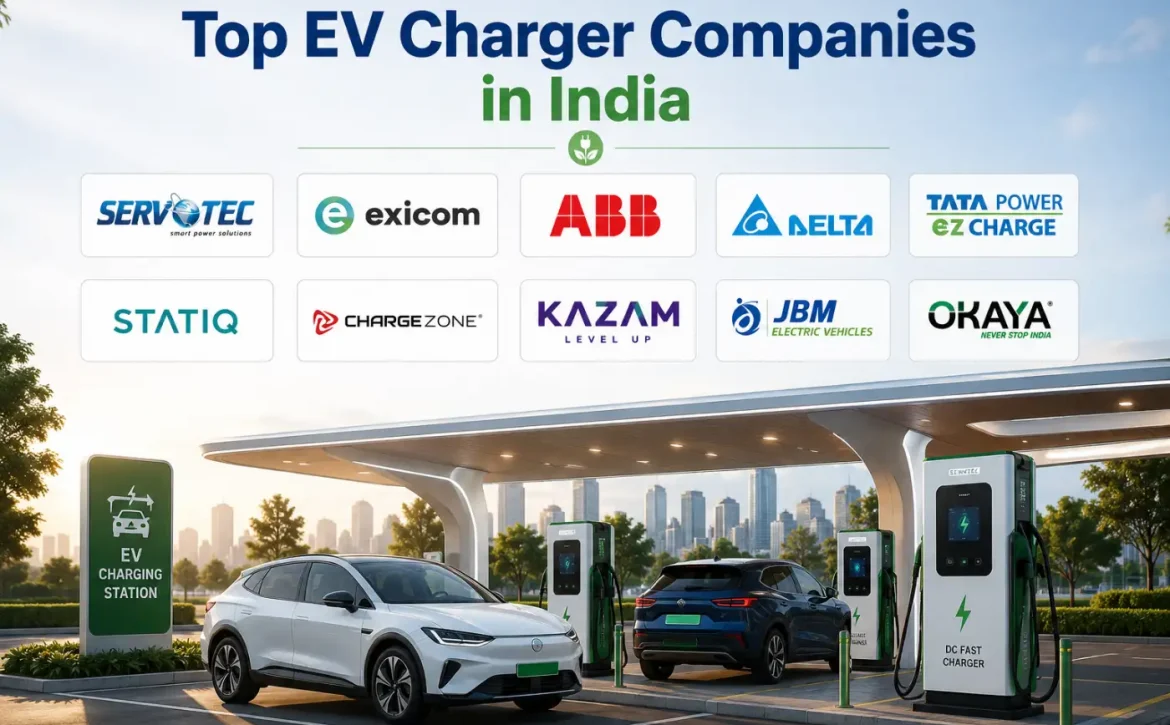
Top EV Charger Companies in India

In this article, we explore the top EV charger companies in India, the technologies driving the industry, and the factors you should consider before choosing an EV charging solution.

1. Servotech Renewable Power System

Among the leading EV charger companies in India, Servotech Renewable Power System has established a strong presence through its comprehensive portfolio of smart EV charging solutions.

Servotech designs and manufactures charging solutions for residential, commercial, fleet, and public charging applications.

Its product range includes:

  • AC EV Chargers
  • DC Fast Chargers
  • Portable EV Chargers
  • Smart Charging Solutions
  • Commercial Charging Systems
  • Fleet Charging Infrastructure

Beyond charging infrastructure, Servotech Renewable Power System is an Indian renewable energy company offering solar solutions, EV chargers, and lithium-ion battery systems.

By integrating renewable energy with electric mobility, the company contributes to the development of a cleaner and more sustainable transportation ecosystem.

2. Exicom

Exicom is one of India’s well-established EV charger manufacturers, offering a wide range of charging hardware and software solutions.

The company serves multiple market segments, including:

  • Public charging
  • Fleet charging
  • Commercial charging
  • High-power DC charging

Its emphasis on digital energy management and scalable charging infrastructure has made it a notable player in India’s EV ecosystem.=

3. ABB India

ABB is a global technology company known for its industrial automation and EV charging solutions.

Its charging portfolio includes high-performance DC chargers designed for:

  • Highways
  • Commercial hubs
  • Public charging stations
  • Fleet depots

ABB’s focus on fast charging technology supports long-distance EV travel and commercial vehicle operations.

4. Delta Electronics India

Delta Electronics has extensive expertise in power electronics and energy management.

The company offers both AC EV chargers and DC fast chargers suitable for residential, commercial, and industrial applications.

Its solutions are designed to deliver efficient charging while supporting advanced connectivity and monitoring features.

5. Tata Power EZ Charge

Tata Power has developed one of India’s largest EV charging networks through its EZ Charge initiative.

In addition to expanding public charging infrastructure, the company offers charging solutions for homes, workplaces, and commercial establishments.

Its integrated digital ecosystem enables users to locate charging stations, monitor charging sessions, and make digital payments.

6. Statiq

Statiq has emerged as one of India’s fastest-growing EV charging companies by focusing on accessible and user-friendly charging infrastructure.

Its network continues to expand across:

  • Shopping malls
  • Hotels
  • Corporate offices
  • Residential communities
  • Highway corridors

The company’s mobile-first approach simplifies charger discovery and payment for EV users.

7. ChargeZone

ChargeZone specializes in building high-speed charging infrastructure for passenger vehicles and commercial fleets.

Its charging stations are strategically located along highways and urban centers to support long-distance EV travel.

The company continues to expand its fast-charging network across multiple Indian states.

8. Kazam

Kazam has quickly become one of India’s promising EV charging technology companies by combining smart charging hardware with cloud-based software.

The company focuses on creating an intelligent charging ecosystem that enables charger owners, businesses, and fleet operators to remotely manage their charging infrastructure.

Key Highlights

  • Smart AC EV Chargers
  • Commercial charging solutions
  • Fleet charging management
  • Cloud-based charger monitoring
  • Mobile application integration

Its emphasis on software-driven charging experiences makes Kazam a noteworthy player among modern EV charger companies.

9. JBM Electric Vehicles

JBM is well known for its electric buses and integrated public transportation ecosystem.

To complement its electric mobility solutions, the company also manufactures EV charging infrastructure suitable for commercial fleets and public transport applications.

Product Focus

  • Bus charging infrastructure
  • Fleet charging solutions
  • High-capacity DC charging
  • Commercial charging systems

10. Okaya EV

Okaya has expanded beyond battery manufacturing into the EV charging ecosystem.

Today, the company offers charging solutions for residential and commercial applications while leveraging its expertise in energy storage technologies.

Key Offerings

  • AC EV Charger
  • Home charging solutions
  • Commercial charging
  • Battery technology integration

Future of EV Charging Infrastructure in India

India’s EV charging industry is expected to evolve rapidly over the next few years.

Several trends are likely to shape its future:

1) Ultra-Fast Charging

The adoption of high-power DC chargers will continue to increase, reducing charging time for passenger and commercial EVs.

2) Battery Energy Storage Systems (BESS)

Integrating EV charging stations with Battery Energy Storage Systems will help reduce peak load on the grid and improve charging efficiency.

3) Renewable Energy Integration

Solar-powered EV charging stations are gaining popularity as businesses seek sustainable charging solutions.

The combination of rooftop solar, battery storage, and EV charging is expected to play a significant role in India’s clean energy transition.

4) AI-Powered Charging Networks

Artificial Intelligence is enabling:

  • Predictive maintenance
  • Energy optimization
  • Dynamic pricing
  • Smart route planning
  • Real-time charger availability

These innovations will make charging networks more efficient and user-friendly.


Conclusion

India’s electric mobility revolution is creating unprecedented opportunities for innovation in EV charging infrastructure. As electric vehicle adoption continues to grow, the role of reliable EV charger companies in India becomes increasingly important in ensuring seamless, safe, and accessible charging experiences.

Leading EV charger manufacturers are no longer focused solely on hardware. They are building integrated ecosystems that combine smart software, cloud connectivity, energy management, and future-ready technologies to support homes, businesses, fleets, and public charging networks.

As government initiatives, technological innovation, and consumer adoption continue to accelerate, the future of India’s EV charging ecosystem looks stronger than ever. Choosing the right EV charger company today is not just an investment in charging infrastructure—it’s an investment in the future of sustainable transportation.

Frequently Asked Questions (FAQs)

Which are the top EV charger companies in India?

Some of the leading EV charger companies in India include Servotech Renewable Power System, Exicom, ABB India, Delta Electronics, Tata Power EZ Charge, ChargeZone, Statiq, Kazam, JBM Electric Vehicles, and Okaya EV.

What should I look for in an EV charger company?

Look for product quality, BIS certifications, OCPP compatibility, charging standards, after-sales support, warranty, installation services, and smart charging capabilities.

What is the difference between an AC EV charger and a DC charger?

An AC EV charger is generally used for residential and workplace charging, while a DC charger delivers much faster charging and is commonly installed at public charging stations and highways.

Which EV charger is best for home charging?

Most residential users prefer AC EV chargers because they are cost-effective, easy to install, and suitable for overnight charging.

What is OCPP in EV charging?

OCPP (Open Charge Point Protocol) is a communication standard that enables EV chargers to connect with centralized charging management systems for remote monitoring and operation.

Are DC fast chargers safe?

Yes. Certified DC fast chargers include multiple safety features such as over-voltage protection, temperature monitoring, and intelligent power management.

Can EV chargers be integrated with solar energy?

Yes. Modern EV charging stations can be integrated with rooftop solar systems and Battery Energy Storage Systems (BESS) to improve sustainability and reduce electricity costs.

Why are smart EV charging solutions important?

Smart charging solutions offer features like remote monitoring, mobile app control, load balancing, digital payments, and energy optimization, enhancing both convenience and efficiency.
Read More
EV Charger
August 30, 2025by servotech team0 Comments
491 Likes

Public EV Charging in India: Are Fast Chargers the New Norm?

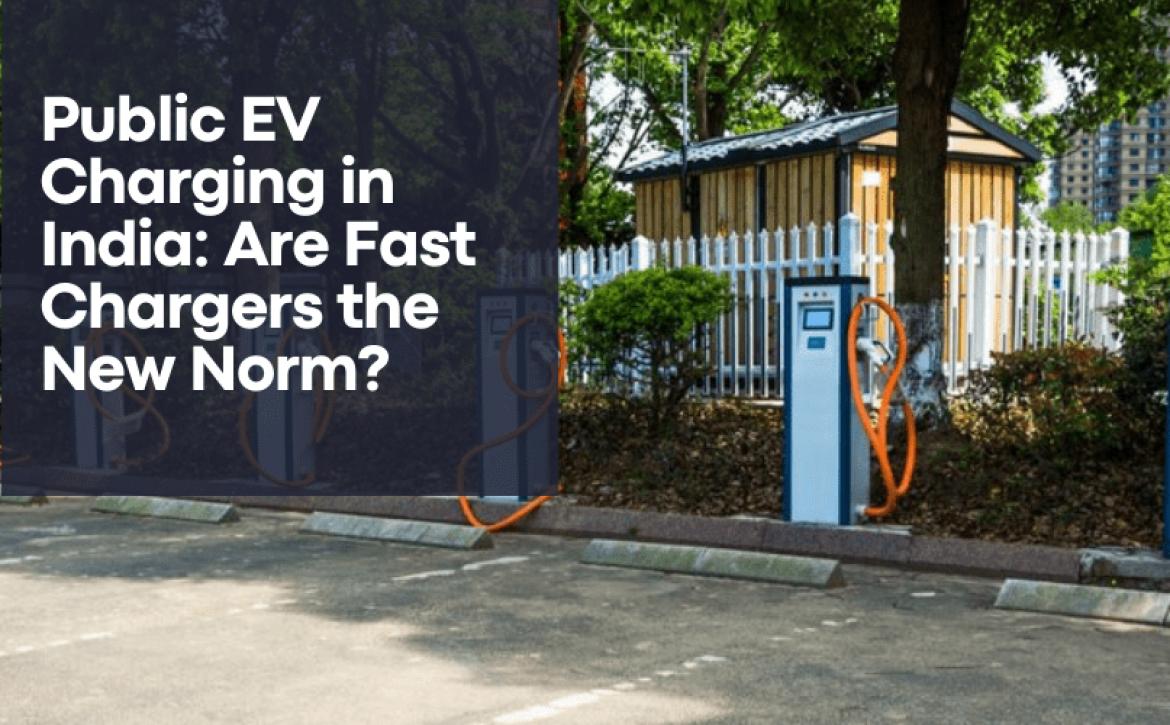
India’s public EV charging landscape is changing at freeway speed. In 2025, policy nudges, highway electrification, and oil-marketing company (OMC) rollouts are pushing DC fast charging from “nice to have” to “expected.” Yet, AC charging still anchors workplaces, homes, and destination sites. So, is fast charging the new norm? The short answer is, it’s quickly becoming the norm for public ev charging, while AC remains foundational for private and long-dwell use cases.

What’s Driving India’s Fast-Charging Surge?

The Indian EV charging ecosystem is undergoing rapid transformation, fueled by strong policy support and strategic investments. The central government has earmarked $230 million to accelerate the rollout of fast-charging stations, providing a crucial push to both automakers and charge-point operators. This wave of incentives has created fertile ground for network expansion, especially as the focus shifts from small-scale pilots to nationwide infrastructure capable of supporting mass adoption.

At the same time, network effects are kicking in as state-owned oil marketing companies (IOCL, BPCL, HPCL) and leading auto OEMs collaborate to build one of the country’s largest public charging networks. By strategically deploying rapid chargers at existing fuel stations and along highways, they’re creating convenient touchpoints for drivers. Meanwhile, the rise in EV adoption beyond two-wheelers, particularly four-wheelers and commercial fleets, has intensified the need for faster charging solutions. Fleet uptime, intercity travel, and ride-hailing all demand higher power levels, typically 60–120 kW or more, making DC fast-charging sites the natural choice for public use.

The Public Charging Base in 2025: Diving into Numbers

As of April 2025, India stands at over 17,800 public ev charging stations, according to data from the Bureau of Energy Efficiency (BEE). Growth is particularly strong along national highways and in leading EV states, where demand for reliable, high-speed charging is accelerating.
Automakers are playing a pivotal role in this expansion. Tata Motors has announced plans to set up 30,000 public charging points and 500 large-scale “mega-charger” hubs by 2027. Meanwhile, Maruti Suzuki and Hyundai are also ramping up investments in public fast-charging infrastructure through strategic partnerships, highlighting the industry’s clear shift toward higher-power, future-ready networks.

What Makes Fast Charging Perfect for Public Use

  • Highways & transit hubs: Travelers want <60-minute top-ups; DC wins on dwell-time economics.
  • Urban forecourts & malls: Turnover matters. Higher kW squeezes more sessions per day, improving site ROI.
  • Fleets & logistics: Uptime is revenue. DC and smart scheduling keep vehicles in service longer.

On the other hand, AC charging continues to dominate in residential complexes, office spaces, and other long-dwell locations where vehicles remain parked for extended hours. In such cases, the lower upfront cost of AC hardware makes it a more practical and TCO-friendly choice. What’s emerging, therefore, is a hybrid charging landscape, fast DC chargers driving public and high-throughput use, while AC solutions remain the preferred option for private, overnight, and cost-sensitive charging needs.

Why Site Hosts Are Shifting Towards More DC Chargers

  • Higher utilization potential: Faster sessions enable more vehicles served per day, especially at high-traffic forecourts.
  • Bundled services & retail uplift: Co-located convenience retail, F&B, or fleet yards benefit from 20–40 minute dwell times.
  • Policy-linked capex support: Incentives for fast chargers improve the payback math in early-stage markets.

That said, many operators still deploy mixed sites: a few DC guns for throughput plus multiple AC points for price-sensitive or long-stay users, spreading capex and capturing broader demand.

Tech Trends Making Fast Charging the “New Norm”

  1. Higher-power modules (60–240 kW and above) with smart load sharing to right-size power per vehicle.
  2. OCPP-based interoperability for cross-network roaming and centralized operations.
  3. Solar and BESS coupling to shave demand peaks, cut energy costs, and keep fast chargers resilient during grid events, an approach proven in Servotech’s solar-powered carport pilot.
  4. Predictive maintenance & analytics to boost uptime and reduce truck rolls across distributed portfolios.

Highways, Tier-2/3 Cities, and the “Every 50–70 km” Rule of Thumb

As national corridors densify, DC hubs spaced every 50–70 km are becoming common practice among operators, with OMC forecourts as anchor locations. While metro clusters still hold the lion’s share, Tier-2/3 cities are now in scope as intercity travel and regional commerce electrify.

Two-Wheeler & Three-Wheeler Reality Check

India’s EV base is still dominated by two- and three-wheelers, many of which rely on home/work AC charging or swap ecosystems. Public DC is less critical for them day-to-day, but mixed-use forecourts and urban hubs are adding lower-power DC and fast AC to support quick top-ups for e-commerce and delivery fleets, further normalizing “faster than AC wallbox” public experiences.

Will Fast Chargers Fully Replace AC Public Chargers?

Fast chargers won’t completely replace AC chargers because the use case defines the fit. In 2025, DC dominates highways, fleet yards, forecourts, and premium hubs where speed and uptime are critical, while AC remains the smarter choice for workplaces, apartments, hotels, and other long-dwell sites where vehicles sit for hours and lower hardware costs improve total cost of ownership. The most resilient public charging model is therefore complementary: high-power DC for throughput, paired with AC for widespread coverage and affordability.

How Businesses Can Future-Proof Their Rollouts

  1. Plan hybrid sites (DC and AC) to match diverse dwell times.
  2. Design for solar and storage where feasible to hedge tariffs and enhance reliability.
  3. Standardize on CCS2 for four-wheelers while maintaining backward compatibility for legacy fleets.
  4. Prioritize uptime with OCPP platforms, proactive maintenance, and strong SLAs.
  5. Leverage incentives and OMC partnerships to accelerate scale.

Where Servotech Fits in Your 2025 Plan

If you’re planning public hubs, highway forecourts, or mixed-use depots, Servotech offers:

  • Proven DC deployments (60/120 kW), including large OMC rollouts.
  • Set up Delhi’s first grid-connected solar-powered EV charging carport.
  • Local co-development of charger components with Watt & Well (France) to strengthen Make-in-India supply chains.
  • Interoperability R&D to bridge standards during India’s transition to faster protocols.

Conclusion

In 2025, fast charging is becoming the new norm for public EV infrastructure in India, powered by incentives, OMC forecourts, and OEM participation. AC remains essential for homes, workplaces, and long-dwell destinations, but when drivers pull into a public site, they increasingly expect DC speeds.
For charge-point investors, retailers, fleet operators, and municipalities, the winning strategy is hybrid: deploy DC where time is money and AC where cost and dwell align, and integrate solar and storage to future-proof operations. With a growing portfolio of DC fast chargers, solar-integrated pilots, and Make-in-India engineering, Servotech is well placed to help operators build that future faster.

Read More
EV Charger
October 18, 2024by servotech team0 Comments
3.25K Likes

Dalal Street Investment Journal Interview with Raman Bhatia, Founder and Managing Director of Servotech Power Systems Limited

Servotech has begun indigenous manufacturing of EV charger components, aligning with the Make in India initiative, further enhancing our role in India’s clean energy and sustainable infrastructure sectors, articulates Raman Bhatia, Founder and Managing Director of Servotech Power Systems Limited.

Q1: What were the key factors behind the company’s strong 41 percent year-on-year revenue growth in Q1FY25? With net profit growth at 9 percent, what strategies can be implemented to further enhance profitability?

The strong revenue growth was an amalgamation of many factors. However, key factors among them were the growing demand for EV chargers and renewable energy solutions, supported by government initiatives like the FAME scheme, PM Surya ghar muft bijli yojana, etc. The company’s strategic focus on expanding its presence across new markets, coupled with partnerships for large-scale EV infrastructure projects, also contributed significantly to revenue growth.

Additionally, continuous innovation and the introduction of high-tech products in the EV and solar segments helped capture a larger market share. Despite this strong revenue growth, there is room for improving profitability. Strategies to enhance margins include cost optimization through streamlining operations and improving supply chain efficiency, diversification into high-margin product lines, and expanding service offerings such as maintenance or subscription-based models. Furthermore, investing in automation and digital tools can help improve operational efficiency, reduce costs, and enhance overall profitability.

Q2: Could you provide insights into the company’s product portfolio and the contribution of each segment?

The company’s product portfolio majorly includes technologically advanced EV chargers which include a high range of both AC and DC EV Chargers and solar solutions like solar panels, solar inverters, and solar batteries. The company’s major source of revenue comes through EV chargers and solar solutions which are in high demand due to the shift toward sustainable energy.

We want to further capitalize on the growing market by expanding its offerings and scaling its operations in both the EV charging and solar energy sectors, solidifying its position as a key player in the green energy industry.

Q3: What is the company’s current order book, and how is it distributed among clients, particularly Oil Marketing Companies (OMCs)?

Servotech Power Systems Ltd. has a strong and diversified order book, demonstrating high demand for EV charging and solar solutions, especially from Oil Marketing Companies (OMCs). In 2024, the company secured an order for approximately 5,100 units of DC Fast EV chargers from BPCL, IOCL, HPCL, and other EV charger OEMs. Additionally, Servotech has an order for 52 EV charging stations from nodal agencies and DISCOMs.

The company also continues to work on solar projects, including a 1.2 MW Solar Energy Storage and Grid-connected System order from UPNEDA, expanding its presence in the renewable energy sector by promoting solar power solutions nationwide.

Q4: Is the company planning any capital expenditures? Additionally, what are its current top three strategic priorities?

Yes, the company is planning capital expenditures to support its growth in both EV charging infrastructure and renewable energy solutions. Investments will focus on expanding manufacturing capabilities, enhancing R&D for product innovation, and scaling the deployment of solar and EV charging systems.

The company’s top three strategic priorities include:

– Expanding Manufacturing Facility to meet the growing demand for EV chargers and solar energy solutions efficiently handling larger volumes of orders, reducing lead times, and maintaining high-quality standards across its product portfolio.

– R&D and Product Development through investing heavily in research and development to introduce new technologies, such as faster-charging solutions, smart energy management systems, and advanced solar inverters, catering to both domestic and international markets.

– Investment and In-house Development of EV Charger Components to reduce reliance on imports but also enhance the company’s control over product quality, supply chain resilience, and cost efficiencies.

Q5: What is your outlook for India’s electric equipment industry? Also, how does the company plan to leverage opportunities from government initiatives such as Make in India, the FAME Scheme, and the PM Suryodaya Yojana?

The future of India’s electrical equipment industry looks highly promising. According to reports, the market is projected to grow at a CAGR of 11.68 percent from 2023 to 2027, reaching a value of USD 52.98 billion, with the industry expected to double in size by 2030, achieving a market valuation of USD 130 billion.

Key drivers of this growth include the increasing number of residential and commercial building projects, rising power generation from renewable energy sources, and growing investments in the power sector. Servotech is well-positioned to capitalize on these opportunities, leveraging government initiatives like the PM Suryodaya Yojana. As an authorized vendor, the company has partnered with 62 DISCOMs to deliver cutting-edge solar solutions.

Additionally, Servotech has begun indigenous manufacturing of EV charger components, aligning with the Make in India initiative, further enhancing its role in India’s clean energy and sustainable infrastructure sectors.

Originally Published on: https://www.dsij.in/dsijarticledetail/interview-with-raman-bhatia-founder-and-managing-director-of-servotech-power-systems-limited-id004-43026

Read More
EV Charger
August 17, 2023by servotech team0 Comments
697 Likes

India’s Fastest DC Charger – Servotech SQUAD 360kW DC EV Charger

The electric vehicle (EV) revolution is sweeping the globe as we collectively seek sustainable and eco-friendly transportation solutions. As part of this transformative movement, advanced technologies have emerged to cater to the growing needs of EV owners. One such breakthrough innovation is the Servotech 360kW DC EV charger, an ultra-fast charging station designed to revolutionize the EV charging experience. In this blog, we explore the features, charging capacity, installation process, cost implications, compatibility for all-electric vehicles, and the overall significance of the 360kW DC EV charger.

Features of Servotech 360 kW DC EV Charger

Servotech 360 kW DC EV Charger Features
  • Ultra-fast charging: Capable of delivering a massive 360 kilowatts of direct current (DC) power.
  • Reduced charging time: Significantly cuts down the time required to charge an electric vehicle compared to traditional chargers.
  • User-friendly interface: User-friendly design with real-time charging information, payment options, and remote monitoring capabilities.
  • Compatibility: Designed to be compatible with all types of electric vehicle models equipped with fast-charging capabilities and suitable charging ports.
  • Efficient power management: Utilizes advanced algorithms to optimize power distribution and maintain stability in the electrical grid.
  • Liquid-cooled cables: Equipped with liquid-cooled cables to prevent overheating during high-power charging sessions.
  • Robust infrastructure: Requires a sturdy electrical infrastructure to handle the high-power demands.
  • Long-term investment: Higher initial installation costs but contributes to positive brand image and attracts more EV customers for businesses.
  • Fosters EV adoption: Addresses range anxiety and encourage more people to consider EVs as a practical transportation option.
  • Current flow: Comes with two charging guns and a smart current flow system. Both guns supply current at the frequency of 180kW each during simultaneous use. On the other hand, if only one gun is connected to a 200 KVA battery pack and the second is free to be connected then the connected gun intelligently draws the rest of the current to charge the battery even faster.          

Charging Time or Capacity

The Servotech 360kW DC EV charger’s greatest strength lies in its charging speed. Depending on the electric vehicle’s battery capacity and compatible charging capabilities, this DC charger can add several hundred kilometers of range in just a few minutes. For instance, an EV can be charged at 0 to 80% capacity within 20-30 minutes, significantly reducing the time spent at charging stations during long trips.

Such rapid charging times effectively address the range anxiety commonly associated with EVs and foster greater confidence among EV owners in their daily commutes and extended journeys.

Read also: The Ultimate Guide to EV Charging

Price of Servotech 360kW EV Charger

While the 360kW DC EV charger brings tremendous benefits, its high-power capabilities also result in higher installation and operational costs compared to standard chargers. The initial investment of around 50-60 lakhs includes equipment costs, site preparation, and electrical infrastructure upgrades to install the Servotech 360kW EV Charger.

However, the cost implications should be viewed from a long-term perspective. For businesses and commercial enterprises, offering ultra-fast charging stations can attract more EV customers and contribute to a positive brand image associated with sustainability and environmental consciousness.

Steps to Install Servotech 360kW DC EV Charger

Install Servotech 360kW DC EV Charger

The installation of a 360kW DC EV charger demands careful consideration of several factors. Firstly, it requires a robust electrical infrastructure capable of handling high-power demands. Collaborating with local utility companies and ensuring sufficient grid capacity is essential to prevent overloading and optimize charging efficiency.

To install a 360kW DC EV charger, follow these steps:

  • Site Assessment: Determine a suitable location with proper power capacity and access for vehicles.
  • Permits: Obtain necessary permits from local authorities and utility companies.
  • Electrical Upgrades: If needed, upgrade electrical infrastructure to handle the charger’s power demand.
  • Foundation: Prepare a stable foundation for mounting the charger unit. Ensure the foundation can handle the charger’s weight and any potential load, providing stability and durability throughout its operational life.
  • Charger Installation: Mount and connect the charger following manufacturer guidelines.
  • Testing: Perform thorough testing of the charger’s functionality and safety features.
  • Final Inspections: Get necessary approvals from relevant authorities.
  • Signage and Markings: Install clear instructions and markings for users.

Compatibility for All Electric Vehicles

Servotech 360kW EV Charger is compatible with all types of electric vehicle models equipped with fast-charging capabilities and suitable charging ports which provides the full advantage of ultra-fast charging speed for your EV. Thankfully, many modern EV models come with fast-charging support, allowing them to harness the full potential of the high-power charger.

As EV manufacturers continue to innovate and enhance charging capabilities, the compatibility with high-power chargers like the 360kW DC EV charger is expected to become increasingly widespread, further solidifying the position of EVs as a practical and sustainable transportation option.

Conclusion

The 360kW DC EV charger is a game-changing technology that propels the electric vehicle revolution to new heights. With its ultra-fast charging capabilities, user-friendly features, and potential to significantly reduce charging times, it addresses one of the most significant barriers to widespread EV adoption – range anxiety. As more of these high-power chargers are deployed across the world, EV owners can embrace the convenience and sustainability of electric mobility with confidence.
Moreover, the Servotech 360kW DC EV charger encourages businesses and governments to invest in expanding the EV charging infrastructure, fostering a greener and cleaner transportation landscape. As the EV industry continues to evolve, this high-power charging station marks a crucial step towards a more sustainable future, where electric vehicles dominate the roads and contribute to a healthier planet for generations to come.

Read also: How to Open an Electric Car Charging Station in India

Read More
EV Charger
June 26, 2023by servotech team2 Comments
725 Likes

Difference between AC and DC Charger For Electric Vehicles

The electric vehicle sales charts show that people nowadays prefer buying electric vehicles over traditional vehicles. The decision to drive EVs helps to keep the environment clean and save money against the purchase of expensive fossil fuels. These hi-tech EV cars are recharged through AC or DC chargers. Therefore, EV owners need suitable electric vehicle chargers to charge the batteries of their EVs. It is important for customers to know that automakers manufacture electric vehicles with different charging ports. 

It simply means EV owners need to use compatible chargers for battery charging and escape several inconveniences. Stringent efforts are not needed to find & purchase the appropriate EV chargers. Multiple options for meticulously-engineered chargers are available in the market. Always purchase a genuine charger with high durability to use for years. Here, we will discuss some key points to understand the difference between AC and DC Chargers. 

Key Difference Between AC and DC Chargers

Read this information carefully to understand the key difference between AC and DC chargers. These points will help to make a beneficial decision to fetch big advantages.  

1. AC and DC Charging

Both AC and DC chargers use grid supply to charge electric vehicles but their charging technology is different from each other. The AC charger properly runs on low power connection but delivers slow charging and uses a converter, which is provided inside the car, to convert Alternating Current into Direct Current because batteries only charge with Direct Current. On the other hand, a DC charger requires a high-power connection to deliver a fast charging experience. DC chargers bypass the converter provided inside the car and directly supply power to batteries.

2. Types of EV Chargers

The EV charger manufacturers offer an extensive range of AC and DC chargers for individual EV owners and for commercial charging stations. The EV AC charger range includes 3.3 kW, 7.2/11 kW Type-2, 10 kW Bharat AC-001, and 14 kW Hybrid AC Charger capacities. Similarly, the DC EV charger range comprises options in 15kW, 20kW, 30kW, Dual Gun 60kW, and 120 kW capacities. 

Read also: 5 Benefits of Installing an EV Charger at your Home 

3. Charging time

The EV battery charging time depends upon the requirement of the battery and the type & capacity of the charger. A low-capacity AC charger takes long hours to charge a small battery pack. Due to slow charging, AC charger proves unsuitable for big-size batteries of electric cars and commercial vehicles. On the opposite side, the high-capacity DC charger takes lesser time to charge the large-size batteries of electric vehicles of different segments and helps to overcome range anxieties. Commercial charging stations with DC fast chargers are continuously developing across strategic city locations, rural areas, highways, major routes, and other important locations.    

4. Accessibility to the compatible charger

All AC and DC chargers are easily available in the market but they do not follow similar patterns and work at all places to charge electric vehicles. The low-capacity AC charger works perfectly at home/office parking but high-capacity fast DC chargers are specifically designed to be installed at commercial charging stations. EV owners need to reach commercial charging facilities to charge batteries with high-capacity DC chargers. Consumers pay domestic electricity prices per unit consumed on home/office AC chargers. On the other hand, commercial charging stations require high charging prices to use DC fast chargers.        

5. Cost

The AC chargers are relatively less expensive to install. The price of a low-capacity AC 3.3 kW charger starts from 20-22 thousand and goes up to 70-75 thousand for a 14 kW AC charger. On the other hand, the price of a 15 kW DC charger starts at 3-4 lakhs and goes up to 9-10 lakhs for a 60 kW DC charger. Customers need to spend more money to purchase a 240 kW ultra-fast DC charger. There are more options available for AC and DC chargers. Select a compatible AC charger if you have a low budget and looking to avail the benefits of home charging. Expensive DC chargers prove a good choice for those who are planning to set up a commercial charging station.  

Read also: How to Open an Electric Car Charging Station in India  

Conclusion

AC and DC chargers work according to the different principles of electrical engineering. Therefore, their performance and efficiency differ to a wide extent. This constraint makes it very important to choose a suitable EV charger and use it intelligently to enjoy easy battery charging and smooth driving in your favorite EV. Customers are also suggested to comply with all guidelines of charging to keep the battery safe for long years and escape different kinds of issues. The right selection of AC or DC chargers also helps to save money.

    Connect Now!

    Our expert will contact you soon.

    About us
    Awards & FelicitationsOur CapabilitiesOur CompanyOur LeadershipOur ProjectsTestaments
    Follow us
    Products
    EV ChargerLEDsPower & Backup
    Subsidiary Company
    Servotech EV Infra Pvt. Ltd. Servotech Sports and Entertainment Pvt. Ltd. Rebreathe Medical Devices India Pvt. Ltd. Hertz & Pixelz Pvt. Ltd.
    Media
    BlogsEventsMedia CoveragesMedia KitPress Release
    Quick Links
    Store LocatorSolar CalculatorEV Charging AppVendor RegistrationSite Map
    Write to us
    Sales
    servotech@servotechindia.comexportsales@servotechindia.comchannelsales@servotechindia.com
    Public Relations
    pr@servotechindia.com
    Marketing
    marketing@servotechindia.com
    ebiz@servotechindia.com
    Careers
    hr@servotechindia.com
    Contact us

    For Sales Enquiry: 011 41183116

    For EV Chargers sales: 9717691800

    For Service: 011 41183119

    Email : customercare@servotechindia.com

    Corporate Office

    806, 8th Floor, Crown Heights, Hotel Crown Plaza, Sector 10, Rohini New Delhi 110085

    Registered & Kundli Plant Address

    KHATA NO. 1970, KHEWAT NO. 1672, KHASRA NO. 21/20/2/2, REVENUE ESTATE, KUNDLI, P.S.Rai, Sonipat, Sonipat 131029, Haryana, India

    Safiabad Address

    Killa No.14, 6/1/2(0-3), 6/2/3(5-13, Safiabad, Pana Paposhian, Tehsil, Rai, Sonipat, Haryana 131029

    Follow us

    Awards & FelicitationsOur CapabilitiesOur CompanyOur LeadershipOur ProjectsTestaments

    EV ChargerLEDsPower & BackupSolar Products

    Servotech EV Infra Pvt. Ltd. Servotech Sports and Entertainment Pvt. Ltd. Rebreathe Medical Devices India Pvt. Ltd. Hertz & Pixelz Pvt. Ltd.

    BlogsEventsMedia CoveragesMedia KitPress Release

    Store LocatorSolar CalculatorEV Charging AppVendor RegistrationSite Map

    Sales
    servotech@servotechindia.comexportsales@servotechindia.comchannelsales@servotechindia.com
    Public Relations
    pr@servotechindia.com
    Marketing
    marketing@servotechindia.com
    ebiz@servotechindia.com
    Careers
    hr@servotechindia.com

    For Sales Enquiry: 011 41183116

    For EV Chargers sales: 9717691800

    For Service: 011 41183119

    Email : customercare@servotechindia.com

    Corporate Office

    806, 8th Floor, Crown Heights, Hotel Crown Plaza, Sector 10, Rohini New Delhi 110085

    Registered & Kundli Plant Address

    KHATA NO. 1970, KHEWAT NO. 1672, KHASRA NO. 21/20/2/2, REVENUE ESTATE, KUNDLI, P.S.Rai, Sonipat, Sonipat 131029, Haryana, India

    Safiabad Address

    Killa No.14, 6/1/2(0-3), 6/2/3(5-13, Safiabad, Pana Paposhian, Tehsil, Rai, Sonipat, Haryana 131029

    Copyright 2026 © Servotech Renewable Power System Limited: Privacy Policy. Brand Guidelines. Our Capability. Legal Disclaimer. Terms of use

    Top