Servotech 60kW EV Charger: A Complete Guide to the Servotech BEE 5-Star Rated DC Fast Charger
India’s charging infrastructure has moved past the experimental phase. Fleet operators, mall developers, highway plaza owners, and fuel retailers are no longer asking whether to install DC fast chargers — they’re asking which capacity makes sense for their site and which manufacturer they can actually rely on for years of daily use. The 60kW segment sits right at the center of that decision, and it’s where Servotech’s Squad Series has recently made a notable move: its 60kW DC charger became one of the first in the country to earn a BEE 5-Star rating.
That’s not a small detail. It changes how the product should be evaluated, and it’s worth unpacking properly.
Why the 60kW Segment Matters
Not every charging site needs a 120kW or 240kW unit. A lot of commercial locations — office parking lots, retail complexes, hotel entrances, fuel stations along state highways — see moderate footfall through the day rather than a constant queue of vehicles needing the fastest possible top-up. For these sites, a 60kW DC charger hits a practical middle ground: fast enough to bring most passenger EVs from a low charge to 80% in roughly 40-60 minutes (depending on the vehicle’s battery and onboard capabilities), without the higher upfront cost and heavier electrical infrastructure that 120kW+ units demand.
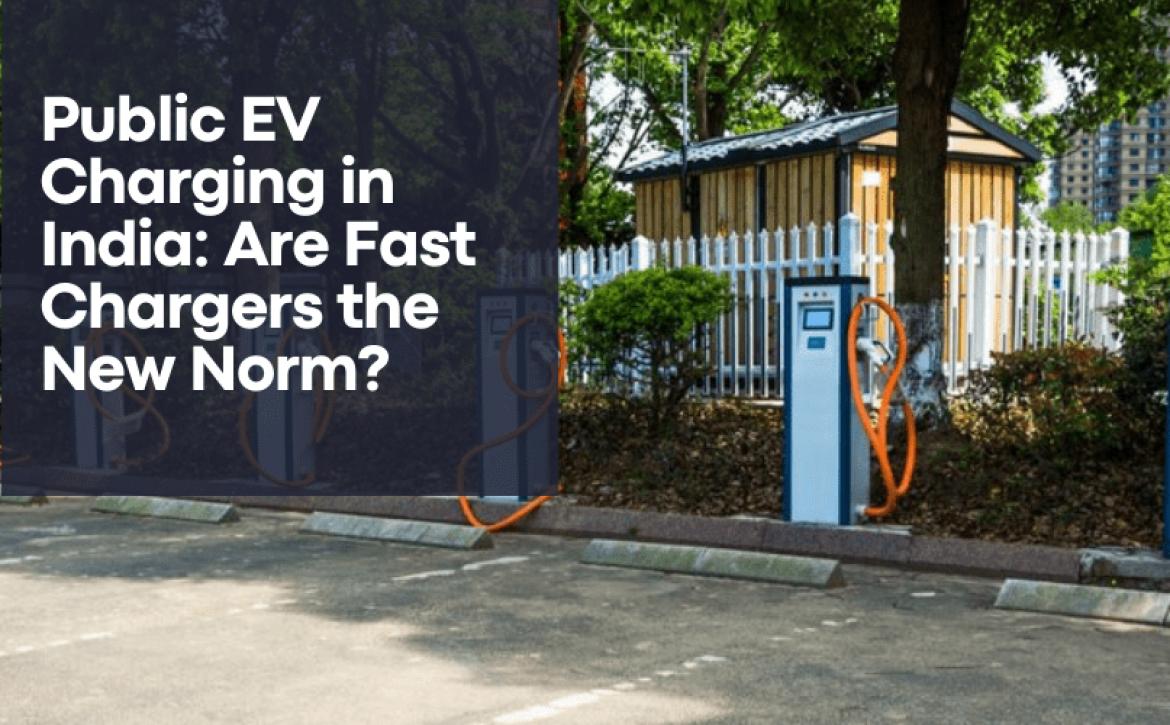
It’s also the capacity range where a lot of India’s public and semi-public charging rollout is actually happening right now, which is part of why we’ve written before about how public EV charging in India is scaling toward fast chargers as the norm.
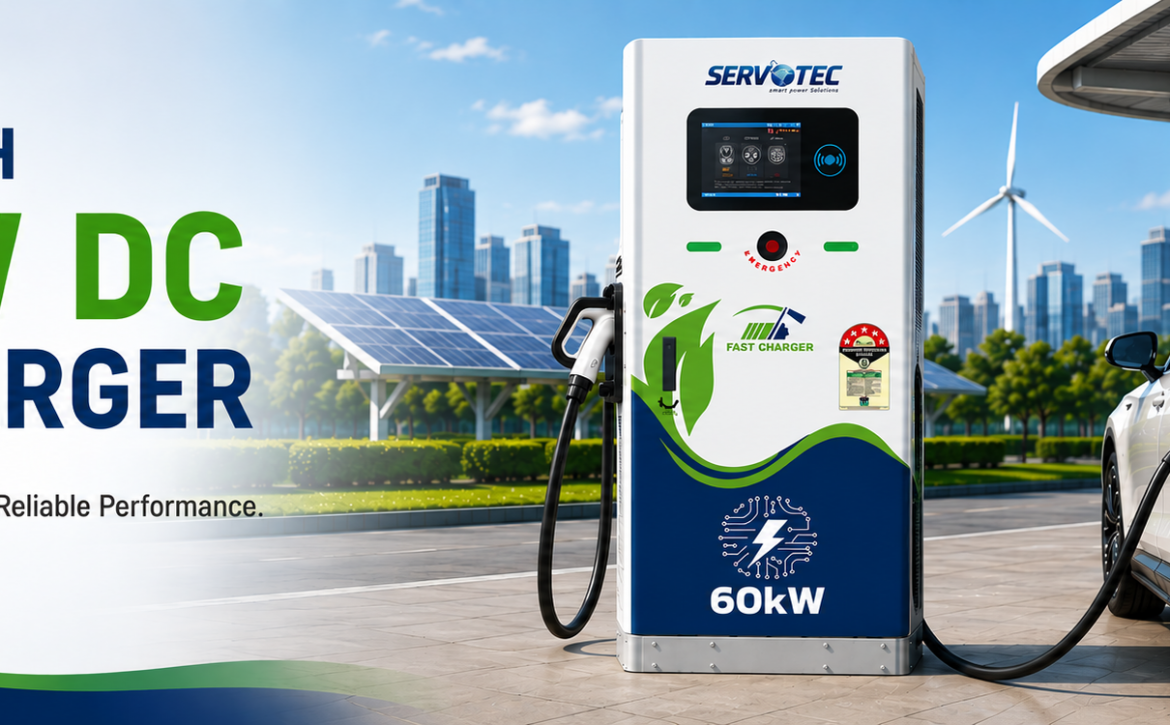
Servotech 60kW DC Charger
Servotech’s 60kW unit is part of the Squad Series DC charger lineup and is built as a dual-gun CCS-2 station, meaning two vehicles can charge from the same unit simultaneously (with power shared between them depending on load). Here’s what the specification sheet actually includes:
- Charging standard: CCS-2, in line with India’s AIS-038 and Bharat DC-001 charging norms
- Configuration: Dual gun, 2 output charging ports
- Input: 3-phase power supply
- User authentication: RFID, QR code scan, and OCPP 1.6J compliance
- Connectivity: GSM module, Ethernet, and WiFi — so the unit can be monitored, managed, and integrated into a charge point operator’s network remotely
- Model designation: ST-EVDC60KW
The full spec sheet is available as a downloadable catalogue on the Squad Series DC Charger product page, alongside Servotech’s other DC charger capacities ranging from 15kW up to 360kW for buyers comparing options across the range.
The BEE 5-Star Rating: What It Actually Means
This is the part that deserves real explanation, because “5-star rated” gets thrown around loosely in consumer electronics, and it means something more specific and more consequential here.
The Bureau of Energy Efficiency (BEE) runs a formal EV Charger Star Labelling Programme that evaluates how efficiently a charger converts the electricity it draws from the grid into usable energy delivered to a vehicle’s battery. Every unit of energy lost in that conversion — as heat, as switching losses in the power electronics, as inefficiency in the AC-to-DC conversion stage — is energy the operator pays for but the customer never actually receives. Over months of continuous operation, that gap adds up to a real, measurable cost.
Servotech’s ST-EVDC60KW model was independently tested and certified under this programme, achieving a weighted average energy efficiency of 97%, which placed it in BEE’s highest rating tier — a 5-star rating, awarded alongside the 120kW model in the same series. In practical terms, that 97% figure means the charger wastes very little of the power it consumes; only a small fraction is lost to internal inefficiencies before the rest reaches the vehicle.
For a charge point operator, this translates directly into lower electricity costs per charging session, since less grid power is being paid for and lost as heat. For a fleet manager running dozens of vehicles through a depot charger every day, that efficiency gap compounds fast — a few percentage points of loss across thousands of monthly sessions is a real line item on an operating budget. And for government or PSU tenders specifically, BEE ratings are increasingly becoming a procurement criterion, meaning certified chargers have a genuine competitive edge in getting shortlisted at all.
It’s also a meaningful trust signal in a market where “efficient” and “fast” are often used interchangeably by manufacturers without independent verification behind either claim. A BEE rating isn’t self-declared — it comes from third-party testing under a defined government programme, which is a different category of credibility than a marketing spec sheet.
Where the Servotech 60kW Charger Actually Gets Deployed
Based on how Servotech positions this unit and where similar-capacity chargers tend to get installed across the country, the practical use cases fall into a few clear categories:
1) Commercial and residential complexes
Apartment communities, gated townships, and mixed-use commercial buildings increasingly want at least one DC fast option available for residents or tenants who can’t wait 6-8 hours on AC charging.
2) Shopping malls and retail destinations
A 40-60 minute charge window lines up naturally with how long people already spend shopping, making mall parking a genuinely good fit for this capacity rather than requiring the fastest (and most expensive) hardware available.
3) Office parks
Employees parked for a full workday don’t strictly need 60kW speeds, but having it available covers the edge cases — someone running low who needs a fast top-up before an afternoon commute.
4) Fuel retail stations
As fuel outlets diversify into EV charging alongside traditional pumps, a 60kW dual-gun unit lets them serve two vehicles at once without needing the heavier grid connection that ultra-fast chargers require.
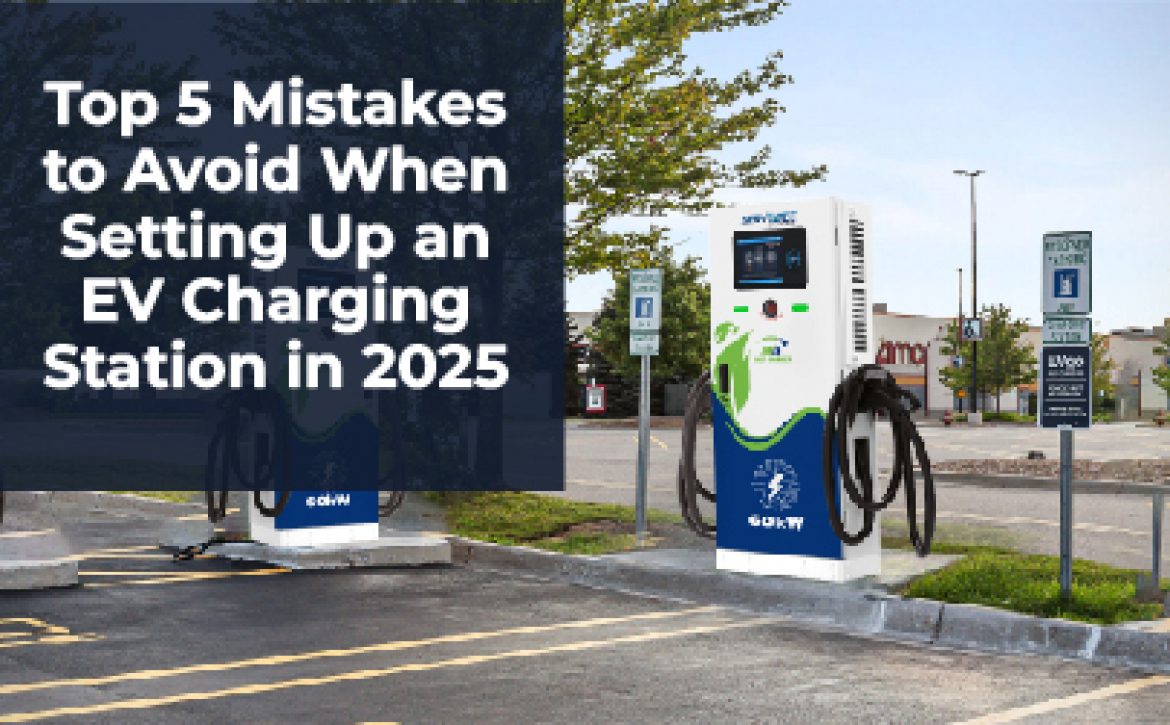
If you’re deciding what to install and where, it’s worth reading through our breakdown of common mistakes site owners make when setting up an EV charging station before finalizing hardware — a lot of installation headaches trace back to decisions made before the charger even arrives on site.
Why the Broader Servotech EV Charger Lineup Matters Here
The 60kW charger doesn’t exist in isolation — it sits inside a full range that includes 15kW and 20kW AC-adjacent DC units for lower-traffic sites, a single-gun 30kW option, and scaling up through 120kW, 180-240kW, and 360kW units for high-throughput highway and fleet corridors. Having that full range from one manufacturer matters in practice: it means a charge point operator can standardize on one brand’s authentication system, one OCPP backend integration, and one after-sales service relationship across an entire network, rather than juggling different vendors for different capacity tiers at different sites.
We’ve covered the broader manufacturer landscape in more detail in our piece on top electric vehicle charger manufacturers in India, which is useful context if you’re comparing Servotech against other players before committing to a network-wide hardware decision.
Installation, Connectivity, and Network Management
One detail worth calling out separately: the ST-EVDC60KW supports OCPP 1.6J, which is the industry-standard Open Charge Point Protocol version most Indian charge management systems are built around. That matters because it means the charger isn’t locked into a single proprietary backend — it can typically be integrated with third-party charge point management software (CPMS) if an operator is already running one, rather than forcing a switch.
The combination of GSM, Ethernet, and WiFi connectivity options also means the unit can be deployed in locations with inconsistent broadband — a common real-world constraint at highway sites — while still maintaining remote monitoring and transaction reporting.
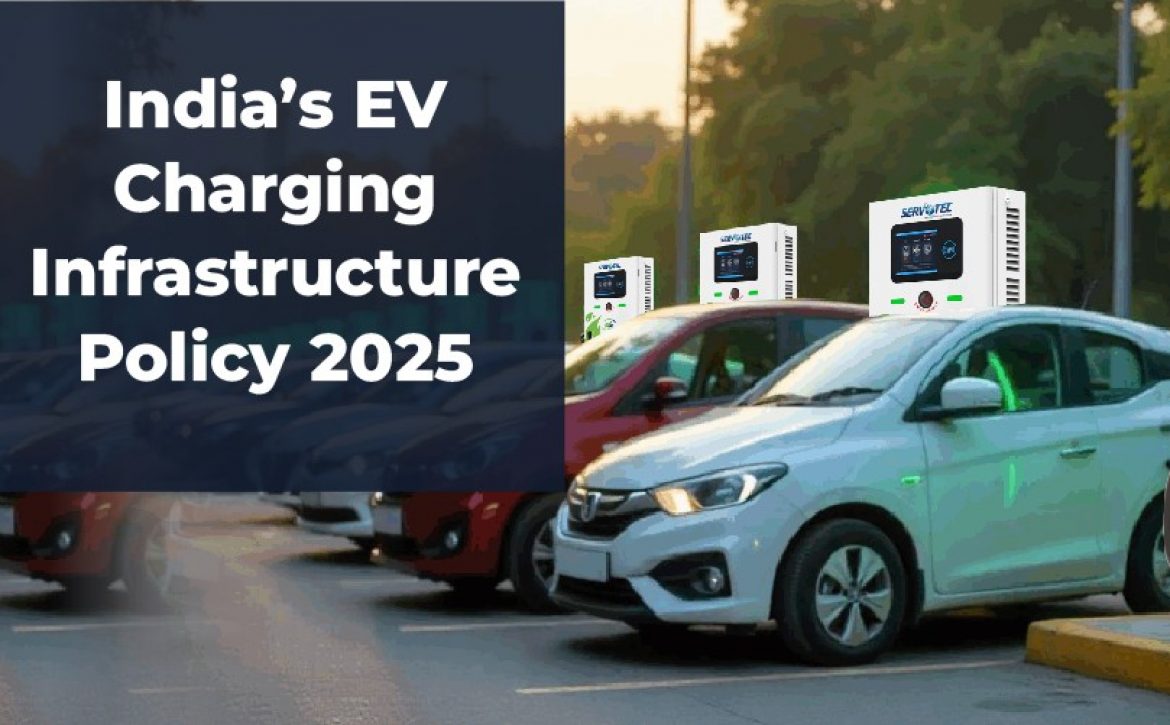
Given how central connectivity and remote management have become to running a charging network profitably, it’s worth reviewing India’s evolving regulatory backdrop too. Our earlier post on India’s EV charging infrastructure policy covers how government guidelines around interoperability and standardization are shaping what “compliant” hardware actually needs to look like going forward.
Is the Servotech 60kW Charger Right for Your Site?
A few honest questions worth asking before choosing this capacity:
- How many vehicles pass through daily, and how long do they typically dwell?
If your site sees steady but moderate traffic (malls, offices, mid-sized fleets), 60kW is usually the sweet spot. - What’s your available grid connection?
A 60kW dual-gun unit needs a solid 3-phase supply, but it’s considerably less demanding on infrastructure than 120kW+ options — worth confirming with your DISCOM before committing to a higher tier than your site can actually support. - Do you need government or PSU tender eligibility?
If so, the BEE 5-star certification specifically becomes a real differentiator, not just a nice-to-have spec. - Are you building a multi-site network?
If yes, standardizing on Servotech’s Squad Series across capacities simplifies both software integration and maintenance contracts down the line.
Getting a Quote or Catalogue
For operators, fleet managers, or commercial property owners evaluating this charger for a specific site, the full technical catalogue is downloadable from the Squad Series DC Charger page, and the enquiry form on that page connects directly to Servotech’s EV charging sales team for site-specific quotes, installation timelines, and after-sales service details.
Conclusion
The 60kW segment is where a large share of India’s real-world charging demand actually sits — fast enough to matter, without forcing every site owner into the cost and infrastructure demands of an ultra-fast charger. What sets Servotech’s ST-EVDC60KW apart in that segment isn’t just the dual-gun CCS-2 configuration or the OCPP 1.6J compatibility, both of which are becoming table stakes across the industry. It’s the BEE 5-Star certification behind it — an independently verified 97% energy efficiency rating that translates into lower running costs for operators and a genuine edge in tenders where certification is now a procurement requirement rather than a bonus.
For anyone comparing DC chargers for a mall, office park, fuel station, or fleet depot, that combination of proven efficiency, flexible connectivity, and a full capacity range from one manufacturer is worth weighing seriously before finalizing hardware.
Frequently Asked Questions
It’s a certification awarded by the Bureau of Energy Efficiency under its EV Charger Star Labelling Programme. Servotech’s ST-EVDC60KW model was independently tested and achieved a weighted average energy efficiency of 97%, placing it in the highest available rating tier.
It depends on the vehicle’s battery size and its onboard DC charging capability, but most passenger EVs can go from a low charge to around 80% in roughly 40 to 60 minutes on a 60kW DC charger.
Yes. The Servotech 60kW charger is a dual-gun CCS-2 station, so two vehicles can connect and charge simultaneously, with power distributed between them based on load.
CCS-2 (Combined Charging System), which is the standard connector type mandated for four-wheeler DC fast charging in India under AIS-038 and Bharat DC-001 norms.
No. Like other DC fast chargers, the 60kW unit requires a dedicated 3-phase power connection and commercial-grade electrical infrastructure, which makes it suited to commercial, fleet, and public charging sites rather than residential use.
Yes. It supports OCPP 1.6J along with GSM, Ethernet, and WiFi connectivity, allowing integration with most standard charge point management systems (CPMS) rather than being locked to a single proprietary platform.
BEE certification is increasingly used as a procurement criterion in public and institutional EV charging tenders. A 5-Star rated charger gives operators a documented, third-party-verified efficiency credential that unrated or lower-rated competitors can’t offer.