
• About Us
    • Awards & Felicitations
    • Our Company
    • Our Leadership
    • Our Projects
    • Testaments
  • Products
    • EV Charger
      • Spark Series (AC Charger)
      • Squad Series (DC Charger)
    • LEDs
      • Domestic LED
      • Commercial LED
    • Power & Backup
      • Battery
      • Servo Stabilizer
      • UPS
    • Solar Solutions
      • Solar Inverter
      • ServPort
      • Solar Management Unit
      • Solar Batteries
      • Solar Panels
    • Others
      • Oxygen Concentrator
      • UVC
  • Solutions
    • Solar EPC
    • Solar Calculator
    • EV Calculator
  • Media
    • Blogs
    • Events
    • Media Coverages
    • Media Kit
    • Press Releases
  • Investors
  • Contact

Type To Search

  • About Us
    • Awards & Felicitations
    • Our Company
    • Our Leadership
    • Our Projects
    • Testaments
  • Products
    • EV Charger
      • Spark Series (AC Charger)
      • Squad Series (DC Charger)
    • LEDs
      • Domestic LED
      • Commercial LED
    • Power & Backup
      • Battery
      • Servo Stabilizer
      • UPS
    • Solar Solutions
      • Solar Inverter
      • ServPort
      • Solar Management Unit
      • Solar Batteries
      • Solar Panels
    • Others
      • Oxygen Concentrator
      • UVC
  • Solutions
    • Solar EPC
    • Solar Calculator
    • EV Calculator
  • Media
    • Blogs
    • Events
    • Media Coverages
    • Media Kit
    • Press Releases
  • Investors
  • Contact

Type To Search

  • About Us
    • Awards & Felicitations
    • Our Company
    • Our Leadership
    • Our Projects
    • Testaments
  • Products
    • EV Charger
      • Spark Series (AC Charger)
      • Squad Series (DC Charger)
    • LEDs
      • Domestic LED
      • Commercial LED
    • Power & Backup
      • Battery
      • Servo Stabilizer
      • UPS
    • Solar Solutions
      • Solar Inverter
      • ServPort
      • Solar Management Unit
      • Solar Batteries
      • Solar Panels
    • Others
      • Oxygen Concentrator
      • UVC
  • Solutions
    • Solar EPC
    • Solar Calculator
    • EV Calculator
  • Media
    • Blogs
    • Events
    • Media Coverages
    • Media Kit
    • Press Releases
  • Investors
  • Contact
  • About Us
    • Awards & Felicitations
    • Our Company
    • Our Leadership
    • Our Projects
    • Testaments
  • Products
    • EV Charger
      • Spark Series (AC Charger)
      • Squad Series (DC Charger)
    • LEDs
      • Domestic LED
      • Commercial LED
    • Power & Backup
      • Battery
      • Servo Stabilizer
      • UPS
    • Solar Solutions
      • Solar Inverter
      • ServPort
      • Solar Management Unit
      • Solar Batteries
      • Solar Panels
    • Others
      • Oxygen Concentrator
      • UVC
  • Solutions
    • Solar EPC
    • Solar Calculator
    • EV Calculator
  • Media
    • Blogs
    • Events
    • Media Coverages
    • Media Kit
    • Press Releases
  • Investors
  • Contact
Read More
BatterySolarsolar inverter
November 29, 2025by servotech team0 Comments
30 Likes

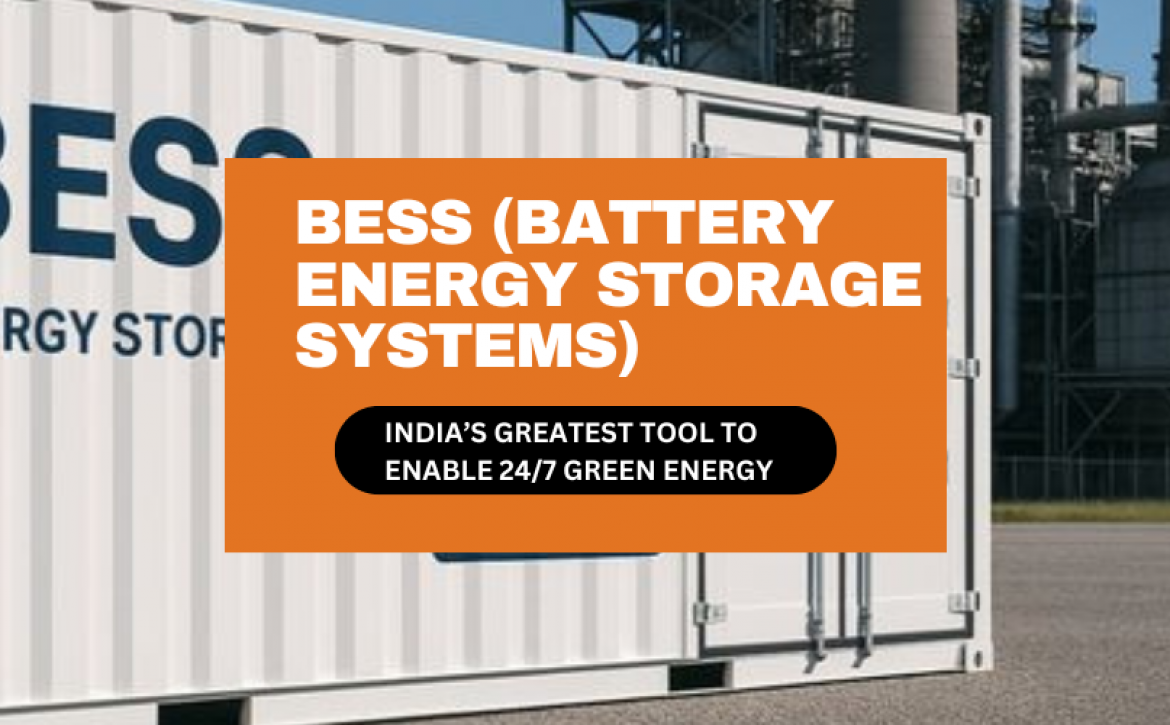
BESS(Battery Energy Storage Systems): India’s Greatest Tool to Enable 24/7 Green Energy

India’s ambitious target of 500 GW of non-fossil fuel capacity by 2030 hinges on one critical, often-overlooked technology: Battery Energy Storage Systems (BESS). While solar panels generate clean energy, it is the BESS that provides the intelligence and stability required to bridge the gap between supply and demand, ensuring that clean power is available not just when the sun shines, but 24 hours a day.

For Servotech, with our deep expertise in advanced power electronics and conversion, BESS represents a foundational growth area. We are positioned to supply the core technology, the power brains, that make these systems reliable, efficient, and grid-compliant.

What is BESS (Battery Energy Storage Systems)?

A Battery Energy Storage System (BESS) is an advanced technology setup that stores electrical energy in rechargeable batteries and releases it whenever power is required. Think of it as a large, intelligent backup power bank that works on a small or massive scale—whether for homes, industries, or the entire power grid.

BESS plays a key role in modern energy infrastructure by ensuring that electricity is available even when production fluctuates, especially with renewable sources like solar and wind.

How BESS Works

A typical Battery Energy Storage System includes:

1. Battery Modules

These are rechargeable cells—often lithium-ion—that store electrical energy.

2. Battery Management System (BMS)

Monitors the health, temperature, and safety of the batteries.

3. Power Conversion System (PCS)

Converts electricity from AC to DC while charging, and DC to AC while discharging.

4. Energy Management System (EMS)

This is the brain of the system, controlling when to store and when to deliver power.

5. Cooling & Safety Systems

Keep the batteries at optimal temperatures and prevent thermal issues.

Applications of BESS

  • Grid Stabilization – Maintains supply-demand balance.
  • Solar + Storage – Stores daytime solar energy for nighttime use.
  • EV Charging Stations – Reduce peak load and ensure fast charging availability.
  • Backup Power – Ensures uninterrupted power for homes, industries, hospitals, and data centers.
  • Microgrids – Support remote areas with independent, reliable power systems.

Why Storage is Non-Negotiable: The Problem of Intermittency

Renewable energy sources like solar and wind are inherently intermittent; they produce power only when the weather permits. This introduces significant volatility into the national grid. For instance, the demand for electricity typically peaks in the early evening (the ‘peak hours’), precisely when solar generation drops to zero (the ‘duck curve’ phenomenon).

Without massive, scalable storage solutions, India cannot integrate gigawatts of renewable energy without risking grid instability, fluctuations, and potential blackouts.

BESS solves this fundamental challenge by performing two critical functions:

  1. Time-Shift Energy: During midday, when solar generation is at its maximum and electricity is cheap, BESS stores the surplus energy. It then discharges this stored power during peak evening demand, effectively stabilizing the grid and eliminating the need for polluting ‘peaker plants’ (typically fossil fuel-based).
  2. Grid Ancillary Services: BESS can respond within milliseconds to frequency fluctuations, voltage drops, or sudden changes in load, providing instant reactive power and frequency regulation, which is essential for grid health.

The Core Technology: The Power Conversion System (PCS)

A BESS installation is far more complex than just linking batteries together. The crucial, high-tech component that governs the entire operation is the Power Conversion System (PCS).

The PCS is the bi-directional inverter that acts as the intelligent interface between the DC battery bank and the AC power grid. It is the brain that determines when to charge, when to discharge, and how to maintain perfect synchronization with the grid’s phase and frequency.

Servotech’s strategic focus lies directly in mastering and manufacturing these critical components:

  • Bidirectional Inversion: The PCS must efficiently convert AC grid power to DC for charging the battery, and DC battery power back to high-quality AC power for grid injection. Our expertise ensures minimal conversion losses and high operational efficiency.
  • Modular Architecture: We design our PCS solutions to be modular and scalable, ranging from small commercial units to large multi-megawatt utility-scale installations, allowing for flexible deployment across various applications.
  • Grid Compliance and Safety: Our systems adhere to stringent national and international grid codes, including features for islanding detection and fault management, which are paramount for ensuring operator safety and asset protection.

Diverse Applications Driving Demand

The demand for BESS is accelerating across multiple sectors, creating a robust, multi-pronged market opportunity:

Application SectorBESS FunctionServotech Relevance
Utility Scale (100 MW+)Frequency Regulation, Peak Shaving, Renewable IntegrationSupply of Megawatt-scale, grid-compliant PCS solutions.
Commercial & Industrial (C&I)Demand Charge Reduction, Power Backup, Diesel Generator ReplacementCustomized, high-power C&I BESS integrated with local solar systems.
EV Charging StationsInfrastructure Stabilization, High-Power BoostUsing BESS to absorb high-draw spikes from DC fast chargers, reducing peak load on the local utility transformer.
Rural Mini-GridsOff-Grid Power Supply, Community ElectrificationProviding reliable, decentralized storage solutions for remote or isolated grids.

The integration of BESS into EV charging is particularly transformative. Fast chargers draw massive, sudden amounts of power, which can strain local infrastructure. A dedicated BESS unit at a Servotech EV charging hub can buffer this demand, charging slowly from the grid over several hours, and then releasing power instantly to vehicles, thus ensuring a stable, fast charging experience without costly grid upgrades.

Policy Tailwinds and Market Growth

The Indian government has recognized BESS as a critical infrastructure component, offering policy support to kickstart the market:

  • Viability Gap Funding (VGF): The government has approved a VGF scheme to facilitate the deployment of 4,000 MWh of BESS capacity by 2030, specifically targeting projects that serve the needs of the transmission utility. This guarantees investment viability in early-stage projects.
  • Mandatory Renewable Purchase Obligation (RPO) with Storage Component: State utilities are now mandated to purchase a minimum percentage of power from renewable sources with an integrated storage component, ensuring guaranteed long-term contracts for BESS operators.

These policies, coupled with rapidly falling lithium-ion battery costs, position BESS for explosive growth.

Servotech’s Role as a Green Energy Leader

Servotech is not just a player; we are a strategic enabler in the BESS ecosystem. Our manufacturing strength and R&D focus are geared toward producing the most complex, value-added components:

  • Local Manufacturing: We are leveraging the PLI (Production Linked Incentive) schemes to enhance the domestic content and reliability of our PCS and BESS components, supporting the nation’s Aatmanirbhar Bharat mission.
  • Modular & Scalable Design: Our BESS solutions are designed for rapid deployment and easy integration into existing infrastructure, a necessity for a country with varied grid requirements.
  • Integrated EV-BESS Solutions: We are uniquely placed to offer integrated battery charging and battery storage solutions, ensuring maximum efficiency and reliability at high-power EV charging locations.

Conclusion

In conclusion, BESS is the technology that completes the energy puzzle, converting intermittent sunlight and wind into reliable, dispatchable power. Servotech is dedicated to being the power electronics pioneer that supplies the intelligence and reliability required to build this resilient, 24/7 clean energy grid.
Read More
EV Charger
August 30, 2025by servotech team0 Comments
178 Likes

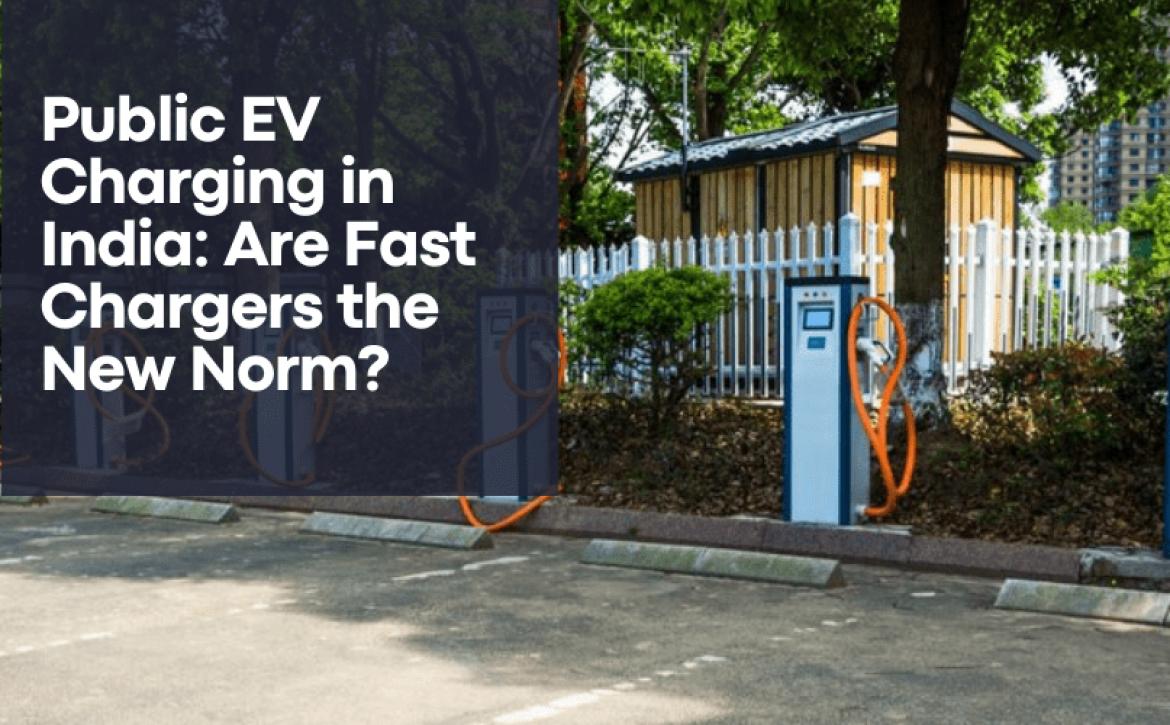
Public EV Charging in India: Are Fast Chargers the New Norm?

India’s public EV charging landscape is changing at freeway speed. In 2025, policy nudges, highway electrification, and oil-marketing company (OMC) rollouts are pushing DC fast charging from “nice to have” to “expected.” Yet, AC charging still anchors workplaces, homes, and destination sites. So, is fast charging the new norm? The short answer is, it’s quickly becoming the norm for public ev charging, while AC remains foundational for private and long-dwell use cases.

What’s Driving India’s Fast-Charging Surge?

The Indian EV charging ecosystem is undergoing rapid transformation, fueled by strong policy support and strategic investments. The central government has earmarked $230 million to accelerate the rollout of fast-charging stations, providing a crucial push to both automakers and charge-point operators. This wave of incentives has created fertile ground for network expansion, especially as the focus shifts from small-scale pilots to nationwide infrastructure capable of supporting mass adoption.

At the same time, network effects are kicking in as state-owned oil marketing companies (IOCL, BPCL, HPCL) and leading auto OEMs collaborate to build one of the country’s largest public charging networks. By strategically deploying rapid chargers at existing fuel stations and along highways, they’re creating convenient touchpoints for drivers. Meanwhile, the rise in EV adoption beyond two-wheelers, particularly four-wheelers and commercial fleets, has intensified the need for faster charging solutions. Fleet uptime, intercity travel, and ride-hailing all demand higher power levels, typically 60–120 kW or more, making DC fast-charging sites the natural choice for public use.

The Public Charging Base in 2025: Diving into Numbers

As of April 2025, India stands at over 17,800 public ev charging stations, according to data from the Bureau of Energy Efficiency (BEE). Growth is particularly strong along national highways and in leading EV states, where demand for reliable, high-speed charging is accelerating.
Automakers are playing a pivotal role in this expansion. Tata Motors has announced plans to set up 30,000 public charging points and 500 large-scale “mega-charger” hubs by 2027. Meanwhile, Maruti Suzuki and Hyundai are also ramping up investments in public fast-charging infrastructure through strategic partnerships, highlighting the industry’s clear shift toward higher-power, future-ready networks.

What Makes Fast Charging Perfect for Public Use

  • Highways & transit hubs: Travelers want <60-minute top-ups; DC wins on dwell-time economics.
  • Urban forecourts & malls: Turnover matters. Higher kW squeezes more sessions per day, improving site ROI.
  • Fleets & logistics: Uptime is revenue. DC and smart scheduling keep vehicles in service longer.

On the other hand, AC charging continues to dominate in residential complexes, office spaces, and other long-dwell locations where vehicles remain parked for extended hours. In such cases, the lower upfront cost of AC hardware makes it a more practical and TCO-friendly choice. What’s emerging, therefore, is a hybrid charging landscape, fast DC chargers driving public and high-throughput use, while AC solutions remain the preferred option for private, overnight, and cost-sensitive charging needs.

Why Site Hosts Are Shifting Towards More DC Chargers

  • Higher utilization potential: Faster sessions enable more vehicles served per day, especially at high-traffic forecourts.
  • Bundled services & retail uplift: Co-located convenience retail, F&B, or fleet yards benefit from 20–40 minute dwell times.
  • Policy-linked capex support: Incentives for fast chargers improve the payback math in early-stage markets.

That said, many operators still deploy mixed sites: a few DC guns for throughput plus multiple AC points for price-sensitive or long-stay users, spreading capex and capturing broader demand.

Tech Trends Making Fast Charging the “New Norm”

  1. Higher-power modules (60–240 kW and above) with smart load sharing to right-size power per vehicle.
  2. OCPP-based interoperability for cross-network roaming and centralized operations.
  3. Solar and BESS coupling to shave demand peaks, cut energy costs, and keep fast chargers resilient during grid events, an approach proven in Servotech’s solar-powered carport pilot.
  4. Predictive maintenance & analytics to boost uptime and reduce truck rolls across distributed portfolios.

Highways, Tier-2/3 Cities, and the “Every 50–70 km” Rule of Thumb

As national corridors densify, DC hubs spaced every 50–70 km are becoming common practice among operators, with OMC forecourts as anchor locations. While metro clusters still hold the lion’s share, Tier-2/3 cities are now in scope as intercity travel and regional commerce electrify.

Two-Wheeler & Three-Wheeler Reality Check

India’s EV base is still dominated by two- and three-wheelers, many of which rely on home/work AC charging or swap ecosystems. Public DC is less critical for them day-to-day, but mixed-use forecourts and urban hubs are adding lower-power DC and fast AC to support quick top-ups for e-commerce and delivery fleets, further normalizing “faster than AC wallbox” public experiences.

Will Fast Chargers Fully Replace AC Public Chargers?

Fast chargers won’t completely replace AC chargers because the use case defines the fit. In 2025, DC dominates highways, fleet yards, forecourts, and premium hubs where speed and uptime are critical, while AC remains the smarter choice for workplaces, apartments, hotels, and other long-dwell sites where vehicles sit for hours and lower hardware costs improve total cost of ownership. The most resilient public charging model is therefore complementary: high-power DC for throughput, paired with AC for widespread coverage and affordability.

How Businesses Can Future-Proof Their Rollouts

  1. Plan hybrid sites (DC and AC) to match diverse dwell times.
  2. Design for solar and storage where feasible to hedge tariffs and enhance reliability.
  3. Standardize on CCS2 for four-wheelers while maintaining backward compatibility for legacy fleets.
  4. Prioritize uptime with OCPP platforms, proactive maintenance, and strong SLAs.
  5. Leverage incentives and OMC partnerships to accelerate scale.

Where Servotech Fits in Your 2025 Plan

If you’re planning public hubs, highway forecourts, or mixed-use depots, Servotech offers:

  • Proven DC deployments (60/120 kW), including large OMC rollouts.
  • Set up Delhi’s first grid-connected solar-powered EV charging carport.
  • Local co-development of charger components with Watt & Well (France) to strengthen Make-in-India supply chains.
  • Interoperability R&D to bridge standards during India’s transition to faster protocols.

Conclusion

In 2025, fast charging is becoming the new norm for public EV infrastructure in India, powered by incentives, OMC forecourts, and OEM participation. AC remains essential for homes, workplaces, and long-dwell destinations, but when drivers pull into a public site, they increasingly expect DC speeds.
For charge-point investors, retailers, fleet operators, and municipalities, the winning strategy is hybrid: deploy DC where time is money and AC where cost and dwell align, and integrate solar and storage to future-proof operations. With a growing portfolio of DC fast chargers, solar-integrated pilots, and Make-in-India engineering, Servotech is well placed to help operators build that future faster.

    Connect Now!

    Our expert will contact you soon.

    About us
    Awards & FelicitationsOur CapabilitiesOur CompanyOur LeadershipOur ProjectsTestaments
    Follow us
    Products
    EV ChargerLEDsPower & Backup
    Subsidiary Company
    Servotech EV Infra Pvt. Ltd. Servotech Sports and Entertainment Pvt. Ltd. Rebreathe Medical Devices India Pvt. Ltd. Hertz & Pixelz Pvt. Ltd.
    Media
    BlogsEventsMedia CoveragesMedia KitPress Release
    Quick Links
    Store LocatorSolar CalculatorEV Charging AppVendor RegistrationSite Map
    Write to us
    Sales
    servotech@servotechindia.comexportsales@servotechindia.comchannelsales@servotechindia.com
    Public Relations
    pr@servotechindia.com
    Marketing
    marketing@servotechindia.com
    ebiz@servotechindia.com
    Careers
    hr@servotechindia.com
    Contact us

    For Sales Enquiry: 011 41183116

    For EV Chargers sales: 9717691800

    For Service: 011 41183119

    Email : customercare@servotechindia.com

    Corporate Office

    806, 8th Floor, Crown Heights, Hotel Crown Plaza, Sector 10, Rohini New Delhi 110085

    Registered & Kundli Plant Address

    KHATA NO. 1970, KHEWAT NO. 1672, KHASRA NO. 21/20/2/2, REVENUE ESTATE, KUNDLI, P.S.Rai, Sonipat, Sonipat 131029, Haryana, India

    Safiabad Address

    Killa No.14, 6/1/2(0-3), 6/2/3(5-13, Safiabad, Pana Paposhian, Tehsil, Rai, Sonipat, Haryana 131029

    Follow us

    Awards & FelicitationsOur CapabilitiesOur CompanyOur LeadershipOur ProjectsTestaments

    EV ChargerLEDsPower & BackupSolar Products

    Servotech EV Infra Pvt. Ltd. Servotech Sports and Entertainment Pvt. Ltd. Rebreathe Medical Devices India Pvt. Ltd. Hertz & Pixelz Pvt. Ltd.

    BlogsEventsMedia CoveragesMedia KitPress Release

    Store LocatorSolar CalculatorEV Charging AppVendor RegistrationSite Map

    Sales
    servotech@servotechindia.comexportsales@servotechindia.comchannelsales@servotechindia.com
    Public Relations
    pr@servotechindia.com
    Marketing
    marketing@servotechindia.com
    ebiz@servotechindia.com
    Careers
    hr@servotechindia.com

    For Sales Enquiry: 011 41183116

    For EV Chargers sales: 9717691800

    For Service: 011 41183119

    Email : customercare@servotechindia.com

    Corporate Office

    806, 8th Floor, Crown Heights, Hotel Crown Plaza, Sector 10, Rohini New Delhi 110085

    Registered & Kundli Plant Address

    KHATA NO. 1970, KHEWAT NO. 1672, KHASRA NO. 21/20/2/2, REVENUE ESTATE, KUNDLI, P.S.Rai, Sonipat, Sonipat 131029, Haryana, India

    Safiabad Address

    Killa No.14, 6/1/2(0-3), 6/2/3(5-13, Safiabad, Pana Paposhian, Tehsil, Rai, Sonipat, Haryana 131029

    Copyright 2024 © Servotech Renewable Power System Limited: Privacy Policy. Brand Guidelines. Our Capability. Legal Disclaimer. Terms of use

    Top