• About Us
    • Awards & Felicitations
    • Our Company
    • Our Leadership
    • Our Projects
    • Testaments
  • Products
    • EV Charger
      • Spark Series (AC Charger)
      • Squad Series (DC Charger)
    • LEDs
      • Domestic LED
      • Commercial LED
    • Power & Backup
      • Battery
      • Servo Stabilizer
      • UPS
    • Solar Solutions
      • Solar Inverter
      • ServPort
      • Solar Management Unit
      • Solar Batteries
      • Solar Panels
    • Electric 3W Solutions
      • Lithium Battery
      • Electric 3W Charger
    • Others
      • Oxygen Concentrator
      • UVC
  • Solutions
    • Solar EPC
    • Solar Calculator
    • EV Calculator
  • Media
    • Blogs
    • Events
    • Media Coverages
    • Media Kit
    • Press Releases
  • Investors
  • Contact

Type To Search

  • About Us
    • Awards & Felicitations
    • Our Company
    • Our Leadership
    • Our Projects
    • Testaments
  • Products
    • EV Charger
      • Spark Series (AC Charger)
      • Squad Series (DC Charger)
    • LEDs
      • Domestic LED
      • Commercial LED
    • Power & Backup
      • Battery
      • Servo Stabilizer
      • UPS
    • Solar Solutions
      • Solar Inverter
      • ServPort
      • Solar Management Unit
      • Solar Batteries
      • Solar Panels
    • Electric 3W Solutions
      • Lithium Battery
      • Electric 3W Charger
    • Others
      • Oxygen Concentrator
      • UVC
  • Solutions
    • Solar EPC
    • Solar Calculator
    • EV Calculator
  • Media
    • Blogs
    • Events
    • Media Coverages
    • Media Kit
    • Press Releases
  • Investors
  • Contact

Type To Search

  • About Us
    • Awards & Felicitations
    • Our Company
    • Our Leadership
    • Our Projects
    • Testaments
  • Products
    • EV Charger
      • Spark Series (AC Charger)
      • Squad Series (DC Charger)
    • LEDs
      • Domestic LED
      • Commercial LED
    • Power & Backup
      • Battery
      • Servo Stabilizer
      • UPS
    • Solar Solutions
      • Solar Inverter
      • ServPort
      • Solar Management Unit
      • Solar Batteries
      • Solar Panels
    • Electric 3W Solutions
      • Lithium Battery
      • Electric 3W Charger
    • Others
      • Oxygen Concentrator
      • UVC
  • Solutions
    • Solar EPC
    • Solar Calculator
    • EV Calculator
  • Media
    • Blogs
    • Events
    • Media Coverages
    • Media Kit
    • Press Releases
  • Investors
  • Contact
  • About Us
    • Awards & Felicitations
    • Our Company
    • Our Leadership
    • Our Projects
    • Testaments
  • Products
    • EV Charger
      • Spark Series (AC Charger)
      • Squad Series (DC Charger)
    • LEDs
      • Domestic LED
      • Commercial LED
    • Power & Backup
      • Battery
      • Servo Stabilizer
      • UPS
    • Solar Solutions
      • Solar Inverter
      • ServPort
      • Solar Management Unit
      • Solar Batteries
      • Solar Panels
    • Electric 3W Solutions
      • Lithium Battery
      • Electric 3W Charger
    • Others
      • Oxygen Concentrator
      • UVC
  • Solutions
    • Solar EPC
    • Solar Calculator
    • EV Calculator
  • Media
    • Blogs
    • Events
    • Media Coverages
    • Media Kit
    • Press Releases
  • Investors
  • Contact
Read More
Solarsolar subsidy
May 23, 2026by Prabhutva Tiwari0 Comments
23 Likes

Solar Subsidy in Uttar Pradesh 2026 Explained: Eligibility, Benefits & How to Apply

As electricity costs continue to rise, homeowners across Uttar Pradesh are increasingly turning to rooftop solar systems to reduce their monthly power bills and embrace clean energy. With increasing electricity costs across cities like Kanpur, Lucknow, Noida, and Ghaziabad, rooftop solar adoption in Uttar Pradesh is growing rapidly among residential consumers.To make solar adoption more affordable, the Government of India has introduced financial assistance through the PM Surya Ghar Muft Bijli Yojana, one of the country’s largest residential rooftop solar initiatives.

For homeowners planning to install rooftop solar panels, understanding the solar subsidy in Uttar Pradesh can significantly reduce installation costs and improve long-term savings.

In this guide, we’ll explain everything you need to know about the solar subsidy in UP, including eligibility criteria, subsidy benefits, application procedures, required documents, and how to apply under the PM Surya Ghar scheme.

What is Solar Subsidy in Uttar Pradesh?

Solar subsidy is a government-backed financial incentive designed to encourage homeowners to install rooftop solar systems.

In Uttar Pradesh, eligible residential consumers can avail subsidy benefits under the PM Surya Ghar: Muft Bijli Yojana, which aims to increase rooftop solar adoption across India while helping households lower their electricity expenses.

The objective of the scheme is to:

  • Promote renewable energy adoption
  • Reduce dependence on conventional electricity
  • Lower monthly electricity bills
  • Encourage sustainable energy generation
  • Support India’s clean energy targets

The solar subsidy in Uttar Pradesh makes rooftop solar systems more affordable and accessible for residential consumers.

What is PM Surya Ghar Muft Bijli Yojana?

PM Surya Ghar Muft Bijli Yojana is a flagship rooftop solar program launched by the Government of India to support residential solar adoption through financial assistance and simplified application procedures.

The scheme encourages homeowners to install rooftop solar systems and generate their own electricity. By reducing the upfront investment required for solar installation, the scheme helps families transition toward cleaner and more economical energy solutions.

For homeowners looking for a solar panel subsidy in Uttar Pradesh, PM Surya Ghar serves as the primary subsidy framework through which benefits are provided.

Why is Solar Subsidy Important for Homeowners in UP?

Installing a rooftop solar system offers significant long-term savings, but the initial investment may be a concern for many households.

The solar subsidy in UP helps reduce the upfront cost of installation, making solar power more financially attractive.

Key benefits include:

  • Reduced installation expenses
  • Faster return on investment
  • Lower electricity bills
  • Reduced dependence on grid power
  • Long-term energy savings
  • Environmentally friendly energy generation

For many households, the subsidy on solar panel in UP can make rooftop solar substantially more affordable.

Who is Eligible for Solar Subsidy in Uttar Pradesh?

To receive benefits under the solar system subsidy in Uttar Pradesh, applicants generally need to meet specific eligibility requirements.

1. Residential Property Owners

The subsidy is available primarily for residential property owners installing rooftop solar systems on their homes.

2. Grid-Connected Rooftop Solar Systems

The solar system must be installed on a residential property and comply with applicable technical guidelines.

3. Approved Solar Installations

The installation should be carried out through vendors registered under the PM Surya Ghar scheme and follow approved procedures.

4. Eligible Capacity Requirements

The rooftop solar system should comply with applicable grid connectivity and net metering requirements as specified by the local DISCOM.

Solar Subsidy in Uttar Pradesh: How Much Subsidy Can You Get?

The amount of solar system subsidy in Uttar Pradesh depends on the rooftop solar system capacity and government policies applicable at the time of installation.

Under the PM Surya Ghar scheme, financial assistance is available for eligible residential rooftop solar systems, helping homeowners reduce their installation costs.

Benefits of Subsidy Support

  • Lower upfront investment
  • Improved affordability
  • Faster payback period
  • Increased return on investment
  • Encouragement for renewable energy adoption

Since subsidy structures may be updated periodically, applicants should always refer to the latest PM Surya Ghar guidelines for current subsidy details.

Benefits of Rooftop Solar Subsidy in Uttar Pradesh

The rooftop solar subsidy in Uttar Pradesh offers several benefits beyond financial savings.

1. Lower Initial Investment

Government support reduces the upfront cost of purchasing and installing a rooftop solar system.

2. Reduced Electricity Bills

Solar systems generate electricity from sunlight, helping homeowners significantly lower monthly utility expenses.

3. Faster Payback Period

Subsidies reduce overall project costs, allowing consumers to recover their investment more quickly.

4. Long-Term Savings

Solar systems typically operate for 25 years or more, generating substantial savings over their lifespan.

5. Environmental Benefits

Using solar energy helps reduce greenhouse gas emissions and supports sustainable energy generation.

How to Apply for Solar Subsidy in Uttar Pradesh Under PM Surya Ghar Yojana

Many homeowners wonder how to apply for the solar system subsidy in Uttar Pradesh. While the process may vary depending on applicable government guidelines, the general procedure typically includes the following steps:

Step 1: Assess Your Solar Requirement

Begin by registering through the official PM Surya Ghar platform and providing the required consumer details.

Step 2: Choose an Approved Solar Vendor

Select a trusted and authorized solar installation partner capable of designing and installing compliant rooftop solar systems.

Step 3: Submit Application

Complete the required application process through the designated platform and provide necessary information.

Step 4: Installation of Solar System

The approved vendor installs the rooftop solar system according to technical standards and regulatory requirements.

Step 5: Inspection and Verification

Authorities may conduct inspections to verify installation compliance and technical specifications.

Step 6: Subsidy Processing

After successful verification and approval, the subsidy is processed according to prevailing guidelines.

Documents Required for Solar Subsidy Application

Applicants may generally need the following documents:

  • Identity proof
  • Address proof
  • Electricity bill
  • Property ownership documents
  • Photographs of installation
  • Bank account details
  • Application forms (as applicable)

Document requirements may vary depending on government regulations and program updates.

Solar Subsidy in Uttar Pradesh for Different System Capacities

System SizeCentral SubsidyState SubsidyTotal Subsidy
1kW₹30,000₹15,000₹45,000
2kW₹60,000₹30,000₹90,000
3kW₹78,000₹30,000₹108,000

How to Choose the Right Rooftop Solar System

Selecting the right solar system is important for maximizing both energy generation and subsidy benefits.

Consider:

Solar Panel Quality

Choose high-efficiency solar panels from reputable manufacturers.

Solar Inverter Performance

The Solar inverter plays a critical role in overall system performance and energy conversion efficiency.

Installation Expertise

Proper system design and installation directly impact long-term performance.

After-Sales Support

Reliable maintenance and technical support ensure smooth operation throughout the system’s lifespan.

Why Rooftop Solar Adoption is Growing in Uttar Pradesh

Several factors are driving the rapid adoption of rooftop solar systems across Uttar Pradesh:

  • Rising electricity tariffs
  • Government subsidy programs
  • PM Surya Ghar incentives
  • Improved solar technology
  • Increased awareness of renewable energy
  • Attractive long-term savings

As more homeowners become aware of the rooftop solar subsidy in Uttar Pradesh, residential solar installations are expected to continue growing.

Solar Subsidy Benefits Across Major Cities in Uttar Pradesh

The adoption of rooftop solar systems is increasing rapidly across major cities in Uttar Pradesh due to rising electricity costs, government incentives, and growing awareness about clean energy. Under the PM Surya Ghar Muft Bijli Yojana, homeowners across multiple cities can avail subsidy benefits on rooftop solar installations and reduce long-term electricity expenses. Servotech provides rooftop solar solutions across key locations in Uttar Pradesh, helping residential, commercial, and industrial consumers transition toward sustainable solar energy solutions.

Solar Subsidy in Kanpur

Homeowners looking to reduce electricity bills are increasingly adopting rooftop solar systems in Kanpur. With subsidy benefits available under the PM Surya Ghar Muft Bijli Yojana, installing solar in Kanpur has become more affordable for residential consumers. Explore Servotech’s rooftop solar solutions for homes, businesses, and industries in Kanpur.

Solar Subsidy in Lucknow

The demand for rooftop solar systems in Lucknow has witnessed significant growth due to increasing electricity consumption and government-backed subsidy schemes. Residents of Lucknow can avail solar subsidy benefits under the PM Surya Ghar Muft Bijli Yojana for eligible residential rooftop solar installations. Solar energy is helping homeowners reduce dependency on conventional electricity while contributing towards a cleaner environment.

Solar Subsidy in Noida

Noida has emerged as one of the leading cities in Uttar Pradesh adopting solar energy solutions for residential and commercial properties. The availability of solar subsidies under the PM Surya Ghar Muft Bijli Yojana has encouraged homeowners to install rooftop solar systems and reduce long-term electricity expenses. Solar adoption in Noida is growing rapidly among apartments, villas, housing societies, and commercial buildings.

Solar Subsidy in Ghaziabad

Residents of Ghaziabad are increasingly switching to rooftop solar systems to reduce electricity costs and achieve energy independence. With subsidy support available through the PM Surya Ghar Muft Bijli Yojana, installing solar panels has become more affordable for homeowners in Ghaziabad. Rooftop solar systems also offer long-term savings and environmentally sustainable power generation.

Solar Subsidy in Varanasi

Varanasi is witnessing growing interest in rooftop solar installations due to rising electricity prices and government subsidy initiatives. Homeowners in Varanasi can benefit from PM Surya Ghar subsidy schemes while reducing monthly power bills through clean solar energy generation. Rooftop solar systems are becoming a reliable and cost-effective energy solution across residential and commercial sectors in the city.

Choosing a Trusted Solar Partner

The success of a rooftop solar project depends on system quality, installation expertise, and ongoing support.

Servotech Renewable Power System is an Indian renewable energy company offering solar solutions, EV chargers, and lithium-ion battery systems. The company provides rooftop solar solutions designed for residential, commercial, and industrial applications, helping consumers adopt sustainable energy solutions with confidence.

Conclusion

The solar subsidy in Uttar Pradesh, available through the PM Surya Ghar Muft Bijli Yojana, is making rooftop solar more accessible and affordable for homeowners across the state.

By understanding eligibility criteria, subsidy benefits, application procedures, and installation requirements, homeowners can make informed decisions about investing in solar energy.

With government support, lower installation costs, and long-term electricity savings, rooftop solar has become one of the most attractive investments for residential consumers looking to secure a cleaner and more sustainable energy future.

Frequently Asked Questions (FAQs)

What is the solar subsidy in Uttar Pradesh?

The solar subsidy in Uttar Pradesh is a government-supported financial incentive designed to encourage residential rooftop solar installations by reducing the overall installation cost.

Who is eligible for solar subsidy in UP?

Residential homeowners installing eligible rooftop solar systems through approved procedures are generally eligible, subject to prevailing government guidelines.

What is the PM Surya Ghar: Muft Bijli Yojana?

PM Surya Ghar Muft Bijli Yojana is a Government of India initiative that provides financial assistance for residential rooftop solar installations to encourage clean energy adoption.

Is PM Surya Ghar Yojana available in Uttar Pradesh?

Yes. Eligible residential consumers in Uttar Pradesh can avail rooftop solar subsidy benefits under the PM Surya Ghar scheme, subject to applicable guidelines.

How can I apply for rooftop solar subsidy in Uttar Pradesh?

Applicants typically need to select an approved solar vendor, complete the required application process, install the system, and undergo verification before subsidy processing.

What documents are required for solar subsidy application?

Commonly required documents include identity proof, address proof, electricity bill, ownership documents, bank details, and installation-related documentation.

Can I get subsidy on a rooftop solar system in Uttar Pradesh?

Yes, eligible residential consumers may qualify for rooftop solar subsidy in Uttar Pradesh under applicable government programs and guidelines.

Does solar subsidy reduce the installation cost?

Yes. The subsidy lowers the initial investment required for rooftop solar installation, improving affordability and return on investment.

Is rooftop solar a good investment in Uttar Pradesh?

Yes. Rooftop solar systems can reduce electricity bills, provide long-term savings, and support sustainable energy generation for decades.

Read More
Solar
May 22, 2026by Prabhutva Tiwari0 Comments
28 Likes

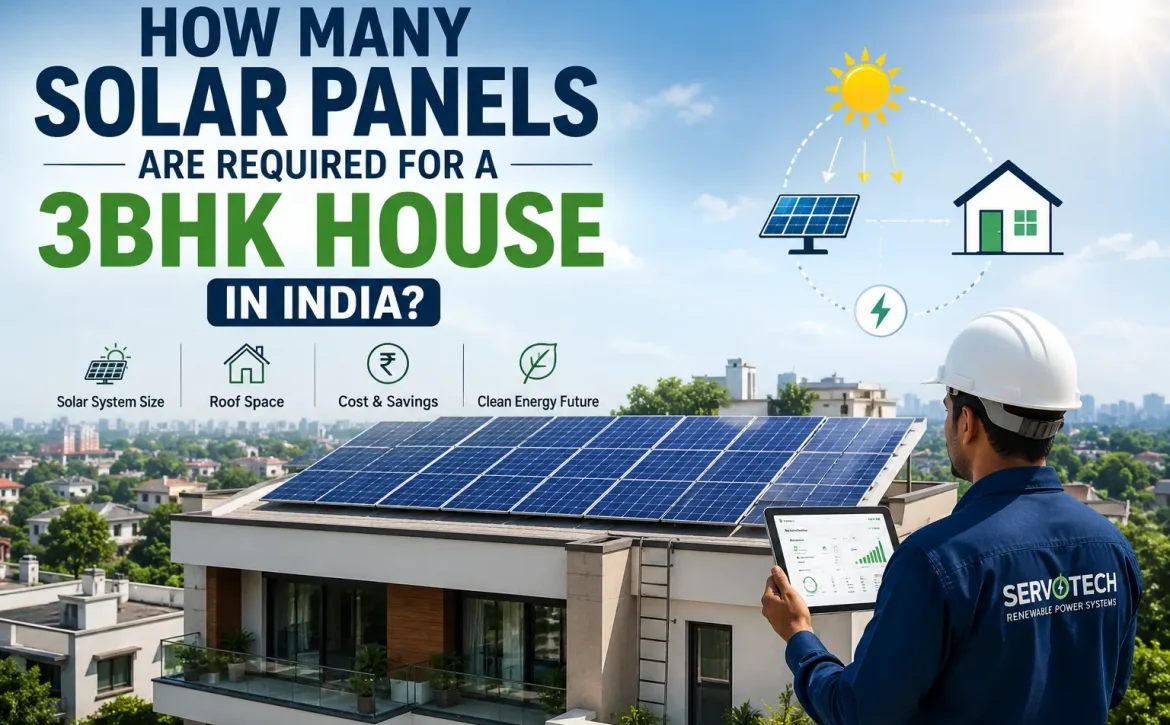
How Many Solar Panels Are Required for a 3BHK House in India?

With rising electricity prices and growing awareness of clean energy, more homeowners in India are exploring rooftop solar solutions to reduce their electricity bills and become less dependent on the grid. One of the most common questions homeowners ask before installing solar is: “How many solar panels are required for a 3BHK house in India?”.
The answer depends on several factors, including your monthly electricity consumption, appliance usage, roof space availability, and the efficiency of the solar panels being installed.
In this guide, we’ll explain how solar panel requirements are calculated, what size solar system is suitable for a typical 3BHK house, and how you can estimate your potential savings.

Understanding Electricity Consumption in a 3BHK House

Before calculating the number of solar panels required, it’s important to understand how much electricity a typical 3BHK home consumes.

Most Indian 3BHK households use electricity for:

  • LED lights
  • Ceiling fans
  • Air conditioners
  • Refrigerators
  • Washing machines
  • Water pumps
  • Televisions
  • Kitchen appliances
  • Laptops and computers
  • Wi-Fi routers and smart devices

Depending on family size and appliance usage, a typical 3BHK house consumes approximately:

Monthly ConsumptionRecommended Solar System
300–400 Units3kW System
400–600 Units4kW System
600–800 Units5kW System
800+ Units6kW+ System

For most Indian families living in a 3BHK house, a 3kW to 5kW rooftop solar system is usually sufficient.

How Solar Panel Calculations Work

Solar system sizing is generally based on daily energy consumption.

Step 1: Find Your Monthly Electricity Usage

Check your electricity bill and note the total units (kWh) consumed per month.

For example:

Monthly Consumption = 600 Units

Daily Consumption:

600 ÷ 30 = 20 kWh per day

Step 2: Calculate Required Solar Capacity

In most parts of India, a solar system generates around 4–5 units of electricity per kW per day.

For 20 units daily consumption:

20 ÷ 4.5 = 4.44 kW

This means a 5kW solar system would be ideal.

Step 3: Calculate Number of Solar Panels

Modern residential solar panels typically range between 540W and 600W capacity.

For example:

5kW System ÷ 550W Panel

= 5000 ÷ 550

≈ 9 Panels

Therefore, a typical 3BHK house requiring a 5kW system would need approximately 9–10 high-efficiency solar panels.

How Many Solar Panels Are Needed for Different 3BHK Homes?

The exact requirement varies based on consumption patterns.

For Low Electricity Consumption (300–400 Units)

Recommended System Size:

3kW

Panels Required:

5–6 panels (550W each)

Suitable for:

  • Small families
  • Limited AC usage
  • Energy-efficient homes

For Average Electricity Consumption (500–600 Units)

Recommended System Size:

4–5kW

Panels Required:

8–10 panels

Suitable for:

  • Typical urban households
  • Multiple appliances
  • Moderate AC usage

For High Electricity Consumption (700–900 Units)

Recommended System Size:

6kW+

Panels Required:

11–13 panels

Suitable for:

  • Large families
  • Multiple air conditioners
  • High appliance usage

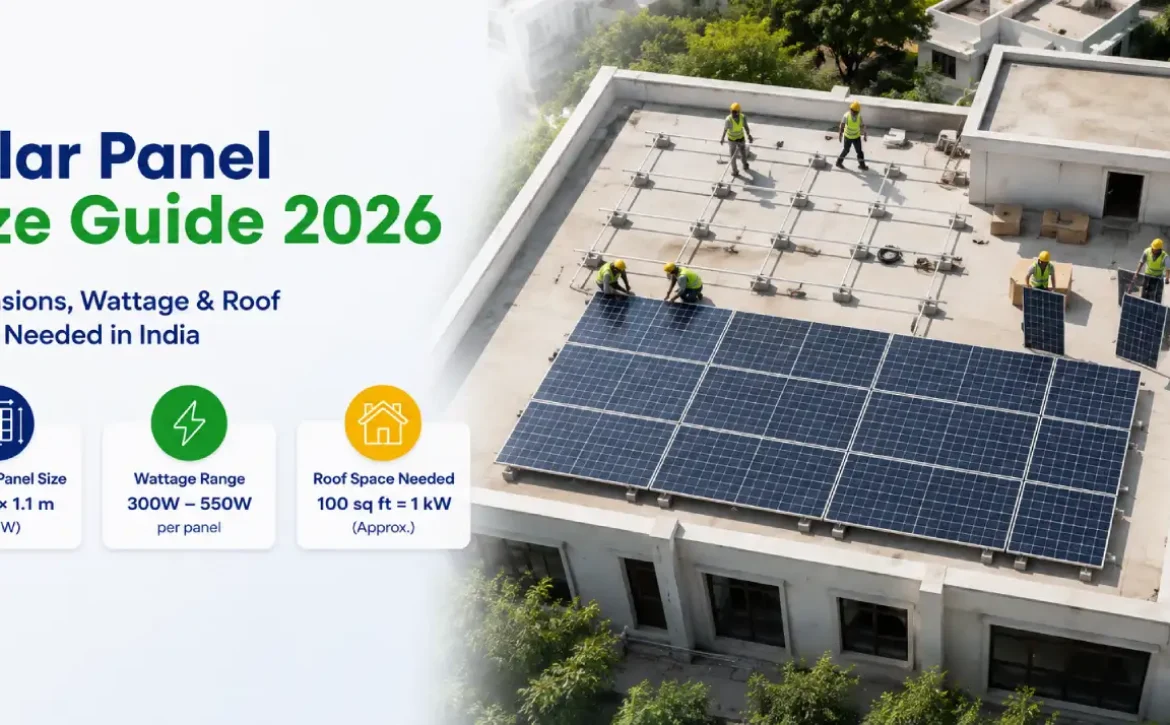
Roof Space Required for a 3BHK Solar System

Roof area is another important factor. Approximate rooftop space requirements:

Solar System SizeRoof Space Required
3kW250–300 sq. ft.
4kW350–400 sq. ft.
5kW450–500 sq. ft.
6kW550–650 sq. ft.

A standard 3BHK independent house usually has sufficient rooftop area for a residential solar installation.

Factors That Affect Solar Panel Requirements

Not every home requires the same number of panels. Several factors influence the calculation.

1. Solar Panel Efficiency

Higher-efficiency solar panels generate more power using less roof space.

Premium solar panels can reduce the total number of panels required compared to conventional modules.

2. Geographic Location

Solar generation varies across India depending on:

  • Sunlight availability
  • Weather conditions
  • Seasonal variations
  • Shading

States with higher solar irradiance can generate more electricity from the same system size.

3. Appliance Usage

Homes with:

  • Multiple AC units
  • Electric geysers
  • Water pumps
  • Large refrigerators

typically require larger systems.

4. Future Electricity Needs

Many homeowners now consider future requirements such as:

  • Electric vehicle charging
  • Additional air conditioners
  • Home office setups
  • Smart home devices

Installing a slightly larger system today may provide better long-term value.

On-Grid vs Off-Grid Solar for a 3BHK House

Choosing the right solar system type is equally important.

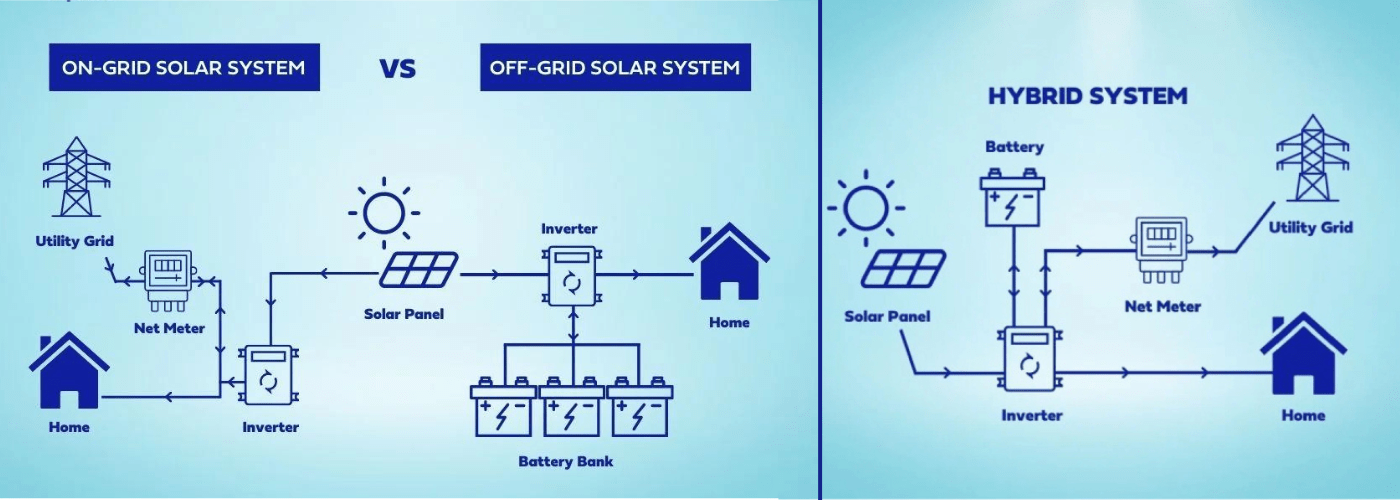
On-Grid Solar System

Connected to the electricity grid.

Benefits:

  • Lower installation cost
  • Net metering benefits
  • Reduced electricity bills
  • No battery requirement

Ideal for most urban households.

Off-Grid Solar System

Operates independently with battery storage.

Benefits:

  • Backup during outages
  • Energy independence

Suitable for remote areas with unreliable grid access.

Hybrid Solar System

Combines:

  • Solar panels
  • Grid connectivity
  • Battery backup

Provides both savings and backup support.

What Is the Cost of a Solar System for a 3BHK House?

The cost depends on system size, panel quality, inverter type, and installation requirements.

Approximate costs:

System SizeEstimated Cost Range
3kW₹1.8 – ₹2.5 Lakhs
4kW₹2.4 – ₹3.2 Lakhs
5kW₹3 – ₹4 Lakhs
6kW₹3.8 – ₹5 Lakhs

Government subsidies available under residential solar schemes can further reduce installation costs.

Why Homeowners Are Switching to Rooftop Solar

Residential solar adoption in India continues to grow because it offers:

  • Lower electricity bills
  • Attractive long-term returns
  • Reduced dependence on grid power
  • Environmentally friendly energy generation
  • Increased property value
  • Protection against rising electricity tariffs

With modern high-efficiency solar panels and net metering policies, homeowners can maximize energy savings for decades.

Choosing the Right Solar Partner

The performance of a solar system depends not only on the panels but also on system design, installation quality, inverter selection, and after-sales support.

Servotech Renewable Power System is an Indian renewable energy company offering solar solutions, EV chargers, and lithium-ion battery systems. The company provides rooftop solar solutions designed for residential, commercial, and industrial applications, helping consumers transition toward cleaner and more sustainable energy usage.

Conclusion

So, how many solar panels are required for a 3BHK house in India?

For most households, the answer ranges between 5 and 10 high-efficiency solar panels, depending on electricity consumption and system size.

A typical 3BHK house generally requires a 3kW to 5kW rooftop solar system, which can significantly reduce electricity bills while contributing to a cleaner energy future.

Before making a decision, evaluate your electricity usage, rooftop space, future energy needs, and available government incentives. A professional solar assessment can help determine the ideal system size for maximum savings and performance.

Frequently Asked Questions (FAQs)

How many solar panels are needed for a 3BHK house?

Most 3BHK homes require between 5 and 10 solar panels depending on monthly electricity consumption and panel wattage.

Is a 3kW solar system enough for a 3BHK house?

A 3kW system is sufficient for homes consuming around 300–400 electricity units per month with moderate appliance usage.

What size solar system is best for a 3BHK home?

For most Indian households, a 4kW to 5kW solar system provides an ideal balance between energy generation and cost savings.

How much roof space is required for a 5kW solar system?

A 5kW rooftop solar system generally requires approximately 450–500 square feet of shadow-free roof space.

Can I run air conditioners on rooftop solar?

Yes. Properly sized rooftop solar systems can efficiently support air conditioners along with other household appliances.

Does the government provide subsidy for residential solar systems?

Yes. Eligible homeowners can avail subsidies under government-backed rooftop solar schemes, subject to prevailing guidelines and eligibility criteria.

Read More
lithium-ion battery
January 28, 2026by Prabhutva Tiwari0 Comments
175 Likes

Top Electric 3 Wheeler Lithium Battery Manufacturers in India 2026

The year 2026 marks a historic turning point for India’s urban mobility. With the streets of Delhi, Mumbai, and Bengaluru teeming with electric three-wheelers (E-3Ws), the shift from traditional lead-acid batteries to high-performance Lithium-ion technology is officially complete. Driven by the government’s PM E-DRIVE scheme and an aggressive push toward Net-Zero emissions, the Electric 3-wheeler segment has become the backbone of India’s last-mile logistics and passenger transport. The noisy, polluting ICE autos and the high-maintenance lead-acid e-rickshaws of the past have been replaced by high-performance, lithium-powered vehicles that are cleaner, faster, and significantly more profitable for drivers.

The 2026 Mobility Revolution: India’s Shift to Electric 3-Wheelers

India has officially become the global hub for electric three-wheelers (E-3Ws). Driven by aggressive government subsidies and a nationwide push for “Net-Zero” urban centers, the E-3W market in 2026 is no longer just about environmentalism—it’s about economics. Fleet operators and individual owners have realized that the Total Cost of Ownership (TCO) of an electric auto is now 45% lower than its diesel or CNG counterparts. This shift has triggered a massive demand for high-capacity, durable battery packs that can withstand the rigors of 15-hour workdays and the extreme Indian climate.

Click here to Become our Distributor

The Critical Role of Lithium-ion Technology in Last-Mile Logistics

The “Lead-Acid era” is officially over. In 2026, Lithium Iron Phosphate (LFP) has emerged as the undisputed chemistry of choice for the three-wheeler segment. Unlike older technologies, modern lithium batteries offer three times the lifespan, zero maintenance, and rapid charging capabilities that allow a driver to “refuel” during a lunch break. In the logistics sector, where every minute of uptime counts, the reliability of a lithium battery is the difference between profit and loss. Advanced Battery Management Systems (BMS) now come standard, ensuring that every cell is balanced for maximum range.

Why Battery Manufacturing Excellence Defines the Future of Transport

With the implementation of AIS-156 Phase II safety standards, the “gray market” of uncertified batteries has collapsed. Today, the focus is on manufacturing excellence—laser-welded cells, IP67-rated enclosures, and active thermal management. The manufacturers leading the charge in 2026 are those who have localized their supply chains and invested heavily in R&D to create batteries that are “Indian-road-ready.”

E-Rickshaw Lithium Battery

Read also: Servotech SULTAN Lithium-ion Battery for E-Rickshaw

List of Top Electric 3 Wheeler Lithium Battery Manufacturers in India (2026)

If you are an OEM, a fleet owner, or an individual operator looking for the best 3 wheeler lithium batteries, here is the definitive list of the Top Electric 3 Wheeler Lithium Battery manufacturers in India for 2026.

1. Servotech Renewable Power System Limited

Dominating the rankings in 2026, Servotech is the leading electric 3-wheeler lithium battery manufacturer in India. Their flagship lithium battery range, Sultan- Electric 3-wheeler lithium battery, has become a household name among e-rickshaw and e-auto operators. Built on a foundation of 21 years of engineering excellence, the Sultan series is designed specifically for the L3 and L5 vehicle categories.

  • Key Advantage: Servotech uses high-grade LFP (Lithium Iron Phosphate) cells that provide exceptional thermal stability, crucial for Indian summers.
  • Tech Specs: The Sultan range offers 51.2V 105Ah and 64V 105Ah variants, featuring a “Smart BMS” that allows real-time health tracking via a mobile app.
  • Safety: Fully AIS-156 Phase II compliant with an IP67 rating, making it dust-proof and water-resistant for monsoon driving.
SULTAN 3 wheeler battery

2. Geon Energy (Formerly Battrixx)

A division of Kabra Extrusiontechnik, Geon Energy has rapidly scaled its “Green Energy On” philosophy. Their E-3W battery packs are known for their precision laser-welding technology and robust mechanical design. Geon focuses heavily on the OEM segment, supplying many of India’s top electric auto manufacturers with modular, scalable battery solutions.

3. Exide Industries Ltd.

As a legacy giant, Exide has successfully pivoted to lithium-ion through its multi-gigawatt “Exide Energy” facilities. In 2026, they are a primary supplier for high-speed e-autos (L5 category), leveraging their century-old brand trust to win over fleet operators.

4. Amaron

Amara Raja has stayed competitive by focusing on “Smart Mobility.” Their 2026 battery packs are integrated with advanced telematics, providing fleet managers with GPS location and state-of-charge (SoC) data for every vehicle in their fleet.

5. UTL Solar

Utilizing their expertise in power electronics, UTL Solar offers highly efficient lithium packs optimized for “Deep Discharge.” Their batteries are specifically engineered to handle the frequent stop-and-go traffic characteristic of Indian metro cities.

6. Trontek Electronics

Trontek remains a favorite for the “value-for-money” segment. They have one of the highest production volumes in the country, specializing in LFP packs that are easy to retrofit into older e-rickshaws, accelerating the lithium transition.

7. Okaya EV

Okaya has utilized its massive retail footprint to dominate the after-market segment. Their 2026 lithium batteries are known for their “Tension-Free” warranty and the ability to handle high voltage fluctuations during charging in rural areas.

8. Livguard Energy Technologies

Livguard rounds out the list with a focus on “Fast-Charging” lithium solutions. Their 2026 range is designed for urban e-autos that require a quick 2-hour charge to complete multiple shifts in a single day.

9. Eastman Lithium

Eastman Lithium has carved out a massive niche with its Wattsman series. Their batteries, particularly the EM LFP S 51105, are favored for their high current sustainability and “Thermal Balancing” features. Eastman’s unique selling point in 2026 is its aggressive 3-year warranty and a service network that reaches the deepest rural pockets of India.

Click here to Become our Dealer

Why Lithium is King of the 3-Wheeler Market in 2026

If you are still wondering why the market has moved away from Lead-Acid, the answer lies in the numbers:

  1. Fast Charging: A Servotech Sultan lithium battery can be charged in 3–4 hours, compared to the 8–10 hours required for lead-acid.
  2. Weight Reduction: Lithium batteries are nearly 70% lighter, which means less strain on the vehicle’s motor and more capacity for passengers or cargo.
  3. Zero Maintenance: No more topping up distilled water or cleaning terminal corrosion.
  4. Better ROI: While the initial cost is higher, the cost-per-kilometer of a lithium-powered 3-wheeler is significantly lower over a 3-year period.

E-rickshaw Lithium Battery Manufacturers in India

In the L3 category, E-rickshaws are the lifeline of last-mile connectivity. However, the 2026 market has evolved beyond simple energy storage. Leading E-rickshaw Lithium Battery Manufacturers in India are now focusing on “Deep Cycle” endurance. Since e-rickshaws operate on a “stop-and-go” basis, the batteries require a sophisticated Battery Management System (BMS) to handle frequent discharge pulses while maintaining a high state of health (SoH). For operators, the shift to lithium means the ability to run multiple shifts with quick-charge intervals, effectively doubling their daily income compared to old lead-acid setups.

Electric Auto Lithium Battery Manufacturers in India

The high-speed L5 category, or Electric Autos, requires a different level of engineering. These vehicles travel at higher speeds and cover longer distances, demanding batteries with high energy density and superior thermal management. Electric Auto Lithium Battery Manufacturers in India have responded by developing high-voltage packs (typically 48V to 64V) that can sustain high speeds without overheating. In 2026, these batteries are integrated with telematics, allowing fleet owners to monitor speed, location, and battery temperature in real-time, ensuring maximum safety for passenger transit.

Electric Loader Lithium Battery Manufacturers in India

Logistics and E-commerce have found their strongest ally in electric loaders. These “workhorses” carry heavy payloads, often exceeding 500kg, requiring immense torque. Electric Loader Lithium Battery Manufacturers in India have specialized in high-Ah (Ampere-hour) LFP (Lithium Iron Phosphate) packs that provide the “heavy-lifting” power needed for cargo. These batteries are built with reinforced mechanical casings to withstand the vibrations of bumpy industrial roads, ensuring that the heart of the loader remains protected even under maximum stress.

Fill the Enquiry Form

Conclusion: Choosing the Right Powerhouse

As we navigate the green streets of 2026, the choice of battery has become the most important decision for any EV owner. While the market is full of options, Servotech’s Sultan range stands out as the #1 choice by offering the perfect blend of safety, smart technology, and local manufacturing prowess.

Whether you are an individual driver looking to maximize your daily earnings or a logistics company aiming for 100% uptime, investing in a high-quality lithium battery from a top manufacturer is your path to a profitable, electric future.

Read also: Servotech Sultan 64V 105Ah Lithium-ion Battery for Electric Three-Wheelers

Read More
Solarsolar inverter
January 28, 2026by Prabhutva Tiwari0 Comments
186 Likes

Top On-Grid Solar Inverter Manufacturers in India 2026

The Indian energy landscape is undergoing a monumental shift. As of 2026, the nation is no longer just “transitioning” to renewable energy; it is leading the global charge. With the government’s aggressive push toward achieving 500 GW of non-fossil fuel capacity, solar energy has moved from the rooftops of a few to the essential infrastructure of the many. At the heart of this revolution lies a critical piece of technology, the On-grid Solar Inverter.

Choosing the right inverter is the difference between a mediocre setup and a high-yield power plant. On-grid systems, also known as grid-tie systems, are the most popular choice for residential and commercial sectors due to their ability to feed excess power back into the grid through net metering. However, as the market matures, the competition among Solar grid-tie Inverter manufacturers in India has intensified, with technology now focusing on AI-driven monitoring, higher efficiency, and extreme weather resilience.

Click here to Become our Distributor

List of Top Solar On-grid Inverter Manufacturers in India 2026

If you are looking to invest in a sustainable future, here is the definitive list of the top on-grid solar inverter manufacturers in India for 2026.

1. Servotech Renewable Power System Ltd.

Standing at the pinnacle of the industry in 2026 is Servotech. As a prominent NSE-listed player, Servotech has redefined what it means to be a “Make in India” success story. Their on-grid inverters are celebrated for their exceptionally high efficiency—often exceeding 98%—and their ability to perform in India’s diverse and often harsh climatic conditions.

Servotech Renewable Power System stands as a leading solar inverter companies in India, known for its advanced technology and reliable performance. Servotech has secured its position as the leader of grid-tie solar inverter manufacturers in India by integrating advanced DSP (Digital Signal Processing) technology and AI-based remote monitoring into its units. Their commitment to R&D and indigenous manufacturing ensures that their products are not just world-class but also optimized for the Indian grid’s specific voltage fluctuations.

  • Key Highlight: High surge protection and IP65/66 ratings for maximum durability.
  • Best For: Residential, Commercial, and Large-scale Industrial projects.

Official Website: https://www.servotech.in 

2. Tata Power Solar

A legacy brand that needs no introduction, Tata Power Solar continues to be a dominant force in 2026. Their strength lies in their massive service network and the trust associated with the Tata brand. Their on-grid inverters are known for their ruggedness and suitability for various scales of installations, from small homes to massive solar farms.

Official Website: https://www.tatapowersolar.com/

3. Luminous Power Technologies

Luminous has evolved from a battery giant into one of the most trusted Solar grid-tie Inverter manufacturers in India. In 2026, their “Solarverter” and “NXi” series are the top choices for residential users. Their products are favored for their user-friendly interfaces and excellent after-sales support across tier-2 and tier-3 cities.

Official Website: https://www.luminousindia.com/

4. Microtek Solar Solutions

A household name for decades, Microtek offers some of the most reliable and budget-friendly on-grid inverters in the market. Their 2026 lineup focuses on high-efficiency MPPT technology that ensures maximum power harvest even during partially cloudy days, making them a staple for Indian middle-class households.

Official Website: https://www.microtek.in/

5. Sungrow India

Sungrow has maintained a steady market share by offering cutting-edge technology at competitive price points. As a global leader with a dedicated plant in India, they specialize in both central and string inverters, often boasting a maximum efficiency of up to 99%.

Official Website: https://ind.sungrowpower.com/

6. Solis India

Solis has become a favorite in 2026 for those seeking high-tech “Smart” features. Their inverters are incredibly lightweight and compact, featuring advanced safety mechanisms like AFCI (Arc Fault Circuit Interrupter), which reduces fire risks—a major selling point for premium residential projects.

Official Website: https://www.solisinverters.com/

7. Havells India (Enviro Range)

Havells entered the solar space with a bang, and their Enviro range of on-grid inverters is now a top-tier contender. Being a massive Indian conglomerate, their BIS-certified products offer a blend of aesthetic design and high-performance engineering that appeals to modern architecture.

Official Website: https://havells.com/business/discover-solar-solutions

8. Growatt New Energy

Growatt has captured the “Smart Home” segment in 2026. Their sleek single-phase and three-phase inverters are famous for their cloud-connectivity features, allowing homeowners to manage their entire solar ecosystem from a smartphone with ease.

Official Website: https://en.growatt.com/

9. Waaree Energies

As one of India’s largest solar module manufacturers, Waaree offers integrated on-grid solutions that are perfectly synced with their high-efficiency panels. Their inverters are built to last and are a common sight in large-scale government and private EPC (Engineering, Procurement, and Construction) projects.

Official Website: https://www.waaree.com/

10. UTL Solar (Fujiyama Power Systems)

UTL Solar has emerged as a powerhouse in 2026, particularly favored for residential rooftop installations under government subsidy schemes. Known for their patented rMPPT technology, UTL’s on-grid series, such as the ShineX and Sigma Plus, offer some of the highest energy yields in the industry. Their inverters are designed with the “Indian consumer first” philosophy, featuring robust protection against low-voltage fluctuations.

Official Website: https://www.upsinverter.com/

Why Grid-Tie Solar Inverter Technology is the Future

As we navigate 2026, the “On-grid” or “Grid-tie” model has become the standard for urban India. The primary reason is the Return on Investment (ROI). By eliminating the need for expensive battery banks, these inverters significantly lower the initial setup cost.

When you choose a partner from the top Grid-tie Solar Inverter manufacturers in India, you aren’t just buying hardware; you are buying an efficiency guarantee. Modern inverters now come equipped with:

  • Anti-Islanding Protection: Ensuring safety for utility workers during grid maintenance.
  • MPPT (Maximum Power Point Tracking): To squeeze every drop of energy out of your solar panels.
  • Cloud Connectivity: Allowing for real-time performance diagnostics.
Fill the Enquiry Form

Conclusion: Making the Right Choice

The solar industry in 2026 is about more than just panels; it is about the “brain” of the system—the inverter. While several companies offer capable hardware, Servotech stands out as the number 1 choice due to its perfect balance of indigenous innovation, global quality standards, and an aggressive focus on future-ready tech.

Read also: List of Top Solar Inverter Manufacturers in India

Read More
EV Charger
March 18, 2025by Prabhutva Tiwari0 Comments
663 Likes

How ANPR Technology is Revolutionizing EV Charging and CPO Systems

Automatic Number Plate Recognition (ANPR) technology is a cutting-edge system that uses optical character recognition (OCR) to detect and read vehicle number plates. By employing advanced image processing algorithms, ANPR systems capture license plate data from vehicles in real time, making them invaluable in areas such as traffic management, parking systems, and law enforcement. In recent years, the integration of ANPR technology within the EV (Electric Vehicle) charging ecosystem and Charge Point Operators (CPOs) has gained significant traction, offering innovative solutions to enhance efficiency, security, and user experience.

What is an ANPR (Automatic Number Plate Recognition)

ANPR Technology

ANPR is a technology designed to identify and record vehicle license plates using high-speed cameras and software capable of processing and analyzing images. The extracted information is then compared with existing databases for various purposes, including traffic enforcement and access control.

How ANPR Technology Works

ANPR systems work by capturing images of vehicle plates through high-definition cameras, followed by image pre-processing to enhance quality. The OCR software then converts the image into text, which is cross-referenced with databases to extract relevant information. With advancements in AI and machine learning, ANPR technology has become more accurate and reliable than ever.

Evolution and Advancements in ANPR

Since its inception, ANPR technology has evolved significantly, from simple plate detection systems to complex, AI-driven solutions. Enhanced image recognition, faster processing speeds, and integration with cloud computing are some of the recent advancements.

Read Also: 10 Best Tips for Maximising Your EV’s Battery Life Span

Applications of ANPR Technology

1. Traffic Management and Law Enforcement

ANPR technology is essential for law enforcement agencies to monitor and track vehicles effectively. It helps detect unregistered, stolen, or suspicious vehicles, enhancing public safety. Additionally, ANPR systems contribute to improved traffic flow and enforcement of traffic regulations.

2. Parking Management Systems

Parking operators leverage ANPR for automated entry and exit systems, providing hassle-free parking experiences. The technology reduces wait times by instantly recognizing vehicles and granting access. It also improves security by monitoring unauthorized parking and enhancing revenue collection through accurate tracking.

3. Toll Collection and Access Control

ANPR systems streamline toll collection by automatically identifying vehicles and enabling contactless payments. This technology eliminates the need for manual ticketing and reduces traffic congestion at toll booths. Enhanced efficiency improves the overall user experience and revenue generation for toll operators.

4. Smart City Infrastructure

Integrating ANPR with smart city systems enhances urban management by providing real-time data on traffic patterns and parking availability. It supports better urban planning, reduces congestion, and improves overall transportation efficiency. ANPR technology plays a vital role in developing intelligent and connected urban environments.

The Role of ANPR in the EV Charging

i) Integration with EV Charging Stations

ANPR technology is being incorporated into EV charging stations to automate vehicle identification upon arrival. This integration enables seamless user authentication, allowing authorized vehicles to access charging services instantly. It also simplifies payment processing, enhancing overall convenience and efficiency.

ii) Enhancing User Authentication and Payment Processing

By replacing manual input with automatic vehicle recognition, ANPR technology simplifies the payment process. Users can enjoy contactless and secure transactions without additional steps. This approach enhances user satisfaction by offering a smooth, hassle-free charging experience.

iii) Streamlining EV Fleet Management

For EV fleet operators, oc provides valuable insights into vehicle location, charging status, and availability. Automated monitoring enables better scheduling, maintenance planning, and efficient resource allocation. This data-driven approach improves overall fleet performance and reduces operational costs.

ANPR Connection with CPO (Charge Point Operators)

1. How CPOs Utilize ANPR for Efficient Management

CPOs are adopting ANPR systems to streamline their operations by accurately identifying and tracking vehicles. This technology helps optimize charging schedules, reducing downtime and enhancing resource allocation. Automated monitoring also minimizes manual intervention, cutting operational costs. The result is a more efficient and responsive charging network.

2. Improving EV Charger Accessibility and Reservations

ANPR technology allows CPOs to offer reservation-based charging slots, enhancing convenience for EV users. By recognizing registered vehicles upon arrival, it ensures priority access and reduces waiting times. This system also improves user satisfaction by guaranteeing availability during peak hours. Effective reservation management boosts overall network efficiency.

3. Enhancing Security and Monitoring for CPOs

ANPR systems contribute to the security of EV charging infrastructure by continuously monitoring vehicles accessing the chargers. It helps detect unauthorized access or suspicious activities, enhancing the safety of the charging environment. Integrating ANPR with surveillance systems provides a comprehensive security solution. This proactive approach minimizes risks and safeguards assets effectively.

Read Also: Bidirectional EV Charger: The Future of EV Charging

Benefits of Integrating ANPR with EV and CPO Systems

i) Improved Efficiency and Convenience

Integrating ANPR technology with EV and CPO systems automates vehicle identification and access control, minimizing manual interventions. This results in faster, smoother operations and reduced operational costs. Enhanced efficiency ensures a seamless experience for both service providers and users.

ii) Enhanced User Experience

By simplifying vehicle recognition and payment processes, ANPR integration speeds up charging sessions. Users enjoy a hassle-free, contactless experience that eliminates the need for physical authentication. The streamlined process leads to higher user satisfaction and loyalty.

iii) Data Collection for Better Planning and Maintenance

ANPR systems collect valuable data on vehicle usage patterns, charging frequencies, and peak times. CPOs can leverage these insights to improve maintenance schedules, enhance infrastructure planning, and optimize resource allocation. Data-driven decisions ensure better service reliability and network growth.

Challenges and Considerations

1) Privacy Concerns and Data Security

Collecting and storing vehicle data through ANPR systems raises significant privacy concerns. Ensuring data protection requires implementing robust encryption and compliance with privacy regulations. Transparent policies are essential to build user trust and avoid legal complications.

2) Technical Limitations and Costs

Deploying ANPR systems involves substantial costs, especially for large-scale networks of EV chargers. Technical challenges include ensuring accurate detection under various lighting and weather conditions. Balancing cost-efficiency and performance is critical for successful integration.

3) Legal and Regulatory Challenges

Different countries have distinct regulations governing the use of ANPR technology. Complying with varying standards and obtaining necessary permissions can be complex and time-consuming. Adhering to regional laws is essential to avoid legal hurdles and ensure smooth operations.

Future of ANPR Technology in EV Charging and CPO Systems

i) Emerging Trends and Innovations

AI-powered ANPR systems are enhancing accuracy and efficiency through real-time vehicle identification. Blockchain-based security solutions are being explored to protect data privacy and integrity. These innovations are driving the evolution of ANPR technology in EV charging systems.

ii) Potential Market Growth and Adoption Rates

The growing popularity of electric vehicles is boosting the demand for ANPR-integrated charging solutions. As more CPOs adopt this technology, market growth is expected to accelerate. Enhanced efficiency and convenience will further drive adoption rates globally.

iii) Policy Recommendations for Wider Implementation

Governments should create clear regulatory frameworks that address privacy, security, and interoperability concerns. Offering incentives and grants can encourage CPOs to adopt ANPR technology. Supportive policies will pave the way for widespread integration and innovation.

Conclusion

ANPR technology holds immense potential for transforming the EV charging and CPO landscape. As the technology continues to evolve, it promises enhanced security, efficiency, and user experience. The road ahead involves overcoming technical and regulatory challenges to fully unlock the benefits of ANPR technology within the EV and CPO systems.

Read Also: Need of EV Charging Management Software for EV Businesses
Read More
EV ChargerSolar
January 7, 2025by Prabhutva Tiwari0 Comments
1.50K Likes

Servotech Power Systems Rebrands as Servotech Renewable Power System

Servotech Power Systems Ltd., a leading manufacturer of Solar Products and EV Chargers rebrands as Servotech Renewable Power System Limited. The company has a long history in power conditioning products and name rebranding reflects its unwavering commitment to providing cutting-edge renewable energy solutions and aligns perfectly with its core vision: “Produce Green to Live Green”.

Originally focused on power conditioning products, Servotech has evolved over the past decade, progressively dedicating its resources and expertise to the renewable energy sector. This evolution has led to the company becoming a prominent manufacturer of solar products and EV chargers. The renaming to Servotech Renewable Power System Limited marks a crucial milestone in this journey, underscoring the company’s long-term vision to spearhead the transition to a sustainable energy future.

This rebranding is more than just a name change; it represents a complete realignment of the company’s focus. Servotech is now fully immersed in the “Produce Green to Live Green” philosophy, committing to developing and deploying technologies that minimize environmental impact and promote a cleaner future.

“We are incredibly excited to embark on this new chapter for Servotech,” said Raman Bhatia, Founder & Managing Director of Servotech Renewable Power System Ltd. (Formerly Servotech Power Systems Ltd.). “Our roots are in power conditioning, but our future is in green energy. This rebranding to Servotech Renewable Power System Ltd. communicates our unwavering commitment to driving the adoption of clean energy solutions and reflects our complete dedication to a sustainable future. We believe that producing green energy is essential for living green, and we are fully committed to this vision”, added Bhatia

Servotech aims to unlock vast opportunities, not only to contribute significantly to decarbonization efforts but also to emerge as a dominant player in the rapidly evolving energy landscape. The company is dedicated to providing innovative and comprehensive solutions that empower industries and communities to embrace a sustainable energy future, creating enduring value for both its esteemed customers and the environment.

Read More
EV Charger
January 2, 2025by Prabhutva Tiwari0 Comments
1.39K Likes

Key Developments that Shaped India’s Electric Vehicle Industry in 2024

India’s EV Market is witnessing explosive growth, driven by a confluence of factors: government incentives, surging consumer demand, and a burgeoning ecosystem of startups and established players. 2024 has been a pivotal year, marked by significant advancements across the Electric Vehicles India spectrum, from Electric Two-Wheelers India and Electric Cars India to charging infrastructure and battery technology. This blog post delves into the key developments that have shaped the EV Industry India landscape in 2024, providing insights into the future trajectory of this transformative industry.

In 2024, India’s EV Industry saw substantial growth, with sales reaching about 1.94 million units, a 26.5% increase over the previous year. The market is expected to develop at a compound annual growth rate (CAGR) of 22.4%, reaching $117.78 billion by 2032. Electric Two-Wheelers India led the EV market, with sales of approximately one million units in fiscal year 2024. Despite this development, issues such as limited charging infrastructure and high car costs continue to impact adoption rates. The government’s ambitious goal of having EVs contribute to 30% of new car sales by 2030 faces challenges, including a 20% increase in hybrid vehicle sales that exceeded growth in pure EVs. Overall, while India’s EV Industry is on the rise, concentrated efforts are required to overcome current challenges and meet stated targets.

PM E-DRIVE Scheme 2024

In 2024, India introduced the PM E-DRIVE Scheme, committing ₹10,900 crore (~$1.3 billion) over two years to increase EV adoption and improve charging infrastructure. The program focuses on promoting Electric Two-Wheelers India and three-wheelers, e-ambulances, e-trucks, and e-buses, as well as extending public charging infrastructure. This effort intends to minimize pollution and shift to cleaner fuels, contributing to the government’s goal of having EVs account for 30% of new car sales by 2030. PM E-DRIVE, which was announced on September 29, 2024, also funds modifications to vehicle testing agencies, representing a substantial step towards sustainable transportation.

Key Ministry Guidelines

In 2024, the Ministry of Heavy Industries (MHI) published major guidelines to strengthen India’s EV sector:

  • Electric Mobility Promotion Scheme 2024 (EMPS 2024): The ₹500 crore initiative (April 1 to July 31, 2024) intends to promote the use of Electric Two-Wheelers India and three-wheelers, including e-rickshaws and e-carts. It focuses on offering economical and environmentally friendly public transport options, with incentives for automobiles with advanced EV Battery Technology in India.
  • PM E-DRIVE: This two-year initiative, announced on September 29, 2024, gives ₹10,900 crore to assist electric vehicles such as e-2Ws, e-3Ws, e-trucks, e-buses, e-ambulances, EV public charging stations, and enhancing vehicle testing agencies.
  • Operational Guidelines for Electric Mobility Promotion Scheme-2024: Issued in March 2024, these guidelines outline the operational framework for EMPS 2024, detailing the procedures for implementing the scheme and ensuring effective utilization of allocated funds.

These initiatives reflect the government’s commitment to fostering a sustainable and robust EV ecosystem in India.

EV Charging Infrastructure

In 2024, India made major efforts towards expanding its EV infrastructure. Public charging stations increased from 10,261 in September 2023 to 16,347 by March 2024, indicating greater EV usage. Karnataka took the lead, accounting for 24% of the national total with 5,705 stations, followed by Maharashtra (3,615), Delhi (1,931), Uttar Pradesh (1,845), and Tamil Nadu (1,221). By mid-2024, these states would collectively account for 60% of the nation’s charging infrastructure. Delhi intended to install 18,000 public and semi-public charging outlets, and Kerala’s State Electricity Board prioritized charging infrastructure to encourage EV growth.

The Role of AI in EV and IoT in EV in Transforming EV Operations

In 2024, the integration of AI in EVs and the Internet of Things (IoT) transformed India’s electric vehicle operations. AI in EV-powered solutions improved traffic navigation, collision avoidance, and route optimization, resulting in safer and more efficient transportation. IoT in EV-enabled real-time diagnostics has enabled innovative business models such as Battery-as-a-business (BaaS), resulting in cost-effective EV ecosystems. Furthermore, AI in EV-powered helpdesk solutions boosted customer service, hence improving the overall user experience. These breakthroughs demonstrate AI in EV and IoT in EV’s disruptive impact on the EV industry.

BIS EV Standards

In 2024, the Bureau of Indian Standards (BIS) issued two pivotal standards—IS 18590:2024 and IS 18606:2024—to improve the safety and quality of Electric Vehicles in India in several categories. These standards concentrate on important components including the powertrain and battery systems, guaranteeing that Electric Two-Wheelers India, four-wheelers, and heavy-duty vehicles fulfill strict safety criteria. BIS also created IS 18294:2023, which establishes safety requirements for e-rickshaws and e-carts, which are becoming increasingly popular throughout India. With these new standards, the BIS now has a total of 30 Indian Standards for electric vehicles and their components, including charging stations.

The Road Ahead: What 2025 Holds for the EV Industry

In 2025, India’s EV sector is expected to undergo revolutionary growth. Policies such as decreased GST on EV batteries, incentives for domestic production, and infrastructure status for charging stations are projected to boost adoption even further. The Vision 2030: PM Public Transport Sewa initiative, which includes plans to build 6,000 km of EV-ready highways along the Golden Quadrilateral and extend e-bus networks, demonstrates the government’s commitment to improving EV infrastructure.

Private sector involvement remains crucial, with companies such as Reliance Infrastructure exploring EV manufacture and global automakers releasing market-specific models. India’s EV Industry is expected to increase from $2 billion in 2023 to $7.09 billion by 2025, paving the path for an electrified and environmentally friendly future.

Read More
EV Charger
March 7, 2024by Prabhutva Tiwari0 Comments
602 Likes

Servotech to tap into the EV market with future-ready high-power DC Chargers

Q1- How will the government’s plan to construct 6,000 km of EV-ready highway in the ‘Golden Quadrilateral’ benefit the charging infrastructure sector?

The development of charging stations along the Golden Quadrilateral presents significant business opportunities, revenue generation, and job creation prospects. As electric vehicles travel along this transportation corridor, the need for charging services becomes inevitable. This implies that every electric vehicle passing through will likely require a charge, leading to a substantial revenue stream for charging station operators, whether state-owned or privately owned. The establishment and operation of these charging stations will not only create employment opportunities, including roles in station maintenance, operation, and customer service but also foster a thriving ecosystem within the EV charging industry. Every individual involved, whether a fabricator, EV charger manufacturer, or service provider, stands to benefit from this growing sector. Overall, the integration of charging infrastructure along the Golden Quadrilateral supports the growing demand for electric vehicles and stimulates the transition to consumer-friendly EVs by creating a robust and well-connected charging infrastructure. This move promotes decarbonized mobility and caters to the evolving needs of the sustainable automotive industry, furthering India’s commitment to a greener future and every EV user traveling through this highway will be able to drive without having to worry about anything.

Q2- How is your company planning to tap the evolving market in the EV charging infra sector?

The EV charging market is huge and can be tapped at a large scale. Our workforce is working 10 times faster and with great efficiency to tap all the possibilities of the market by actively adapting to India’s evolving EV charging landscape through innovation, expansion, and strategic collaborations. Committed to sustainable transportation, we prioritize market-aligned strategies to reduce carbon emissions. Our unwavering dedication drives us to integrate cutting-edge technologies, enhance efficiency, and anticipate future needs through R&D. Guided by data, our nationwide expansion strategically places charging stations in high-demand areas. Strategic partnerships foster synergies and accelerate robust infrastructure development. With a focus on driving the future of electric mobility in India, we strive to lead the charge towards a greener tomorrow.

Q3- How is your company planning to mitigate the challenges and issues in the EV charging infra sector?

We are committed to fostering enduring relationships with our consumers and ensuring their satisfaction remains our top priority. Our dedication extends to resolving any issues promptly, whether related to power, charger functionality, hardware, software, or compatibility. As we navigate the challenges within India’s EV charging infrastructure, Servotech adopts a multifaceted approach. Our strategic initiatives encompass strategic location planning, last-mile connectivity, investment in advanced technology, high-speed charging solutions, smart infrastructure, and partnerships with governments and local authorities. Additionally, we prioritize consumer education, conduct awareness campaigns, and ensure transparency in our services. By embracing sustainability, agility, and customer-centric innovation, Servotech aims not only to overcome current hurdles but also to pioneer a sustainable and user-friendly charging network, driving India’s transition to electric mobility.

Q4- Which innovative products/ solutions your company has to offer?

Our company provides AC and DC EV chargers catering to different vehicle types and charging needs. While AC EV chargers may see minimal usage on highways where two or three-wheelers are less common, our range of DC chargers, spanning from 60 kW to 360 kW, is well-suited for medium-capacity cars to heavy commercial electric vehicles. In anticipation of future developments such as introducing E-buses and trucks, Servotech offers DC EV chargers with power capacities of 240 kW and 360 kW. Additionally, our solar-powered EV charging carport utilizes sunlight to charge vehicles, backed by lithium batteries for nighttime charging. The process involves solar panels converting sunlight into electricity, which is then used by bidirectional EV chargers to charge vehicles. Any excess electricity is stored in batteries and can be sent to the grid once fully charged. At night, the charged batteries act as backup, providing electricity to the charger for continued EV charging.

Q5- How has the EV charging infra industry contributed to the renewable energy goals?

Integrating renewable energy sources into EV charging stations is crucial for achieving sustainability. By leveraging clean energy, these stations not only curb carbon emissions but also bolster the resilience and eco-friendliness of the charging infrastructure. The incorporation of solar panels and Battery Energy Storage Systems (BESS) addresses the intermittency of renewables, ensuring a stable power supply. BESS can store surplus renewable energy during low-demand periods and release it during peak times, effectively managing energy production fluctuations. This technology promotes sustainable charging practices and eases the strain on the power grid. The environmental advantages of sustainable EV charging infrastructure are significant, with electric vehicles emitting 17-30% fewer greenhouse gases than petrol and diesel cars. This underscores the vital role of sustainable charging in meeting climate objectives and fostering a cleaner, greener future.

The Interview is originally published in EPR Magazine’s March issue

Read Full Interview: https://www.eprmagazine.com/renewables/servotech-to-tap-the-ev-market-with-future-ready-high-power-dc-chargers/

Read More
Solar
March 4, 2024by Prabhutva Tiwari1 Comment
577 Likes

Enlightening the Future of India with Sustainable Solar Solutions

Q1 – Can you provide an overview of your company’s mission and key principles in delivering solar panel solutions, and how do these align with the broader goals of promoting renewable energy?

Servotech Power Systems Ltd. is dedicated to delivering cutting-edge solar panel solutions that embody its mission of sustainability and innovation. With a firm commitment to quality, affordability, and customer satisfaction, Servotech’s approach to solar energy is driven by a vision of creating a greener and more sustainable future for India. By prioritizing sustainability in its choice of materials and manufacturing processes, Servotech ensures that its solar panel solutions meet high standards of performance and reliability while minimizing environmental impact. Our products play a crucial role in India’s transition to renewable energy sources, contributing to the government’s initiatives like the Pradhan Mantri Suryodaya Yojana and solarization projects in Varanasi. Through our commitment to excellence and accessibility, we empower individuals, businesses, and communities across the country to benefit from clean and renewable solar energy, paving the way toward a brighter and more sustainable future for India.

Q2 – Given the dynamic nature of the solar industry, how does your company stay abreast of the latest advancements in solar panel technologies, and how are these innovations integrated into your product offerings?

Currently, we are manufacturing Mono PERC solar panels and Mono Bifacial panels. The Mono Bifacial panels offer a significant advantage in terms of generation, with an estimated increase of 22-30% compared to Mono PERC panels. Looking ahead, market trends suggest that solar panels with capacities ranging from 700 to 1000 watts will become prevalent in the near future, and we are actively working on incorporating this technology into our product portfolio. Our commitment to innovation and staying at the forefront of advancements in solar technology drives our efforts to provide cutting-edge solutions to meet the evolving needs of our customers and the market.

Q3- What sets your solar panel solutions apart from competitors in terms of efficiency, durability, and overall performance, and how do you ensure the highest quality for your products?

To ensure top-notch quality standards, we have embarked on the journey of creating in-house PLC modules, a move aimed at enhancing the quality of our solar products. Leveraging state-of-the-art technology and the latest equipment, we meticulously inspect and validate each component and assembly stage to uphold the highest quality benchmarks. Our relentless pursuit of excellence extends to our solar panels, boasting an impressive efficiency rating of 22%. Moreover, our panels are engineered for longevity, with a lifespan spanning an impressive 30-35 years, ensuring enduring performance and reliability. As we continue to innovate and introduce new products, we subject them to rigorous testing protocols. Each product undergoes comprehensive testing regimes to evaluate its performance, durability, and adherence to stringent quality standards. These exhaustive testing procedures culminate in the creation of detailed testing reports, providing invaluable insights into the performance and reliability of our products.

Q4- Can you share success stories or examples of projects where your solar panel solutions have made a significant impact on reducing carbon footprints, promoting sustainability, or providing energy independence?

We have spearheaded numerous solar initiatives across various regions, showcasing our commitment to advancing sustainable energy solutions. In collaboration with IOCL in Haldia, West Bengal, we successfully installed a solar system, contributing to the region’s transition towards renewable energy. Additionally, we have also collaborated with HPCL to solarize the plant of HPCL. We have installed a smart grid system in Delhi which aims to reduce CO2 emissions by 115 tonnes annually. We have also collaborated with NSEFI to install a solar-powered EV Charging Carport. Through partnerships with government entities like UPNEDA, we have played a pivotal role in solarizing government offices, schools, and buildings, facilitating the adoption of clean energy practices. In Tamil Nadu, our collaboration with the Tamil Nadu Energy Development Authority resulted in the implementation of solar home lighting systems, benefiting over 10,000 households across the state. Additionally, our efforts extended to Himachal Pradesh, where, in partnership with Him Urja, we successfully solarized 2,800+ homes, illuminating communities with sustainable and eco-friendly lighting solutions. These initiatives underscore our unwavering dedication to driving positive environmental impact and fostering the widespread adoption of renewable energy technologies.

Q5- In light of the increasing demand for sustainable practices, how does your company incorporate environmentally friendly materials and manufacturing processes in the production of solar panels?

As a prominent solar panel manufacturer, we prioritize sustainability by incorporating recycled materials and employing energy-efficient manufacturing processes. While there may be some environmental impact associated with solar panel production, the long-term benefits of solar energy greatly outweigh any potential negative effects. To further minimize environmental impact, we are implementing data-driven strategies aimed at extending product lifespans, optimizing resource use, and ensuring responsible disposal and recycling practices. We invest in research and development to enhance the longevity of our solar panels, and sophisticated recycling methods enable us to recover vital components like silicon. Additionally, governments and industry stakeholders are increasingly adopting Extended Producer Responsibility (EPR) frameworks to ensure accountability throughout the product lifecycle. Standardized recycling processes, consumer awareness initiatives, and regulatory frameworks play crucial roles in promoting sustainable practices across the solar industry.

The Interview is originally published in ACE Update Magazine’s March issue
Read Full Interview: https://aceupdate.com/enlightening-the-future-of-india-with-sustainable-solar-solutions/

Read More
EV Charger
February 29, 2024by Prabhutva Tiwari0 Comments
574 Likes

How is Servotech Looking Forward to 2024? Interview of Mr. Raman Bhatia

Servotech is experiencing rapid growth, particularly in the technological domain. While the developments might not be immediately reflected on the revenue front, there’s significant progress on the technology front. The company is actively working on matching global products and has introduced new and innovative products at a fast pace. A notable expansion includes the development of EV chargers specifically designed for bus depots. These chargers incorporate new software algorithms aimed at minimizing bus downtime, ensuring quick charging, and extending battery life. Servotech has also secured patents related to charging EVs with GB/T technology, allowing them to charge from the CCS2 connector available in India. Furthermore, the company has ambitious plans for a new factory, which is expected to triple the production capacity of EV chargers. Our holistic approach to business development aims to elevate the company to new heights. This year marks our venture into the market of solar hybrid inverters, where we’re diligently crafting efficient and technologically advanced products set for imminent launch. We’re gearing up to expand our dealer and distributor network, paralleled by a surge in retail sales. Operational excellence is our priority, focusing on timely product delivery, maintenance, and dispatches.

Expanding our workforce and investing heavily in R&D stand as pivotal pillars in our growth strategy. Moreover, a robust marketing agenda will underline our endeavors to reach new horizons, and amplify our brand presence and reach. Our vision is clear: to take both our business and company to the next level, enriching our offerings, reach, and impact in the market. We are Looking ahead to 2024 and beyond, and are enthusiastic about the prospects and opportunities that lie ahead.

All India EV: What are the things that one must know before setting up a charging station?

Raman Bhatia: Setting up a robust charging infrastructure across India is crucial for widespread EV adoption and contributes significantly to a cleaner, greener future. Key considerations before establishing an EV charging station include choosing a strategic location, understanding the types of charging stations, evaluating power capacity, ensuring compatibility with diverse EV models, and addressing cost structures and safety regulations.

Moreover, amenities like seating, Wi-Fi, and restrooms enhance the charging experience, while a networked charging system with management software optimizes station performance. Incorporating sustainability aspects, such as eco-friendly materials and solar panels, minimizes environmental impact. Regular maintenance, inspections, and responsive customer support ensure smooth operations and user satisfaction.

Despite the excitement surrounding the growth of charging stations, disparities exist, particularly in rural areas, low-income communities, and among apartment dwellers. Addressing these disparities is crucial for equitable EV adoption. Furthermore, managing increased energy demand, standardizing charger types and connectors, and safeguarding sensitive data are essential considerations.

The growth of EV charging infrastructure also brings new job opportunities in installation, maintenance, and network management. However, the industry must navigate potential job displacement due to automation. Expansion plans should carefully consider the impact on existing power grids, parking spaces, and urban landscapes. Open discussions about these challenges and opportunities are essential for building a sustainable, equitable, and user-friendly EV charging infrastructure for the future.

All India EV: What are the technological developments made by Servotech?

Raman Bhatia: We realize the importance of solar energy in fostering a sustainable infrastructure that supports EV charging. Our objective to facilitate renewable energy integration and establish a sustainable charging framework motivated us to design and implement the Solar-powered EV Charging Carport, a revolutionary leap in sustainable charging

infrastructure that underscores our commitment to green energy and innovative solutions for a more sustainable future.

Our endeavor extends further through the creation of a cutting-edge Multiport EV charging system. This system integrates multiple ports with a fast ev charger, enabling multiple EVs to charge at the same time, optimizing the charging process for multiple EVs simultaneously.

Additionally, our subsidiary, Techbec Green Energy Pvt. Ltd., is focused on indigenous manufacturing of essential components for EV chargers, aligning with the Make In India concept. The subsidiary’s core focus lies in producing key components such as Power modules, CCS 2 guns, Type 2 guns, Connectors, Control Cards, PLC Modules, and Lithium-ion Batteries, underscoring our commitment to advancing the realm of EV charging infrastructure.

All India EV: What are the steps taken by Servotech in the EV charging domain?

Raman Bhatia: In a concerted effort to revolutionize both EV charging technology and infrastructure, Servotech forged a strategic partnership with IIT Roorkee, to develop cutting-edge rectifier units for CCS2 chargers and onboard EV chargers designed to cater to the diverse needs of 2, 3, and 4-wheelers, facilitating the seamless integration of electric vehicles into the nation’s transportation landscape.

Dedicated to propelling India towards its vision of an EV-powered nation, we have been working tirelessly and have filed groundbreaking patents to develop technologically advanced EV charging technologies. These patents enable third-party control of load shifting in BESS, empowering utilities to optimize grid services. and channel renewable energy into BESS for peak value, streamlining storage from sources like solar or wind. Recognizing the need to bridge compatibility gaps, we pioneered another EV charger tech patent, enabling GB/T Bharat DC 001 vehicle charging through CCS2 connectors. This innovation eliminated the need for dual infrastructure, enhanced accessibility for small trucks and lorries, opened new markets for GB/T Bharat DC 001 manufacturers, and facilitated smoother EV travel between India and Europe. Through our wholly-owned subsidiary, Servotech EV Infra Pvt. Ltd. we have forayed into the EV Charge Point Operator business. Our subsidiary will establish 5000 EV Charging Stations across the nation in the upcoming years, resulting in the development of a robust EV charging infrastructure, ultimately leading to the development of sustainable transportation.

Authored By
Mr. Raman Bhatia, Founder &  Managing Director
Servotech Power Systems Ltd.

This article was originally published in ALL India EV

  • 1
  • 2

    Connect Now!

    Our expert will contact you soon.

    About us
    Awards & FelicitationsOur CapabilitiesOur CompanyOur LeadershipOur ProjectsTestaments
    Follow us
    Products
    EV ChargerLEDsPower & Backup
    Subsidiary Company
    Servotech EV Infra Pvt. Ltd. Servotech Sports and Entertainment Pvt. Ltd. Rebreathe Medical Devices India Pvt. Ltd. Hertz & Pixelz Pvt. Ltd.
    Media
    BlogsEventsMedia CoveragesMedia KitPress Release
    Quick Links
    Store LocatorSolar CalculatorEV Charging AppVendor RegistrationSite Map
    Write to us
    Sales
    servotech@servotechindia.comexportsales@servotechindia.comchannelsales@servotechindia.com
    Public Relations
    pr@servotechindia.com
    Marketing
    marketing@servotechindia.com
    ebiz@servotechindia.com
    Careers
    hr@servotechindia.com
    Contact us

    For Sales Enquiry: 011 41183116

    For EV Chargers sales: 9717691800

    For Service: 011 41183119

    Email : customercare@servotechindia.com

    Corporate Office

    806, 8th Floor, Crown Heights, Hotel Crown Plaza, Sector 10, Rohini New Delhi 110085

    Registered & Kundli Plant Address

    KHATA NO. 1970, KHEWAT NO. 1672, KHASRA NO. 21/20/2/2, REVENUE ESTATE, KUNDLI, P.S.Rai, Sonipat, Sonipat 131029, Haryana, India

    Safiabad Address

    Killa No.14, 6/1/2(0-3), 6/2/3(5-13, Safiabad, Pana Paposhian, Tehsil, Rai, Sonipat, Haryana 131029

    Follow us

    Awards & FelicitationsOur CapabilitiesOur CompanyOur LeadershipOur ProjectsTestaments

    EV ChargerLEDsPower & BackupSolar Products

    Servotech EV Infra Pvt. Ltd. Servotech Sports and Entertainment Pvt. Ltd. Rebreathe Medical Devices India Pvt. Ltd. Hertz & Pixelz Pvt. Ltd.

    BlogsEventsMedia CoveragesMedia KitPress Release

    Store LocatorSolar CalculatorEV Charging AppVendor RegistrationSite Map

    Sales
    servotech@servotechindia.comexportsales@servotechindia.comchannelsales@servotechindia.com
    Public Relations
    pr@servotechindia.com
    Marketing
    marketing@servotechindia.com
    ebiz@servotechindia.com
    Careers
    hr@servotechindia.com

    For Sales Enquiry: 011 41183116

    For EV Chargers sales: 9717691800

    For Service: 011 41183119

    Email : customercare@servotechindia.com

    Corporate Office

    806, 8th Floor, Crown Heights, Hotel Crown Plaza, Sector 10, Rohini New Delhi 110085

    Registered & Kundli Plant Address

    KHATA NO. 1970, KHEWAT NO. 1672, KHASRA NO. 21/20/2/2, REVENUE ESTATE, KUNDLI, P.S.Rai, Sonipat, Sonipat 131029, Haryana, India

    Safiabad Address

    Killa No.14, 6/1/2(0-3), 6/2/3(5-13, Safiabad, Pana Paposhian, Tehsil, Rai, Sonipat, Haryana 131029

    Copyright 2026 © Servotech Renewable Power System Limited: Privacy Policy. Brand Guidelines. Our Capability. Legal Disclaimer. Terms of use

    Top