• About Us
    • Awards & Felicitations
    • Our Company
    • Our Leadership
    • Our Projects
    • Testaments
  • Products
    • EV Charger
      • Spark Series (AC Charger)
      • Squad Series (DC Charger)
    • LEDs
      • Domestic LED
      • Commercial LED
    • Power & Backup
      • Battery
      • Servo Stabilizer
      • UPS
    • Solar Solutions
      • Solar Inverter
      • ServPort
      • Solar Management Unit
      • Solar Batteries
      • Solar Panels
    • Electric 3W Solutions
      • Lithium Battery
      • Electric 3W Charger
    • Others
      • Oxygen Concentrator
      • UVC
  • Solutions
    • Solar EPC
    • Solar Calculator
    • EV Calculator
  • Media
    • Blogs
    • Events
    • Media Coverages
    • Media Kit
    • Press Releases
  • Investors
  • Contact

Type To Search

  • About Us
    • Awards & Felicitations
    • Our Company
    • Our Leadership
    • Our Projects
    • Testaments
  • Products
    • EV Charger
      • Spark Series (AC Charger)
      • Squad Series (DC Charger)
    • LEDs
      • Domestic LED
      • Commercial LED
    • Power & Backup
      • Battery
      • Servo Stabilizer
      • UPS
    • Solar Solutions
      • Solar Inverter
      • ServPort
      • Solar Management Unit
      • Solar Batteries
      • Solar Panels
    • Electric 3W Solutions
      • Lithium Battery
      • Electric 3W Charger
    • Others
      • Oxygen Concentrator
      • UVC
  • Solutions
    • Solar EPC
    • Solar Calculator
    • EV Calculator
  • Media
    • Blogs
    • Events
    • Media Coverages
    • Media Kit
    • Press Releases
  • Investors
  • Contact

Type To Search

  • About Us
    • Awards & Felicitations
    • Our Company
    • Our Leadership
    • Our Projects
    • Testaments
  • Products
    • EV Charger
      • Spark Series (AC Charger)
      • Squad Series (DC Charger)
    • LEDs
      • Domestic LED
      • Commercial LED
    • Power & Backup
      • Battery
      • Servo Stabilizer
      • UPS
    • Solar Solutions
      • Solar Inverter
      • ServPort
      • Solar Management Unit
      • Solar Batteries
      • Solar Panels
    • Electric 3W Solutions
      • Lithium Battery
      • Electric 3W Charger
    • Others
      • Oxygen Concentrator
      • UVC
  • Solutions
    • Solar EPC
    • Solar Calculator
    • EV Calculator
  • Media
    • Blogs
    • Events
    • Media Coverages
    • Media Kit
    • Press Releases
  • Investors
  • Contact
  • About Us
    • Awards & Felicitations
    • Our Company
    • Our Leadership
    • Our Projects
    • Testaments
  • Products
    • EV Charger
      • Spark Series (AC Charger)
      • Squad Series (DC Charger)
    • LEDs
      • Domestic LED
      • Commercial LED
    • Power & Backup
      • Battery
      • Servo Stabilizer
      • UPS
    • Solar Solutions
      • Solar Inverter
      • ServPort
      • Solar Management Unit
      • Solar Batteries
      • Solar Panels
    • Electric 3W Solutions
      • Lithium Battery
      • Electric 3W Charger
    • Others
      • Oxygen Concentrator
      • UVC
  • Solutions
    • Solar EPC
    • Solar Calculator
    • EV Calculator
  • Media
    • Blogs
    • Events
    • Media Coverages
    • Media Kit
    • Press Releases
  • Investors
  • Contact
Read More
Solar
December 26, 2024by servotech team0 Comments
1.06K Likes

Latest Solar Panel Technology 2025

As global interest in renewable energy surges, 2025 will be a transformative year for solar technology. Innovations like bifacial and mono PERC solar panels are now replacing polycrystalline options for their efficiency and durability. Latest Solar panel technology such as perovskite, heterojunction, and tandem solar cells significantly enhance solar power performance, making it more affordable and practical. With solar systems lasting over two decades, understanding and adopting these advancements today will enable homeowners and businesses to maximize solar energy’s potential well into the future.

Current Technology in Solar Panels 

1. Bifacial Solar Panels

Bifacial solar panels offer a significant upgrade in solar technology by capturing sunlight on both sides. The top layer absorbs direct sunlight, while the bottom layer captures sunlight reflected from the ground. This design can boost energy production by up to 30% under high-sunlight conditions, generating more electricity than traditional panels. With up to 22% practical output currently and the potential for more as research progresses, bifacial panels are ideal for reflective surfaces or snowy areas. They also tend to be more durable, with low annual degradation rates of 0.45-0.55%.

2. PERC (Passivated Emitter and Rear Cell) Solar Cells

PERC technology enhances solar panel efficiency with a passivated layer on the rear side, allowing the capture of additional sunlight. This advancement has led to MonoPERC solar panels, which achieve up to 25% efficiency by harnessing light that would otherwise be lost. MonoPERC panels perform well in low-light conditions, making them adaptable to diverse climates. Although the initial cost may be slightly higher than traditional panels, the improved efficiency leads to faster payback and long-term savings, making them a valuable investment in solar technology.

Read also: Top Solar Panel Brands in India 2025

Latest Solar Panel Technology in India by 2025

Solar technology has a bright future with emerging innovations that promise to reshape the energy landscape:

1. Perovskite Solar Cells

 Perovskite cells are a promising alternative to traditional silicon-based cells, with a theoretical efficiency of over 30%. These cells are lightweight, flexible, and cheaper to produce electricity, making them ideal for a variety of applications, from rooftops to wearables.

2. Transparent Solar Panels

Transparent solar technology enables buildings to generate power while maintaining unobstructed views, integrating seamlessly into windows and glass surfaces. While thin-film panels may not be suitable for mass residential solar installations in India, they hold promise for commercial applications. This technology offers architectural freedom, allowing energy solutions without compromising aesthetics, and maximizes power generation by turning every glass surface into an opportunity for solar energy capture. Despite currently being less efficient than traditional panels, transparent solar panels are gaining popularity for their unique applications in modern architecture.

3. Heterojunction Solar Cells

Heterojunction technology (HJT) merges crystalline and amorphous silicon layers, resulting in solar cells that boast enhanced efficiency and stability. These HJT cells achieve efficiency rates exceeding 25% by improving sunlight absorption and minimizing electron recombination. Additionally, they perform exceptionally well in high-temperature environments due to their higher temperature coefficient, effectively reducing energy loss from overheating. This innovative technology represents a significant advancement in solar power productivity, making HJT cells a durable choice for various applications.

4. Tandem Solar Cells

Tandem solar cells layer two different types of photovoltaic materials — such as silicon and perovskites — to capture a broader spectrum of sunlight and thereby convert more light into electricity. 

By harnessing light across different wavelengths more effectively, tandem cells break through the theoretical efficiency limits of single-material solar cells.

As research progresses, tandem technology is expected to become more affordable and scalable, making ultra-high-efficiency solar panels the standard.

5. Thin-Film Solar Panels 

Thin-film panels, particularly cadmium telluride (CdTe) and copper indium gallium selenide (CIGS), have become more efficient and adaptable. These solar panels are lightweight, and flexible, and perform well in low-light and high-temperature conditions, making them ideal for urban environments and mobile applications.

6. Quantum Dot Solar Cells

Quantum dot solar cells, composed of semiconductor nanoparticles, are being developed to achieve higher conversion efficiencies by tuning their absorption spectrum. These cells offer potential efficiencies of 60% or more by capturing a broader range of light wavelengths.

7. Multi-Junction Solar Cells

 Multi-junction cells use multiple layers of materials, each capturing different parts of the light spectrum, enabling efficiencies as high as 50%. Currently used in space applications, these cells may soon be accessible for terrestrial use, especially in high-efficiency projects.

8. Floating Solar Farms

Floating solar farms are gaining attention for their innovative approach to energy generation, installed on lakes and reservoirs to address land use challenges. This technology offers several benefits: the water beneath the panels helps keep them cool, enhancing their efficiency and reducing the risk of overheating in high temperatures. Additionally, these solar installations help conserve water by minimizing evaporation from the surfaces of water bodies, thus preserving vital resources while generating clean energy.

9. AI and Smart Solar Technology  

Artificial intelligence is increasingly used to optimize solar installations, adjust panel positioning, and predict energy consumption. Integrating AI with solar technology can lead to smarter and more efficient power generation, especially for large-scale solar farms.

Read also: Top 10 Solar Panel Manufacturers in India

 Benefits of Adopting New Technology for Solar Energy

Adopting the latest solar technology brings numerous benefits, particularly as renewable energy becomes a central pillar of global energy strategies.

Increased Efficiency: New solar technologies can capture more energy from the same surface area and increase efficiency, making them ideal for limited space applications and urban settings.

Lower Long-Term Costs: Although the initial investment for newer technologies might be higher, enhanced efficiency, reduced material costs, and greater durability contribute to lower overall energy costs.

Enhanced Durability and Adaptability: Many advanced panels are designed to perform in diverse environments, from deserts to urban rooftops, ensuring stable energy production even in challenging conditions.

Environmental Impact: New solar technologies contribute to a greener, more sustainable production cycle by using sustainable materials and reducing dependency on high-energy manufacturing processes.

Greater Application Flexibility: Innovations like transparent panels and solar paint enable solar energy integration into windows, walls, and other non-traditional surfaces, transforming ordinary structures into energy-generating assets.

Latest Solar Panel Technologies vs. Traditional Panels: Efficiency Comparison

Feature Latest Solar Technology Traditional Solar Technology 
Efficiency Up to 30-50% with advanced cells     Generally around 15-20% for silicon panels  
Performance in Low LightImproved performance (e.g., HJT and bifacial panels)Moderate performance     
Temperature CoefficientBetter tolerance (e.g., HJT, thin-film panels) More energy loss at high temperatures  
Weight and FlexibilityLightweight and flexible options are available   Heavier and rigid      
Installation OptionsSuitable for rooftops, windows, and mobile applicationsPrimarily suited for open areas and rooftops

The Future of Solar Panels in India

India has one of the world’s most ambitious renewable energy goals, aiming to reach 500 GW by 2030. The adoption of cutting-edge solar technologies will be essential to achieving this target. With government initiatives like the PM Surya Ghar Muft Bijli Yojana Scheme, PM-KUSUM scheme, and the National Solar Mission, India is actively investing in solar innovations to make solar more accessible to urban and rural areas alike. Additionally, the focus on local manufacturing and reduced dependency on imports will drive the deployment of advanced, efficient solar solutions.

India’s abundant sunlight makes it an ideal candidate for solar advancements like bifacial panels, HJT cells, and even experimental technologies like quantum dots and organic photovoltaics. By adopting these technologies, India can significantly reduce carbon emissions, increase energy security, and create green jobs, paving the way for a sustainable future powered by solar.

Conclusion

Solar technology is progressing rapidly, and the latest advancements in 2025 offer higher efficiency, lower environmental impact, and more versatile applications than ever before. Whether it’s through next-generation quantum dots or transparent panels for urban spaces, the future of solar energy holds exciting possibilities. By embracing these innovations, India and the world can achieve a cleaner, greener energy landscape for generations to come.

Read also: Will India Meet Revised Solar Rooftop Deadline by 2026?

Read More
Solar
October 21, 2024by servotech team0 Comments
3.22K Likes

Installing a solar system is just the first step

Raman Bhatia, Founder and Managing Director, of Servotech Renewable Power System, talks about innovative approaches to advancing energy efficiency in the solar sector, from embracing the ‘Make in India’ initiative to pioneering new technologies.

Q1: Can you provide an overview of Servotech Power Systems’ contributions to energy efficiency in the solar sector?

Throughout its journey with a strong motto of providing high-quality solar solutions, Servotech made noteworthy contributions towards energy efficiency in the solar sector, through innovative technologies and solutions. By developing high-efficiency solar solutions that are both sustainable and reliable, Servotech has played its part in making solar energy a household name. The company has expanded its reach across various sectors. Servotech’s residential solar solutions empower homeowners to reduce their carbon footprint and electricity bills. The company provides solar solutions for industries, helping them reduce energy costs, improve their environmental quotient, and comply with sustainability regulations. Servotech caters to the commercial sector by offering rooftop and ground-mounted solar power plants helping them reduce electricity costs and enhance their brand image, Lastly, the company has been actively involved in executing solar projects for government institutions, aiding in the country’s renewable energy goals and by providing efficient and reliable solar solutions, we contribute to
the government’s efforts in promoting clean energy adoption.

Q2: What role does the ‘Make in India’ initiative play in your strategy to promote energy efficiency and sustainable solutions?

Make in India, a wonderful initiative by our government has definitely pushed manufacturers across all sectors, especially our sector, which is the renewable energy sector towards Indigenous manufacturing. By manufacturing solar components locally, we significantly reduce the carbon footprint associated with transportation and logistics. Local production often leads to cost reductions in solar products which makes solar energy more affordable for consumers, encouraging wider adoption and contributing to energy efficiency. The Make in India initiative also helps create employment opportunities in the solar sector, leading to skill development and a larger workforce dedicated to renewable energy. Domestic manufacturing reduces reliance on imports and strengthens the supply chain, ensuring uninterrupted production and reducing vulnerabilities to global disruptions.

Q3: How has Servotech adapted its solar solutions to meet the evolving energy efficiency standards?

Well, it has been more than two decades now. During this long journey, we have constantly worked on ourselves, renovated, and innovated ourselves to keep up with the evolving energy efficiency standards in terms of product development, innovation, and R&D. We have consistently incorporated the latest advancements in solar technology that includes the use of higher efficiency solar cells, advanced inverters, and optimized system components. We introduced innovative solar products and solutions that meet the evolving energy efficiency standards. This involves continuous research and development to create more efficient and sustainable products. We prioritize product performance and rigorous testing and quality control measures ensure that our products meet or exceed industry benchmarks and this relentless pursuit of excellence has positioned us as a leader and has helped us in delivering efficient and sustainable solar solutions.

Q4: Could you elaborate on the significance of the engineering and design process in achieving energy efficiency in your Solar EPC projects?

The engineering and design phase in solar EPC projects lays the foundation for optimal performance. It involves a careful analysis of site conditions, including solar radiation, shading, and environmental factors. By carefully selecting high-performance components and designing the system for optimal orientation and tilt, engineers maximize energy capture. Additionally, this phase focuses on minimizing energy losses through efficient wiring, component placement, and system integration. A well-engineered design ensures the solar system operates at peak performance, delivering substantial energy savings and a strong return on investment.

Q5: What measures does Servotech implement during the procurement and project execution phases to ensure optimal energy efficiency in its solar power projects?

Constructing a solar system involves a lot of phases with procurement and project execution being the most important ones. During the procurement phase, we prioritize the development of high-efficiency solar modules, solar inverters, and other components. Rigorous quality assurance processes and performance testing are conducted to verify that all components meet or exceed industry standards and are compatible with project requirements. In the project execution phase, Servotech conducts detailed site assessments to determine the optimal system orientation, tilt angle, and shading analysis. Strict adherence to installation guidelines and best practices ensures proper system integration and performance. Post-installation, the system undergoes comprehensive testing to verify energy efficiency and performance. Monitoring systems are often incorporated to track performance and identify areas for improvement.

Q6: How does your operation and maintenance service contribute to maintaining and enhancing the energy efficiency of installed systems?

Installing a solar system is just the first step; operating and maintaining it properly is equally important to ensure the system runs efficiently over the long term and for that we conduct regular inspections to detect and address issues like module degradation and inverter malfunctions early, preventing energy losses. Our team ensures optimal performance through routine cleaning and maintenance, which maximizes sunlight absorption and energy generation. Continuous performance monitoring using advanced data analytics allows us to optimize system settings, while preventive and corrective maintenance activities minimize downtime and equipment failures. By utilizing techniques such as module-level monitoring and inverter tuning, Servotech ensures that solar systems operate at peak efficiency, delivering maximum energy output and long-term cost savings.

Q7: In your view, how important are radiation data analytics and project feasibility studies in the planning of energy-efficient solar projects?

Radiation data analytics and project feasibility studies are absolutely critical for the successful planning of energy-efficient solar projects. Accurate radiation data allows for precise predictions of energy generation, system sizing, and financial returns. By analyzing radiation patterns, engineers can optimize system design, including orientation and tilt angles, to maximize energy capture. Feasibility studies help identify potential risks, such as shading or grid constraints, enabling proactive solutions. These studies also assess financial viability, considering ROI, payback periods, and incentives, ensuring projects are economically sound enabling data-driven decision-making throughout the project lifecycle.

Q8: Looking ahead, what are the key trends and innovations in energy efficiency that Servotech Renewable Power System plans to focus on in the near future?

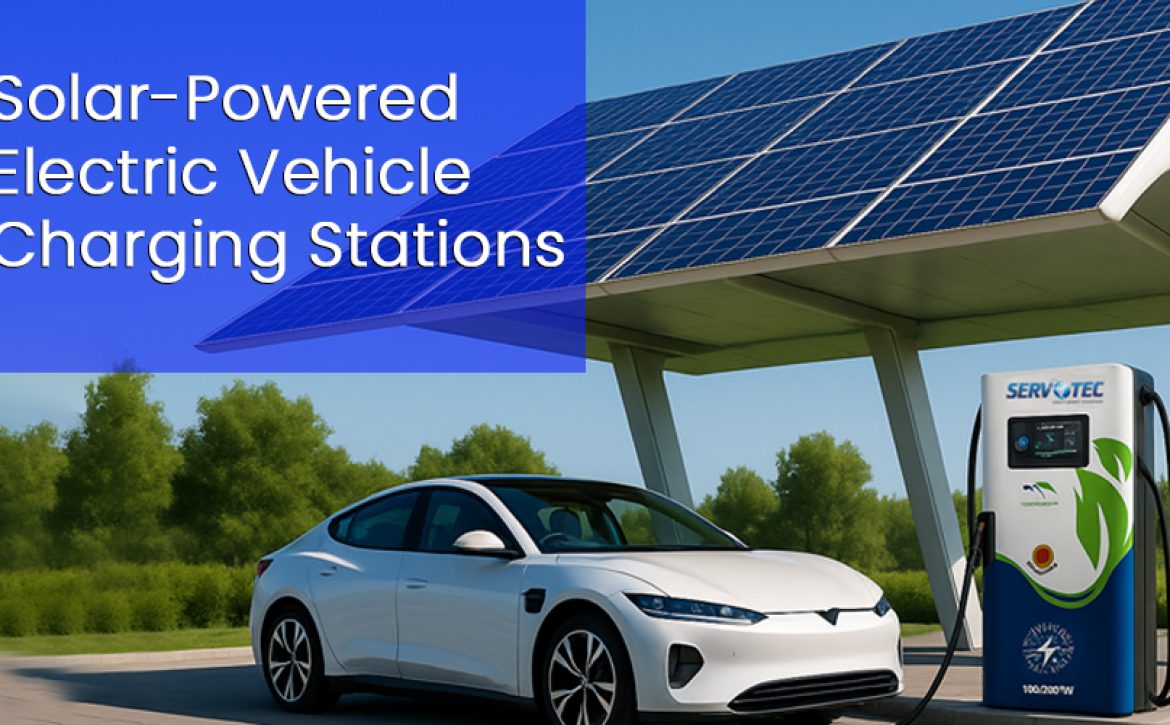
Energy efficiency is a dynamic realm with the constant emergence of trends and innovations. The company recognizes the value these trends and innovations will add to the growth of energy efficiency in the solar sector. Our innovative product solar-powered EV charging carport integrates solar power with EV charging, which is an innovative take on how we can charge our EVs and also save energy from renewable sources. Additionally, Servotech plans to invest in enhancing the quality of bifacial solar panels to increase energy generation. We are investing in research and development of major solar developments and understand the importance of energy storage in enhancing grid stability and optimizing energy utilization and grid optimization. In fact, we are developing an energy storage system that will accelerate the adoption of renewable energy in low-electricity areas.
Exploring digitization of energy efficiency, we are focused on developing advanced monitoring and control systems to optimize system performance and predict maintenance needs. Lastly, to meet the growing demand for clean energy, we are exploring the integration of solar power with other renewable energy sources like wind and hydro to create hybrid power systems.

This Interview was originally published in Indian Cement Review: https://indiancementreview.com/2024/09/23/installing-a-solar-system-is-just-the-first-step-2/

Read More
EV Charger
October 18, 2024by servotech team0 Comments
3.12K Likes

Dalal Street Investment Journal Interview with Raman Bhatia, Founder and Managing Director of Servotech Power Systems Limited

Servotech has begun indigenous manufacturing of EV charger components, aligning with the Make in India initiative, further enhancing our role in India’s clean energy and sustainable infrastructure sectors, articulates Raman Bhatia, Founder and Managing Director of Servotech Power Systems Limited.

Q1: What were the key factors behind the company’s strong 41 percent year-on-year revenue growth in Q1FY25? With net profit growth at 9 percent, what strategies can be implemented to further enhance profitability?

The strong revenue growth was an amalgamation of many factors. However, key factors among them were the growing demand for EV chargers and renewable energy solutions, supported by government initiatives like the FAME scheme, PM Surya ghar muft bijli yojana, etc. The company’s strategic focus on expanding its presence across new markets, coupled with partnerships for large-scale EV infrastructure projects, also contributed significantly to revenue growth.

Additionally, continuous innovation and the introduction of high-tech products in the EV and solar segments helped capture a larger market share. Despite this strong revenue growth, there is room for improving profitability. Strategies to enhance margins include cost optimization through streamlining operations and improving supply chain efficiency, diversification into high-margin product lines, and expanding service offerings such as maintenance or subscription-based models. Furthermore, investing in automation and digital tools can help improve operational efficiency, reduce costs, and enhance overall profitability.

Q2: Could you provide insights into the company’s product portfolio and the contribution of each segment?

The company’s product portfolio majorly includes technologically advanced EV chargers which include a high range of both AC and DC EV Chargers and solar solutions like solar panels, solar inverters, and solar batteries. The company’s major source of revenue comes through EV chargers and solar solutions which are in high demand due to the shift toward sustainable energy.

We want to further capitalize on the growing market by expanding its offerings and scaling its operations in both the EV charging and solar energy sectors, solidifying its position as a key player in the green energy industry.

Q3: What is the company’s current order book, and how is it distributed among clients, particularly Oil Marketing Companies (OMCs)?

Servotech Power Systems Ltd. has a strong and diversified order book, demonstrating high demand for EV charging and solar solutions, especially from Oil Marketing Companies (OMCs). In 2024, the company secured an order for approximately 5,100 units of DC Fast EV chargers from BPCL, IOCL, HPCL, and other EV charger OEMs. Additionally, Servotech has an order for 52 EV charging stations from nodal agencies and DISCOMs.

The company also continues to work on solar projects, including a 1.2 MW Solar Energy Storage and Grid-connected System order from UPNEDA, expanding its presence in the renewable energy sector by promoting solar power solutions nationwide.

Q4: Is the company planning any capital expenditures? Additionally, what are its current top three strategic priorities?

Yes, the company is planning capital expenditures to support its growth in both EV charging infrastructure and renewable energy solutions. Investments will focus on expanding manufacturing capabilities, enhancing R&D for product innovation, and scaling the deployment of solar and EV charging systems.

The company’s top three strategic priorities include:

– Expanding Manufacturing Facility to meet the growing demand for EV chargers and solar energy solutions efficiently handling larger volumes of orders, reducing lead times, and maintaining high-quality standards across its product portfolio.

– R&D and Product Development through investing heavily in research and development to introduce new technologies, such as faster-charging solutions, smart energy management systems, and advanced solar inverters, catering to both domestic and international markets.

– Investment and In-house Development of EV Charger Components to reduce reliance on imports but also enhance the company’s control over product quality, supply chain resilience, and cost efficiencies.

Q5: What is your outlook for India’s electric equipment industry? Also, how does the company plan to leverage opportunities from government initiatives such as Make in India, the FAME Scheme, and the PM Suryodaya Yojana?

The future of India’s electrical equipment industry looks highly promising. According to reports, the market is projected to grow at a CAGR of 11.68 percent from 2023 to 2027, reaching a value of USD 52.98 billion, with the industry expected to double in size by 2030, achieving a market valuation of USD 130 billion.

Key drivers of this growth include the increasing number of residential and commercial building projects, rising power generation from renewable energy sources, and growing investments in the power sector. Servotech is well-positioned to capitalize on these opportunities, leveraging government initiatives like the PM Suryodaya Yojana. As an authorized vendor, the company has partnered with 62 DISCOMs to deliver cutting-edge solar solutions.

Additionally, Servotech has begun indigenous manufacturing of EV charger components, aligning with the Make in India initiative, further enhancing its role in India’s clean energy and sustainable infrastructure sectors.

Originally Published on: https://www.dsij.in/dsijarticledetail/interview-with-raman-bhatia-founder-and-managing-director-of-servotech-power-systems-limited-id004-43026

Read More
Solar
October 4, 2024by servotech team0 Comments
3K Likes

Sustainable Solutions: How Industry Leaders Are Shaping the Future of Renewable Energy

Raman Bhatia, Managing Director of Servotech Renewable Power System Ltd., has more than 25 years of experience in the field of renewable energy. He led the electric vehicle chargers and solar products business for Servotech Power Systems Ltd. When the company got listed on the NSE in 2017, he made a success out of the same. Leadership is most passionate about sustainability, clean energy solutions, and multiple awards under his leadership in the ‘green energy’ space.

The rise of sustainable energy is pivotal in the global battle against climate change, serving as an essential component for both planetary well-being and economic growth. As societies confront the pressing challenges of resource depletion, exploring alternatives like solar, wind, and hydropower becomes crucial for transitioning toward a sustainable future. Various sustainable energy sources offer significant benefits, but challenges must be overcome for widespread adoption. The role of industry leaders in fostering innovation and collaboration is crucial, as their efforts are transforming energy systems to create a greener tomorrow.

In an exclusive interview with SiliconIndia, Raman Bhatia, Managing Director of Servotech Renewable Power System Ltd. emphasized that digital transformation and strategic partnerships can be the best tools to foster innovation and ensure sustainability in a rapidly evolving market. Sustainability coupled with new technologies can efficiently meet new challenges while taking hold of new growth avenues for long-term growth.

1. How are industry leaders fostering innovation to stay competitive in today’s rapidly evolving market?

Embracing digital transformation is key to staying competitive in today’s rapidly evolving market. By investing in research and development (R&D) and forging strategic partnerships, leaders are leveraging advanced technologies like AI, and IoT, to streamline operations, enhance customer experiences, and create innovative products. Cultivating a culture of innovation that fosters employee creativity, experimentation, and calculated risk-taking keeps them ahead of market trends. Additionally, collaborating with startups and academic institutions allows access to cutting-edge ideas and technologies, driving continuous improvement and maintaining a competitive edge in an ever-changing landscape.

2. What key strategies are being adopted to promote sustainable growth while balancing profitability?

To achieve sustainable growth while balancing profitability, companies are adopting renewable energy solutions, optimizing resource efficiency, and embracing circular economy models. Leaders are prioritizing sustainable supply chains, using data analytics to minimize waste, and exploring new revenue streams in eco-friendly products and services to attract environmentally conscious consumers. Key strategies include focusing on long-term planning, reducing environmental impact, and maintaining social responsibility, all while aligning business practices with ethical and sustainable principles for lasting growth.

Leaders are prioritizing sustainable supply chains, using data analytics to minimize waste, and exploring new revenue streams in eco-friendly products and services to attract environmentally conscious consumers.

3. What role do sustainable practices play in shaping the future of businesses across different sectors?

Sustainable practices are essential for shaping the future of businesses by ensuring long-term viability, reducing environmental risks, and complying with regulatory standards. With growing consumer demand for eco-friendly products, companies are pressured to adopt sustainable strategies. In sectors like energy, automotive, and manufacturing, these practices drive innovation, lower costs through energy efficiency and waste reduction, and attract investors. By focusing on sustainability, businesses can enhance customer retention, mitigate risks, and unlock new opportunities for growth while addressing climate change.

4. What innovations in renewable energy are seen as pivotal to driving long-term sustainability efforts?

Key innovations in renewable energy include breakthroughs in solar technologies, advanced energy storage solutions like next-gen batteries, and smart grid systems that optimize energy distribution. Hydrogen fuel is emerging as a clean energy carrier for transportation and industry, while bioenergy innovations are reducing reliance on fossil fuels. These advancements are driving the global transition toward clean energy and enhancing the efficiency, cost-effectiveness, and reliability of renewable power.

5. How is digital transformation reshaping traditional industries and the way they operate?

Digital transformation is revolutionizing traditional industries by automating processes, optimizing supply chains, and enabling data-driven decision-making. Technologies like cloud computing, AI, and IoT are helping businesses enhance customer experiences, personalize services, and accelerate innovation. In sectors such as manufacturing, retail, and finance, digital tools are streamlining operations, reducing costs, and creating opportunities for new business models. This transformation is reshaping industries by improving efficiency, disrupting traditional value chains, and driving personalized, data-driven customer experiences.

6. How are businesses adjusting their budgets to meet changing market demands and ensure sustainable growth?

Businesses are reallocating budgets to prioritize investments in technology, sustainability initiatives, and innovation. By trimming unnecessary expenses and automating repetitive tasks, companies can invest in digital tools that provide long-term savings. They are adopting agile financial strategies that enable rapid adaptation to changing market demands while maintaining a focus on profitability and sustainable growth. This adjustment involves prioritizing innovation through research and development, investing in sustainable practices to enhance competitiveness, optimizing costs through process improvements, and building resilience against economic downturns and market fluctuations.

7. What emerging technologies hold the most potential for enhancing efficiency and customer engagement across sectors?

Emerging technologies such as artificial intelligence (AI), machine learning, blockchain, and 5G are playing a transformative role in the renewable energy sector, significantly enhancing efficiency and customer engagement. AI-driven solutions optimize energy consumption and improve predictive maintenance, while machine learning algorithms analyze vast amounts of data for better decision-making. Blockchain technology facilitates secure and transparent energy transactions, enabling peer-to-peer energy trading and enhancing supply chain traceability. Internet of Things (IoT) devices connect renewable energy sources, such as solar panels and wind turbines, to smart grids, allowing for real-time monitoring and improved resource management. Additionally, advancements in robotics automate maintenance tasks, enhancing safety and operational efficiency. These technologies are paving the way for a more sustainable energy future, driving innovation and growth in the renewable energy landscape.

Note: This Interview is Originally Published on SiliconIndia.com

Click the link: https://industry.siliconindia.com/viewpoint/ceo-insights/sustainable-solutions-how-industry-leaders-are-shaping-the-future-of-renewable-energy-nwid-47118.html

Read More
EV Charger
September 26, 2024by servotech team2 Comments
2.66K Likes

EV Dictionary: Basic Electric Vehicle Terms that you should know!

New to the world of EVs and EV charging? There are a few key terms you should know. In this blog, we’ll simplify essential EV terminology to help you understand how electric vehicles and their charging systems work. From batteries to charging, this quick guide is designed to make EV technology easy to grasp for people who want to know more about EVs and EV charging.

List of Basic Electric Vehicle Terms that you should know

A

AC (Alternating Current): A form of electric current that consumers use when they plug in kitchen appliances, fans, televisions, etc.

Amp (Short for Ampere): Unit used to measure electric current.

B

Battery: The battery is the energy center of the EV and is recharged by plugging the EV into a charging point.

Battery Pack: The battery system in an EV, is composed of modules, high-voltage hardware & protective features.

BEV (Battery Electric Vehicle): BEVs are vehicles that utilize the energy stored in rechargeable battery packs.

Battery Management System: An electronic system within the vehicle that manages & protects the battery.

C

Charging: EVs require an EV charger to keep the battery full, just like any chargeable device. This process is called charging.

Charging Point: A piece of equipment that supplies electrical power for charging EVs.

Charging Station: A facility with one or more electrical outlets for recharging the batteries of EVs.

CCS (Combined Charging System): It is a standard for charging EVs with AC & DC. Both AC & DC vehicle connectors can be charged via the vehicle inlet. It is a European standard connector now used globally.

CSMS (Charging Station Management Software): A system built for managing, controlling & optimizing the EV charging process.

Captive Charging Station: an exclusive facility for charging of EVs owned or controlled by the owner of the charging station or governed by him under a business agreement. 

Central Nodal Agency: Central Nodal Agency is responsible for the rollout of public EV charging infrastructure across the country. 

Charge Point Operator (CPO): any individual/entity operating the EV Charging Station. 

Charger Management System (CMS):  a system used by fleet operators, charge point operators, and others, to monitor and optimize electric vehicle charging operations. 

Community Charging Station:  semi-public charging station installed at Group Housing Societies or other residential accommodations where only residents or authorized visitors can get their EV charged.

D

DC (Direct Current): One-directional flow of electric charge. Fast chargers for EVs make use of DC.

DC Fast Charging: Offers accelerated charging away from home, primarily available at public charging stations. This type of charging allows for high power transfer and faster recharges.

E

EV (Electric Vehicle):  any vehicle propelled, partly or wholly, by an electric motor drawing current from a rechargeable storage battery, other portable energy storage devices, or other self-generating electric source, 

Electric Vehicle Charging Infrastructure (EVCI):  Network of charging stations catering to diverse EV charging requirements and includes components such as EVSE, connection to DISCOM’s supply system including electricity meter, Power Management System for energy optimization, energy distribution, grid stability and renewables integration, Communication network to assist data exchange in real-time and remotely manage EV charging stations, cables, connectors, RFID tags, software applications, circuit breakers, solar panels (if connected), civil work, smart meter, transformer, etc.

 Electric Vehicle Supply Equipment (EVSE): element in Electric Vehicle Charging Infrastructure (EVCI) that supplies electric energy for recharging the battery of electric vehicle

F

FCEV (Fuel Cell Electric Vehicle): A type of EV that uses a fuel cell instead of a battery, or in combination with a battery.

G

Green House Gases: Conventional vehicles emit greenhouse gases (such as carbon dioxide & methane). These are the ultimate causes of global warming.

Grid: Electricity supply mechanism. The EV ultimately draws power from the grid.

Group Housing Society (GHS): a building unit constructed or to be constructed with one or more floors having more than two dwelling units having common service facilities where land is owned jointly (as in the case of co-operative societies or the public agencies, such as local authorities or housing boards, etc.) 

H

HEV (Hybrid Electric Vehicle): An HEV utilizes a dual system of electric propulsion & an internal combustion engine.

Home charging: Plugging your EV when it is parked at home (typically overnight). A dedicated home charging point is the safest way of doing this.

I

ICE (Internal Combustion Engine): An engine powered by fuel in the form of petrol or diesel.

Incentives: Governments offer benefits to encourage buyers to choose an EV.

K

kW (kilowatt): A unit of electric power.

kWh (kilowatt-hour): The basic measurement of an EV’s energy – how much power (kilowatts) it can supply over a period of time (hours).

L

Lithium-ion battery: Also known as a Li-ion, it is a common rechargeable battery.

Level 1 charging: Charging your EV using a common household outlet up to 120v. Level 1 is the slowest method of charging and can take up to 24 hours to fully charge your EV.

Level 2 charging: Charge your EV at 240v using an installed outlet. Level 2 chargers are the most recommended chargers for EV owners.

Level 3 charging: Also known as DC charging, the fastest method of charging for all EVs. It can fully charge an EV battery in about half an hour.

N

Network Service Provider (NSP): with respect to any electronic record is an intermediary which receives, stores transmits, or provides any service with respect to that record. This includes telecom service providers, internet service providers, web-hosting service providers, search engines, online payment sites, online auction sites, online places, and cyber cafes. 

O

OEM (Original Equipment Manufacturer): A manufacturer of vehicles, vehicle parts & related services. Usually, the term is used for EV manufacturers.

Off-peak charging: Charging your electric vehicle at low-cost off-peak hours (usually at night).

OCPP (Open Charge Point Protocol): A protocol of communication between EV charging stations & charging management systems (even when produced by different vendors). 

 Open Access: It means non-discriminatory provision for the use of transmission lines or distribution systems or associated facilities with such lines or systems by any licensee or consumer or a person engaged in generation in accordance with the regulations specified by the Appropriate Commission.

Open Automated Demand Response (Open ADR): It is an open, highly secure, and two-way information exchange model and Smart Grid standard to standardize, automate, and simplify Demand Response (DR) and Distributed Energy Resources (DER) to enable utilities and aggregators to cost-effectively manage growing energy demand & decentralized energy production, and customers to control their energy future

Open Charge Point Interface (OCPI): a communication protocol that supports information exchange between multiple network service providers (NSPs) and charge point operators to enable automated roaming between public charging networks for the ease of EV charging. 

 Open Charge Point Protocol (OCPP): an open protocol used for communication between EVSE and the Charger Management system. 

P

PHEV (Plug-in Hybrid Electric Vehicle): A hybrid electric vehicle whose battery pack can be recharged by plugging a charging cable into an external power source.

Public charging: Charging infrastructure in public spaces accessible to everyone.

PM E-Drive: PM E-Drive, or the PM Electric Drive Revolution in Innovative Vehicle Enhancement, is a scheme by the government. It provides INR 36.79 billion in incentives to promote battery-powered two-wheelers, three-wheelers, ambulances, trucks, and other advanced EVs.

 Public Charging Station (PCS): EV charging station where any electric vehicle can get its battery recharged, without access restriction.

R

Range: The total distance an EV can travel on one full charge before the battery needs to be recharged.

Range anxiety: Stress caused due to the fear that an electric car will run out of battery power before the destination is reached.

Regenerative braking: A method of breaking used by an EV in which energy generated from the braking of the vehicle is stored and used.

Roaming: Roaming for EV charging enables drivers to charge their EVs with charging stations of different networks, using a single account.

S

SoC (State of Charge): The level of charge of an electric battery relative to its capacity.

Smart Charging: It is a way to optimize the charging process according to distribution grid constraints, utilization of renewable energy sources, and customer preference. This helps reduce transformer overloading requirements for enhancing the capability of the grid and mitigating voltage fluctuation in grids having high penetration of renewable energy sources. Smart charging includes bi-directional vehicle-to-grid integration

State Nodal Agency (SNA): an agency designated by the government for the rollout of Public EV Charging Infrastructure in the state. 

T

Top-up charging: Make use of the time your EV is not in use to add charge to your battery (usually when outside).

U

Unified Energy Interface (UEI): a standard and interoperable network based on open source Beck Protocol, which facilitates interoperability among charging networks, flexible demand response, grid services, and cloud storage. 

V

V2G (Vehicle to grid): A system that allows Electric Vehicles to communicate with the power grid to manage the flow of electricity in either direction.

W

Watt: The basic measurement of electrical power.

Z

Zero emission: Zero emission refers to an engine, motor, or process that emits no greenhouse gas.

Read More
EV Charger
September 14, 2024by servotech team0 Comments
2.45K Likes

PM E-Drive Scheme: All you need to Know About

On 11th September 2024, the Government of India announced the launch of the PM Electric Drive Revolution in Innovative Vehicle Enhancement (PM E-DRIVE Scheme). This initiative aims to propel India towards a sustainable and electric mobility future. With an investment of ₹10,900 crore over the next two years, the scheme focuses on promoting electric vehicles (EVs) across various categories and establishing essential infrastructure for their smooth operation.

What is the PM E-Drive Scheme?

PM E-DRIVE stands for Prime Minister’s Electric Drive Revolution in Innovative Vehicle Enhancement. This comprehensive scheme has been designed to push for large-scale adoption of electric vehicles, reduce the country’s dependence on fossil fuels, and tackle environmental concerns like air pollution.

The PM E-Drive Scheme is a government initiative aimed at accelerating the adoption of electric vehicles (EVs) in India. Announced with a budget of ₹10,900 crore, this scheme focuses primarily on electrifying two-wheelers, ambulances, and commercial vehicles like trucks, with the goal of reducing India’s reliance on fossil fuels and curbing vehicular emissions. Unlike previous programs, such as FAME I and FAME II, which offered broad incentives for electric cars and other EVs, the PM E-Drive Scheme takes a more targeted approach, excluding electric cars and emphasizing public and commercial transportation sectors that are slower in EV adoption.

Key Components of the PM E-DRIVE Scheme

The PM E-DRIVE Scheme consists of various components to ensure the holistic promotion and adoption of electric mobility in India. Here’s a breakdown of the major elements:

1. Subsidies and Incentives:

    • ₹3,679 crore has been allocated for subsidies to incentivize the purchase of electric two-wheelers (e-2Ws), electric three-wheelers (e-3Ws), e-ambulances, e-trucks, and other emerging electric vehicles.
    • These incentives are crucial for making EVs more affordable and accessible to the general public, helping to increase their penetration across different sectors.
    • Special E-vouchers will be provided to buyers, enabling them to avail of demand-side incentives under the scheme.

    2. Incentives for E-trucks:

      A dedicated allocation of ₹500 crore has been made to incentivize the deployment of electric trucks (e-trucks) in the country. These incentives are expected to accelerate the transition of the logistics and goods transportation sector towards cleaner electric vehicles.

      3. E-ambulances:

      ₹500 crore has also been reserved for the deployment of e-ambulances, further modernizing emergency medical services by introducing environmentally friendly, battery-operated ambulances across the nation.

      4. Infrastructure Development:

      The scheme lays a strong emphasis on building the necessary charging infrastructure for electric vehicles. To this end:

      • 22,100 fast chargers will be installed for four-wheelers (e-4Ws).
      • 1,800 fast chargers will be set up for electric buses (e-buses).
      • 48,400 fast chargers will cater to electric two-wheelers (e-2Ws) and three-wheelers (e-3Ws).
      • An additional ₹2,000 crore will be allocated for the EV public charging station (PCS) network, ensuring that EV users have access to charging facilities across the country.

      5. Public Transport Electrification:

        A significant ₹4,391 crore has been set aside for the procurement of 14,028 electric buses (e-buses) to be operated by State Transport Undertakings (STUs) and other public transport agencies. This move is expected to enhance public transport while significantly reducing carbon emissions and urban air pollution.

        6. Preference for E-buses in Cities/States:

          Under the PM E-DRIVE Scheme, priority will be given to cities and states that are actively procuring electric buses after scrapping old State Transport Undertaking (STU) buses. This step ensures that regions transitioning to eco-friendly buses will benefit the most from government support.

          Expected Impact of PM E-DRIVE Scheme

          The PM E-DRIVE Scheme is set to transform India’s mobility sector by accelerating the transition to electric vehicles. With substantial subsidies, infrastructure investments, and a focused approach on electrifying public transport, the initiative will bring the following benefits:

          • Cleaner Air: The shift from internal combustion engine vehicles to electric vehicles will reduce air pollution, especially in urban areas.
          • Energy Independence: By reducing reliance on fossil fuels, the scheme will help India in its energy independence journey.
          • Boost to EV Industry: The incentives and infrastructure boost will drive growth in India’s electric vehicle manufacturing sector.
          • Better Public Transport: With the electrification of thousands of public transport buses, citizens can expect a smoother, quieter, and cleaner commuting experience.

          Conclusion

          The PM E-DRIVE Scheme is a bold and forward-thinking initiative by the Indian government to promote electric mobility. With substantial financial support, infrastructure development, and targeted incentives, the scheme will significantly accelerate the adoption of EVs across different sectors. This move is a major step towards achieving India’s green mobility goals, reducing carbon emissions, and setting an example for sustainable urban transport solutions. India is taking a giant leap into the future with this electric revolution, paving the way for a cleaner, greener tomorrow.

                Read More
                Solar
                July 19, 2024by servotech team2 Comments
                529 Likes

                PM Surya Ghar Muft Bijli Yojana 2024 – Online Registration Process

                The PM Surya Ghar Muft Bijli Yojana 2024 Online Registration Process has already begun and it is time to avail government subsidies. In this blog, we will tell you everything that you need to know about the PM Surya Ghar Muft Bijli Yojana. Read till the end of the blog and you will know about the full scheme, Objectives, Eligibility, Benefits, and How to Apply Online for this scheme.

                What is PM Surya Ghar Muft Bijli Yojana? 

                When announcing the interim budget 2024-25, Nirmala Sitharaman announced a new rooftop solar scheme, subsequently, the Prime Minister on 15 February 2024 launched the PM Surya Muft Bijli Yojana. The government aims to install solar panels in 1 crore households throughout the country throughout this scheme. Under this scheme, households who are installing solar panels on their rooftops will get 300 units of free electricity. Through this scheme, poor and middle-class households will be able to save up to Rs. 15,000 to Rs. 18,000 annually by getting solar electricity and selling surplus power to electricity distribution companies. Substantive subsidies that will cover up to 40% of the cost of installation of the solar panel will be provided directly to people’s bank accounts by the central government, and bank loans will be provided to ensure that there is no cost burden on the people. This scheme will also help the government save around Rs. 75,000 crore per year on electricity costs. Documents like proof of identity, proof of address, and electricity bill are required to inform you of the benefits of this scheme. 

                Read also: Here Is What You Should Know About Pradhan Mantri Suryodaya Yojana

                Objectives of PM Surya Ghar Muft Bijli Yojana

                The objective of this scheme is to move towards sustainable energy practices, reduce the electricity costs of the house by installing rooftop solar panels and using solar energy, overall, decreasing dependency on conventional energy sources.

                Eligibility for PM Surya Ghar Muft Bijli Yojana

                • Applicants must own a place suitable for rooftop solar panel installation.
                • Applicants must have a valid electricity connection.
                • Applicants must be Indian.
                • Applicants must be from the poor or middle class.
                • Applicants should not have previously received any other subsidy for solar panels.

                Benefits of the  PM Surya Ghar Muft Bijli Yojana

                • Annual savings of Rs. 15,000 to Rs. 18,000  from solar electricity and selling excess power to distribution companies.
                • Households receive loan facilities at low interest rates without any collateral or subsidies for installing solar panels.
                • Entrepreneurship opportunities for vendors supplying and installing solar panels.
                • Employment opportunities for youth possessing technical skills in solar panel installation and maintenance.
                • Reduction in electricity costs for the government.
                • Increased use of renewable energy and reduction in carbon emissions

                Subsidy Structure 

                Under this Rooftop Solar Scheme, the government will provide the subsidies for installing solar panels:

                • For 2 kW – Rs. 30,000 per kW 
                • For 3 kW – Rs. 18,000 per kW 
                • For systems larger than 3 kW – Maximum Rs. 78,000

                The suitable rooftop solar plant capacity for households is as follows:

                Average monthly electricity Consumption (units)Suitable Rooftop Solar Plant CapacitySubsidy 
                0-1501-2 kWRs. 30,000 to Rs. 60,000
                150-3002-3 kWRs. 60,000 to Rs. 78,000
                >300Above 3 kWRs. 78,000

                Group Housing Societies (GHS) and Resident Welfare Associations (RWA) can get a subsidy of Rs. 18,000 per kW for shared facilities, including EV charging stations, up to 500 kW capacity, and the cost is Rs. 3 per kW for each house. This subsidy also covers individual rooftop solar plants installed by residents.

                PM Surya Ghar Muft Bijli Yojana 2024 Registration Process

                1. Visit the Official Website: Visit the PM Surya Ghar Muft Bijli Yojana’s official website.
                2. Apply for Rooftop Solar: Click on the ‘Apply for Rooftop Solar’ button on the left side of the homepage.
                3. Select Details: Choose your state, district, and electricity distribution company. Enter your customer account number and click ‘Next’.
                4. Enter Contact Information: Provide your mobile number and email address, then follow the instructions to complete the registration.
                5. Log In: Log in to your account using your account number and mobile number.
                6. Apply for Rooftop Solar: Complete the application form for ‘Rooftop Solar’.
                7. Feasibility Approval: Feasibility Approval is the process in which there is a final check by the concerned electricity company to ensure that the provided details are correct and that the area is sufficient and feasible for rooftop solar installation. Once it is approved by DISCOM, install the solar plant through a registered vendor in your DISCOM area. Find a registered vendor near you by clicking here and entering your state in the search bar.
                8. Submit Plant Details: After installation, submit the plant details and apply for a net meter.
                9. Inspection and Certification: Following the net meter installation and DISCOM inspection, a commissioning certificate will be generated from the portal.
                10. Receive Subsidy: Once you have the commissioning report, log into the PM Surya Ghar Muft Bijli Yojana portal to submit your bank account details and a canceled cheque. The subsidy will be deposited into your bank account within 30 days after submitting the details.

                Read also: UP Government all set to Solarize 25000 Homes in Varanasi

                Read More
                Solar
                July 2, 2024by servotech team0 Comments
                508 Likes

                Will India Meet Revised Solar Rooftop Deadline by 2026?

                How does the existing subsidy structure for coal-fired electricity impact the affordability of rooftop solar systems?

                The existing subsidy structure for coal-fired electricity distorts the true energy cost and creates an uneven playing field for rooftop solar systems. Coal power plants receive subsidies that bring down the upfront cost for electricity generation companies. These subsidies often don’t reflect the full environmental and health costs of coal pollution. The subsidized generation cost translates to lower retail electricity prices for consumers. This makes rooftop solar, which has a higher upfront cost despite lower long-term running costs, seem less attractive financially. Lower retail electricity prices due to coal subsidies decrease the potential savings from generating your own solar power. This lengthens the payback period for rooftop solar investments, making them less appealing for cost-conscious consumers. In essence, coal subsidies artificially cheapen grid electricity, hindering the economic viability of rooftop solar and slowing down the transition to cleaner energy sources.

                What are some of the key challenges identified in achieving widespread adoption of rooftop solar systems in India, particularly in rural areas?

                Widespread adoption of rooftop solar in rural India encounters several challenges unique to these areas. While solar panels promise long-term savings, the initial investment poses a significant barrier for rural households with limited disposable income. Therefore, subsidies and tailored financing options are essential to make solar energy accessible. Moreover, many rural regions suffer from unreliable or nonexistent grid infrastructure, limiting the benefits of rooftop solar as generated power cannot be fed back to the grid for net metering. Addressing this issue requires significant investment in grid infrastructure. Additionally, the lack of access to information and technical expertise about solar technology inhibits adoption in rural communities, emphasizing the need for educational outreach programs. Furthermore, the structural suitability of common rural roof types, such as thatched roofs, for solar panel installations poses a challenge, necessitating alternative mounting solutions or exploring ground-mounted options. Moreover, the perception of complex maintenance requirements can discourage rural households from embracing solar energy. To overcome this, easy-to-maintain systems and accessible local service providers are essential. By implementing targeted policies, providing financial incentives, and conducting capacity-building initiatives, the vast potential of rooftop solar in rural India can be unlocked.

                What are the factors that should be focused on to achieve the 40 GW target by 2026?

                India can create a conducive environment for rapid rooftop solar deployment and achieve the ambitious 40 GW target by 2026 and achieve the same via a multi-pronged approach focusing on technical and financial aspects. Develop innovative financing models like rooftop solar loans with attractive interest rates, long repayment terms, and power purchase agreements (PPAs) for larger installations. This can improve affordability and spread the upfront cost. Simplify and streamline net metering policies to incentivize excess power feed-back to the grid. This can encourage larger rooftop installations and presumption models where consumers are both producers and consumers of electricity. Target subsidies towards low-income households in rural areas to bridge the affordability gap. Upgrade and expand the distribution grid infrastructure, especially in rural areas, to handle the increased power injection from rooftop solar systems and ensure reliable grid integration. Promote research and development in areas like building-integrated photovoltaics (BIPV) for efficient use of rooftop space, and explore cost-effective, lightweight mounting solutions suitable for different roof types.

                How has India’s solar energy capacity evolved over the past decade, and what role do residential rooftop installations play in achieving the country’s renewable energy targets?

                India’s solar energy sector has experienced remarkable growth in the past decade, surging from a modest 1.9 GW in 2010 to over 100 GW by 2023. This phenomenal expansion can be attributed to several factors. Technological advancements in photovoltaic technology have notably slashed panel costs, rendering solar energy more economically feasible. Moreover, supportive policies such as subsidies, net metering, and production-linked incentives have propelled the widespread adoption of large-scale solar projects. However, residential rooftop installations, although currently representing a smaller segment of the total solar capacity, offer unique advantages. Firstly, rooftop solar facilitates decentralized power generation, diminishing reliance on centralized power plants and transmission infrastructure. Additionally, rooftop solar generation during peak demand periods, particularly in the afternoons, alleviates strain on the grid. Furthermore, rooftop solar contributes to enhancing grid resilience by diversifying the energy mix and bolstering grid stability. While large-scale solar farms remain pivotal, the widespread adoption of rooftop solar is imperative for India to achieve its ambitious renewable energy targets.

                The Interview is originally published in Entrepreneur India April issue

                Read Full Interview: https://www.entrepreneur.com/en-in/growth-strategies/will-india-meet-revised-solar-rooftop-deadline-of-2026/472108

                Read More
                EV Charger
                July 2, 2024by servotech team0 Comments
                724 Likes

                Key Factors to Consider When Choosing an EV Charger

                The demand for effective and reliable EV charging solutions is rising with the rise in EV’s popularity in the market as India and other countries across the globe are supporting the transition to EVs. In this dynamic scenario, an EV charger plays an important role and holds the potential to change your EV charging experience. Therefore it becomes crucial to choose the most appropriate EV charger that best suits your needs. There are certain factors that must be taken into consideration while selecting the best EV charger for your needs from the plethora of options available.

                Key Factors to be Consider While Choosing an EV Charger

                In this blog, we will tell you about the key factors that you should look at while choosing the perfect EV charger for your EV.

                1. Charging Speed and Power

                When selecting an EV charger, charging speed and power rating are two of the most important factors to take into account. Depending on the time available and battery capacity, you should choose the most appropriate EV charger. AC EV chargers are a better option if you have time and are not in a rush. On the other hand, if you want to go for a quick charge then DC EV chargers are a better option, they can fully charge your EV in less time.

                2. Type of Connector

                EV chargers are included with various connector types to support different electric vehicle models and charging standards. Type 1, Type 2, CCS (Combined Charging System), and Tesla’s unique connector are examples of common connector types. To prevent incompatibilities, make sure the charger’s connector type and the charging port on your car are compatible.

                3. Installation Specifications 

                Think about the EV charger’s installation specifications, such as the needed electrical capacity, voltage, and amperage. While some chargers may be installed by homeowners with ease, some might need to be installed by a professional. To find out if installing the charger is feasible, evaluate the electrical system in your house and speak with an electrician.

                4. Smart Features and Connectivity

                EV chargers have smart features and connections built in to improve user experience. Seek chargers that include Bluetooth or Wi-Fi connectivity so you can use a smartphone app to monitor and manage charging from a distance. Additional efficiency and convenience can be obtained using intelligent features like energy monitoring, scheduling, and billing integration.

                5. Durability and Weather Resistance

                Durability and weather resistance are important considerations because EV chargers are frequently located outside. For dependable performance under all circumstances, search for chargers with sturdy construction and weatherproofing characteristics that can resist exposure to the outdoors.

                6. Warranty and Support

                Finally, take into account the charger manufacturer’s warranty and customer service. Protection against probable flaws or failures as well as peace of mind can be obtained with a complete warranty. Furthermore, timely assistance and resolution in the event of any problems or concerns with the charger are guaranteed by dependable customer care.

                Conclusion

                Choosing the right EV charger is essential for optimizing your charging experience and maximizing the efficiency of your electric vehicle. By considering factors such as charging speed, connector type, installation requirements, connectivity, portability, durability, and warranty coverage, you can select a charger that meets your specific needs and preferences. Investing in a high-quality EV charger ensures reliable and convenient charging for years to come, empowering you to enjoy the benefits of electric mobility with confidence.

                Read also: How to Open an Electric Car Charging Station in India

                Read More
                EV Charger
                March 15, 2024by servotech team0 Comments
                634 Likes

                Top Electric Cab Service Providers in India

                As the nation propels towards sustainable transportation solutions, the rise of Electric Vehicle (EV) fleet operators has revolutionized India’s transport sector. These trailblazing operators are pivotal in reshaping urban mobility by offering eco-friendly alternatives that combat pollution and reduce dependence on fossil fuels. By championing electric vehicles, they not only provide transportation but also actively contribute to India’s pledge towards a cleaner, greener future. Through this blog, discover the comprehensive list of electric cab service providers in India, each contributing uniquely to the nation’s evolving and environmentally conscious mobility paradigm.

                Who is an EV Fleet Operator?

                Electric vehicle (EV) fleet operators are companies or organizations that manage fleets of electric vehicles for various purposes, such as ride-sharing, car-sharing, rentals, delivery services, or corporate transportation. These operators focus on providing electric vehicles as a sustainable and eco-friendly transportation solution. 

                List of Electric Cab Service Providers in India

                Given below is a list of Electric cab service providers in India- 

                1. Ola Electric

                Ola Electric, established in 2017 as a wholly-owned subsidiary of ANI Technologies, the parent company of Ola Cabs, is deeply involved in initiatives advancing electric mobility. The company aims to introduce EVs and infrastructure, particularly for EV cab services, with a vision to potentially establish electric vehicle fleets. As an EV company, Ola Electric is dedicated to building a brighter, safer, and greener future with the mission to make India the world’s EV hub by creating a comprehensive ecosystem encompassing innovative products, services, and technology that will pave the way for the next frontier of innovation.

                2. Uber Electric

                Uber introduces EV cabs in Delhi-NCR, currently available for pre-booked trips via the Reserve feature up to 30 days in advance. Committed to achieving a fully electric, zero-emission platform by 2040, Uber Electric aims for all rides to be in zero-emission vehicles or in eco-friendly modes. Recognizing its role in addressing climate change, Uber prioritizes offering eco-friendly options, aiding drivers in transitioning to electric vehicles, and collaborating for a clean energy transition. Uber Green drivers facilitate electric mobility, contributing to cleaner air and reduced emissions globally.

                3. Meru Cabs

                Meru Cabs, an Indian taxi-hailing company, was established by Neeraj Gupta in 2006 and is headquartered in Mumbai. Owned by Mahindra Logistics, Meru offers comprehensive mobility solutions catering to both individuals and corporate clients nationwide. With a vast fleet of well-maintained vehicles and cutting-edge technology integration, Meru Cabs ensures a seamless and delightful experience for its passengers. Covering over 7,000 outstation destinations and operating in 100 locations, Meru Cabs is the trusted choice for over 50,000 passengers daily.

                4. Blu Smart

                BluSmart Mobility, an Indian ride-sharing company headquartered in Gurugram, operates an all-electric ride-sharing service in Delhi-NCR. Founded in 2019 by Anmol Singh Jaggi, Punit K Goyal, and Puneet Singh Jaggi, BluSmart aims to provide sustainable urban transportation solutions. BluSmart’s fleet includes the Mahindra e-Verito, Tata e-Tigor, Tata Xpres-T EV, Hyundai Kona Electric, and MG ZS Electric, making it India’s first all-electric shared smart mobility platform. BluSmart is dedicated to transforming Indian cities by offering 100% electric, sustainable, and reliable mobility solutions. Their vision encompasses providing efficient, affordable, intelligent, safe, and reliable mobility while prioritizing sustainability in every aspect of their operations. They aim to facilitate the transformation of Indian cities by establishing a comprehensive electric on-demand mobility platform.

                5. Evera Cabs

                Evera Cabs distinguishes itself by offering India’s largest network of all-electric cabs, prioritizing emissions reduction and passenger comfort. With a focus on safety and reliability, the app ensures ride consistency by prohibiting driver cancellations, while professionally certified full-time drivers guarantee a superior commuting experience. As a comprehensive solution, Evera Cabs revolutionizes India’s commuting landscape, providing safe, comfortable, and environmentally friendly transportation options for all.

                6. EEE Taxi

                EEE Taxi specializes in providing transportation services for EVs to corporate houses. Serving numerous business organizations like SpiceJet, MakeMyTrip, Uber, Deloitte, Mahindra, and more, Addressing the pressing issue of environmental pollution in urban areas, EEE Taxi offers an economical and eco-friendly e-mobility solution. By aiming for zero car pollution through CO2 emissions reduction, it also exempts consumers from traffic rationing. Its mission is to provide environmentally sustainable transportation accessible to everyone, everywhere. EEE Taxi is committed to delivering a seamless travel experience while building a robust network of EVs across India.

                Go Green Cabs

                Founded by Ruchi Bhatia, Heena Shah, and Shraddha Madaiya, GoGreen Cabs is led by women entrepreneurs, pioneering as one of the first electric cab service providers in Nashik. The fleet of 15 fully automatic Electric Cabs offers a luxurious and comfortable ride, traveling over 15,000 kilometers per month. Additionally, GoGreen Cabs offers economical rides, seamless travel experience, empathetic service, and operational autonomy, further enhancing its reputation for service excellence.

                7. Cab-E Cars

                Cab-E offers intra-city and outstation Electric cabs in Mumbai and Pune, With a mission to revolutionize mobility, the company is dedicated to establishing a robust charging infrastructure across India. Cab-E aims to transform drivers into cab managers and uphold the highest ethical standards in operations. Aspiring to be India’s most respected Green Tech Mobility Platform Operator, Cab-E strives to enhance value for the country, society, commuters, and all operating partners. 

                8. Snap-E

                Snap-E Cabs, operated by EC Wheels India Private Limited, is a trusted electric cab in Kolkata that provides reliable and eco-friendly public transportation EV cab services. As a subsidiary of Steelman Telecom Limited, Snap-E Cabs is committed to offering safe and affordable travel options, ensuring passengers can reach their destinations without delays, and providing dependable transportation solutions for all.

                9. Everest Fleet Pvt Ltd

                Everest Fleet operates a shared mobility cab service across major Indian cities including Mumbai, Delhi, Bengaluru, Hyderabad, Kolkata, Pune, and Chennai. With over 16,500 cars servicing taxis in these metro areas, Everest Fleet has expanded its offerings to include EV cabs alongside CNGs and vans. Everest Fleet is committed to “Mobility In Action.” with a mission to utilize their expertise in transportation to drive positive change in how people and goods move, benefiting drivers, partners, and employees. Anchored in solving crucial issues for target audiences, Everest Fleet strives to create positive impacts across communities and foster a culture of initiative-taking.

                10. Hail Cabs

                With a vision to provide quality service while prioritizing environmental sustainability, Hail Cabs takes pride in being the premier electric cab service provider in Hyderabad. Offering emission-free rides with transparent pricing, zero cancellations, and no surges, the company strives to redefine everyday commuting. The company’s journey began amidst the challenges of unreliable ride-hailing platforms, unjustified demands, and ambiguous pricing. Hail Cabs is committed to delivering exceptional service with trained drivers and sanitized cabs, fulfilling our promise to customers for a hassle-free and sustainable commute.

                11. Mega Cabs

                Mega Cabs sets the benchmark in hassle-free transportation with round-the-clock customer service and a fleet of luxury cars all equipped with GPS tracking. Serving as the go-to solution for airport transfers, outstation rides, and city commutes, Mega Cabs promises travelers convenience and safety at every turn. With operations in Delhi, Bengaluru, and Amritsar, they offer seamless booking options, including at Delhi Airport, ensuring a swift journey to any destination. Established in 2004, Mega Cabs was India’s pioneer radio taxi service, providing both short and long-term car solutions. Renowned for their commitment to safety, comfort, and now sustainability, Mega Cabs leads the industry in eco-conscious transportation, offering customers a guilt-free ride experience. 

                Conclusion 

                Exploring the realm of EV fleet operators illuminates a landscape brimming with innovation and commitment to sustainability. The showcased operators stand as beacons of change, embodying the vision for an emission-free future. As India embraces these transformative transportation solutions, the collective efforts of these operators play a vital role in steering the nation towards a more environmentally conscious and technologically advanced era of mobility. Their contributions pave the way for a transportation ecosystem that is not just efficient but also harmonious with our planet’s well-being.

                • 1
                • …
                • 3
                • 4
                • 5
                • 6
                • 7
                • …
                • 14

                  Connect Now!

                  Our expert will contact you soon.

                  About us
                  Awards & FelicitationsOur CapabilitiesOur CompanyOur LeadershipOur ProjectsTestaments
                  Follow us
                  Products
                  EV ChargerLEDsPower & Backup
                  Subsidiary Company
                  Servotech EV Infra Pvt. Ltd. Servotech Sports and Entertainment Pvt. Ltd. Rebreathe Medical Devices India Pvt. Ltd. Hertz & Pixelz Pvt. Ltd.
                  Media
                  BlogsEventsMedia CoveragesMedia KitPress Release
                  Quick Links
                  Store LocatorSolar CalculatorEV Charging AppVendor RegistrationSite Map
                  Write to us
                  Sales
                  servotech@servotechindia.comexportsales@servotechindia.comchannelsales@servotechindia.com
                  Public Relations
                  pr@servotechindia.com
                  Marketing
                  marketing@servotechindia.com
                  ebiz@servotechindia.com
                  Careers
                  hr@servotechindia.com
                  Contact us

                  For Sales Enquiry: 011 41183116

                  For EV Chargers sales: 9717691800

                  For Service: 011 41183119

                  Email : customercare@servotechindia.com

                  Corporate Office

                  806, 8th Floor, Crown Heights, Hotel Crown Plaza, Sector 10, Rohini New Delhi 110085

                  Registered & Kundli Plant Address

                  KHATA NO. 1970, KHEWAT NO. 1672, KHASRA NO. 21/20/2/2, REVENUE ESTATE, KUNDLI, P.S.Rai, Sonipat, Sonipat 131029, Haryana, India

                  Safiabad Address

                  Killa No.14, 6/1/2(0-3), 6/2/3(5-13, Safiabad, Pana Paposhian, Tehsil, Rai, Sonipat, Haryana 131029

                  Follow us

                  Awards & FelicitationsOur CapabilitiesOur CompanyOur LeadershipOur ProjectsTestaments

                  EV ChargerLEDsPower & BackupSolar Products

                  Servotech EV Infra Pvt. Ltd. Servotech Sports and Entertainment Pvt. Ltd. Rebreathe Medical Devices India Pvt. Ltd. Hertz & Pixelz Pvt. Ltd.

                  BlogsEventsMedia CoveragesMedia KitPress Release

                  Store LocatorSolar CalculatorEV Charging AppVendor RegistrationSite Map

                  Sales
                  servotech@servotechindia.comexportsales@servotechindia.comchannelsales@servotechindia.com
                  Public Relations
                  pr@servotechindia.com
                  Marketing
                  marketing@servotechindia.com
                  ebiz@servotechindia.com
                  Careers
                  hr@servotechindia.com

                  For Sales Enquiry: 011 41183116

                  For EV Chargers sales: 9717691800

                  For Service: 011 41183119

                  Email : customercare@servotechindia.com

                  Corporate Office

                  806, 8th Floor, Crown Heights, Hotel Crown Plaza, Sector 10, Rohini New Delhi 110085

                  Registered & Kundli Plant Address

                  KHATA NO. 1970, KHEWAT NO. 1672, KHASRA NO. 21/20/2/2, REVENUE ESTATE, KUNDLI, P.S.Rai, Sonipat, Sonipat 131029, Haryana, India

                  Safiabad Address

                  Killa No.14, 6/1/2(0-3), 6/2/3(5-13, Safiabad, Pana Paposhian, Tehsil, Rai, Sonipat, Haryana 131029

                  Copyright 2026 © Servotech Renewable Power System Limited: Privacy Policy. Brand Guidelines. Our Capability. Legal Disclaimer. Terms of use

                  Top