
Solar Subsidy in Bihar Explained: Eligibility, Benefits & How to Apply (2026 Guide)
Electricity bills across Bihar have been steadily climbing, and for homeowners in cities like Patna, Gaya, Muzaffarpur, Bhagalpur, and Darbhanga, frequent tariff hikes combined with grid reliability concerns have made rooftop solar an increasingly practical choice — not just an environmental one. The good news is that going solar in Bihar has become considerably more affordable in the last year.
Under the central PM Surya Ghar Muft Bijli Yojana, implemented in Bihar through BREDA (Bihar Renewable Energy Development Agency) alongside the state’s two DISCOMs, homeowners can already claim a substantial subsidy. And more recently, the Bihar government approved its own additional state-level top-up — meaning residents can now stack two layers of financial support on a single rooftop installation.
This guide covers everything you need to know about the Solar Subsidy in Bihar — eligibility, the exact subsidy amount, the 5kW solar system price in Bihar with subsidy, the step-by-step application process, required documents, and answers to the questions homeowners search for most.
Why Rooftop Solar is Gaining Ground in Bihar
Bihar receives strong, consistent solar irradiance through most of the year, which makes rooftop solar a genuinely efficient investment rather than a symbolic one.
Several factors are driving adoption higher across the state:
- Rising domestic electricity tariffs
- Frequent voltage fluctuations and grid reliability issues in several districts
- Central subsidy support under PM Surya Ghar
- A newly approved Bihar state-level top-up subsidy
- Net metering support from NBPDCL and SBPDCL
- Growing awareness of long-term electricity savings
Read also: Solar Subsidy in Haryana Explained: Eligibility, Benefits & How to Apply
What is the Solar Subsidy in Bihar?
The Solar Subsidy in Bihar refers to the combined financial assistance available to eligible residential consumers — a central subsidy under PM Surya Ghar Muft Bijli Yojana, plus an additional Bihar state-level subsidy — for installing a grid-connected rooftop solar system.
Instead of paying the full installation cost, eligible homeowners now receive:
- A fixed central subsidy based on system capacity, and
- An additional Bihar state subsidy, approved by the state cabinet as a top-up specifically for residential rooftop installations under PM Surya Ghar
Both amounts are credited directly to the applicant’s bank account after DISCOM inspection and commissioning. This two-layer structure is a significant boost for Bihar, which had earlier remained at the central-subsidy-only level while several other states already offered state top-ups.
Understanding PM Surya Ghar Muft Bijli Yojana in Bihar
The PM Surya Ghar Muft Bijli Yojana is India’s flagship residential rooftop solar scheme, targeting one crore households nationwide. In Bihar, BREDA acts as the state nodal agency, working alongside NBPDCL and SBPDCL to process applications, coordinate site inspections, and facilitate net metering.
Key objectives of the scheme in Bihar include:
- Making rooftop solar affordable for middle-income households
- Reducing pressure on the state grid during peak demand hours
- Supporting Bihar’s broader renewable energy targets, including its push toward higher solar capacity by 2030
- Helping consumers lower their monthly electricity bills, with the scheme designed to provide meaningfully reduced bills for many households
Because the Bihar state top-up was only recently approved, homeowners should always confirm the current subsidy structure directly on breda.bih.nic.in or pmsuryaghar.gov.in, since exact slab amounts and eligibility conditions may be refined as the programme rolls out.
Who is Eligible for Solar Subsidy in Bihar?
To claim benefits under the PM Surya Ghar Muft Bijli Yojana Subsidy in Bihar, applicants generally need to meet the following conditions:
1. Residential Ownership
The applicant should own the residential property where the system is being installed. Joint ownership is typically accepted.
2. Valid Domestic Electricity Connection
You need an active residential connection from either NBPDCL or SBPDCL, depending on which part of Bihar you live in. Commercial or agricultural tariff connections do not qualify under this residential subsidy.
3. Adequate, Shadow-Free Rooftop Space
The roof should have enough unshaded area to accommodate the panels and receive consistent sunlight through the day.
4. Sanctioned Load Within Limits
The connection’s sanctioned load generally needs to fall within the scheme’s prescribed limit for residential rooftop systems.
5. Installation Through a BREDA/DISCOM-Registered Vendor
The system must be installed using ALMM-listed (Approved List of Models and Manufacturers) equipment through an installer registered on the national PM Surya Ghar portal.
6. Net Metering Compliance
The installed system needs to be grid-connected and eligible for net metering through your DISCOM.
Read also: 3kW Solar System in India: Price, Subsidy, Specifications & Buying Guide
How Much Solar Subsidy Can You Get in Bihar?
Under the central PM Surya Ghar Muft Bijli Yojana, the subsidy is structured based on system capacity:
- 1kW system: Central subsidy of approximately ₹30,000
- 2kW system: Central subsidy of approximately ₹60,000
- 3kW and above: Central subsidy capped at approximately ₹78,000
On top of this, the Bihar government has approved an additional state subsidy of approximately ₹10,000 per kW, subject to a cap per consumer, applicable to eligible residential rooftop installations under PM Surya Ghar. This means many Bihar households can now receive meaningfully more total support than the central subsidy alone.
Since this state top-up was approved fairly recently and involves specific eligibility conditions and a consumer cap, it’s important to verify the current, exact combined figure on the official BREDA or PM Surya Ghar portal before finalising your installer contract.
The full subsidy amount is disbursed via Direct Benefit Transfer (DBT) straight into the applicant’s bank account, typically within 30 to 45 days of successful commissioning and net meter installation.
5kW Solar System Price in Bihar with Subsidy
One of the most searched questions among Bihar homeowners is:
“What is the 5kW solar system price in Bihar with subsidy?”
Since the central subsidy is capped at the 3kW slab (approximately ₹78,000), a 5kW system receives the same maximum central subsidy — plus Bihar’s additional state top-up where applicable — with the remaining 2kW of capacity priced at the standard market rate.
The final project cost for a 5kW system depends on several variables:
- Solar panel technology and wattage (Mono PERC, TOPCon, etc.)
- Inverter type and brand
- Mounting structure and roof type
- Wiring, cabling, and balance-of-system components
- Installation complexity and site conditions
- Net metering charges levied by your DISCOM
- Brand warranty and after-sales service coverage
A 5kW system is typically well-suited for larger homes with higher electricity consumption — multiple ACs, a water heater, and several major appliances running through the day.
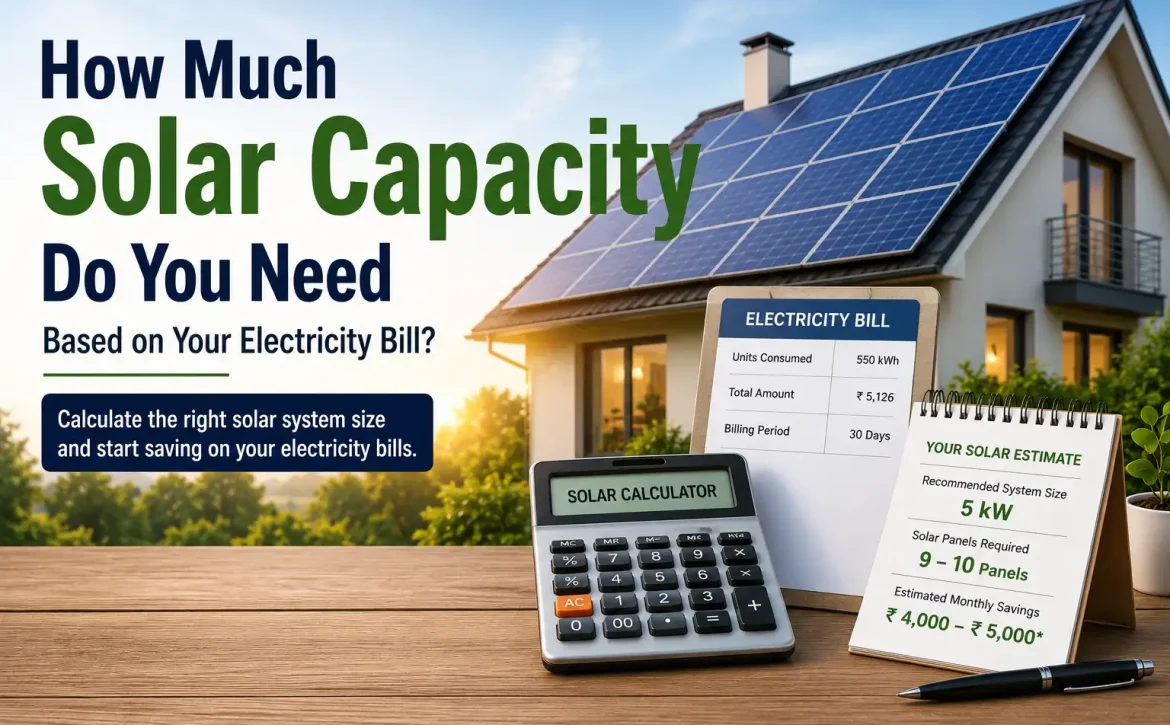
Tip: Before committing to a system size, use Servotech’s Solar Calculator to estimate the ideal capacity based on your actual electricity consumption, so you don’t end up over- or under-sizing your investment. For a closer look at how panel size and roof space affect your system choice, see our Solar Panel Size Guide.
Benefits of Rooftop Solar Subsidy in Bihar
Even without the subsidy, rooftop solar makes financial sense over the long run. With two layers of government assistance now available, the case is considerably stronger for Bihar households.
1. Lower Upfront Investment
The combined central and state subsidy directly reduces the amount you need to pay out of pocket.
2. Faster Payback Period
With a lower net cost, most Bihar households can recover their investment meaningfully faster than an unsubsidised system.
3. Reduced Monthly Electricity Bills
A correctly sized system can offset a large share of daily household consumption, cutting your DISCOM bill significantly.
4. Better Protection Against Grid Reliability Issues
Solar paired with battery backup can help households manage the voltage fluctuations and outages that some parts of Bihar still experience.
5. Protection Against Future Tariff Hikes
Once installed, your solar system insulates a portion of your electricity needs from future tariff increases.
6. Long Operational Life
Quality solar panels typically perform reliably for 25 years or more, delivering savings well beyond the payback period.
NBPDCL vs SBPDCL — Which DISCOM Covers Your Area?
Bihar’s electricity distribution is handled by two DISCOMs under BSPHCL (Bihar State Power Holding Company Limited), and knowing which one serves you matters for the net metering and inspection process:
- NBPDCL (North Bihar Power Distribution Company Ltd.): Covers northern Bihar, including Muzaffarpur, Darbhanga, and Bhagalpur.
- SBPDCL (South Bihar Power Distribution Company Ltd.): Covers southern Bihar, including Patna and Gaya.
Both DISCOMs process PM Surya Ghar applications and net metering requests through the national portal, with BREDA coordinating rooftop solar promotion and local support across circles.
How to Apply for Solar Subsidy in Bihar?
Applying for the Solar Subsidy in Bihar has become considerably more streamlined with the national PM Surya Ghar portal. Here’s the step-by-step process.
Step 1: Assess Your Energy Requirement
Review your last few electricity bills to understand your average monthly consumption, connected load, and available rooftop space.
Tip: Use Servotech’s Solar Calculator to get a quick capacity estimate before applying.
Step 2: Register on the PM Surya Ghar Portal
Visit pmsuryaghar.gov.in, select Bihar as your state, choose your DISCOM (NBPDCL or SBPDCL), and register using your mobile number and consumer account number.
Step 3: Submit Your Application
Provide your consumer details, rooftop information, and the proposed system capacity you wish to install.
Step 4: Get Technical Feasibility Approval
Your DISCOM reviews the application and grants technical feasibility approval before installation can begin.
Step 5: Install the Rooftop Solar System
Once approved, choose an installer registered with BREDA and your DISCOM, who will carry out the site survey, system design, panel and inverter installation, wiring, and safety testing.
Step 6: Net Meter Installation and Inspection
After installation, the DISCOM inspects the system and facilitates net meter installation, enabling you to export surplus solar power to the grid.
Step 7: Subsidy Disbursement
Once commissioning is confirmed on the national portal, the combined central and state subsidy amount is credited to your registered bank account via DBT, generally within 30 to 45 days.
Documents Required for Solar System Subsidy in Bihar
Keep the following ready before you begin your application:
- Aadhaar Card
- PAN Card (if applicable)
- Residential address proof
- Recent electricity bill
- Passport-size photograph
- Rooftop ownership proof
- Bank account details (for DBT)
- Installation and commissioning documents (provided by your installer)
Document requirements can be updated periodically, so it’s a good idea to confirm the current checklist on the official portal before applying.
Understanding Net Metering in Bihar
Net metering is what allows a rooftop solar system to actually pay for itself efficiently. It lets you export any surplus electricity your system generates during the day back to the grid, earning credits against the power you draw at night or on cloudy days.
Bihar’s net metering framework, regulated by BERC (Bihar Electricity Regulatory Commission) and implemented through NBPDCL and SBPDCL, supports systems ranging from 1 kW up to larger capacities, with a check meter mandated for bigger installations.
Why Net Metering Matters
- Maximises the value of every unit your system produces
- Reduces your net monthly electricity bill
- Improves overall return on investment
- Cuts down dependence on grid power during peak hours
Read also: How Does Net Metering Make Solar Power More Accessible to Consumers
Common Mistakes to Avoid While Applying
Many Bihar homeowners lose time — or subsidy eligibility — over avoidable errors.
1) Undersizing or Oversizing the System
Choosing a capacity that doesn’t match your actual consumption pattern reduces both savings and efficiency.
2) Prioritising Price Over Component Quality
Cheaper panels and inverters can compromise long-term output and reliability.
3) Skipping a Proper Roof Assessment
Shadow analysis and structural evaluation are essential before finalising system design.
4) Delaying the Net Metering Process
Postponing net meter installation delays your ability to start saving — and can delay subsidy disbursement too.
5) Choosing an Unregistered Installer
Always confirm your vendor is registered with BREDA and listed on the national PM Surya Ghar portal to avoid application rejection.
Why Choose Servotech for Rooftop Solar in Bihar?
Selecting the right installation partner is just as important as claiming the subsidy itself.
Servotech Renewable Power System Ltd. offers complete rooftop solar solutions for residential consumers in Bihar, including:
- Site assessment and shadow analysis
- Custom system design based on your consumption
- High-efficiency solar panels and advanced solar inverters
- Professional, ALMM-compliant installation
- Assistance with subsidy documentation (central + Bihar state top-up)
- Net metering coordination with NBPDCL/SBPDCL
- End-to-end project support and after-sales service
With a strong presence across India, Servotech helps Bihar homeowners navigate the two-layer subsidy process while ensuring a system that’s built to perform reliably for decades.
Frequently Asked Questions (FAQs)
It’s the combined financial assistance available to eligible residential consumers — a central subsidy under PM Surya Ghar Muft Bijli Yojana plus an additional Bihar state-level top-up — disbursed via direct bank transfer after commissioning.
Residential homeowners with an active domestic connection from NBPDCL or SBPDCL, adequate rooftop space, and installation through a BREDA/portal-registered vendor are generally eligible.
A 3kW system is eligible for the maximum central subsidy of approximately ₹78,000, plus Bihar’s additional state top-up, subject to current eligibility conditions and caps.
The final cost depends on equipment, brand, and installation complexity, with the central subsidy capped at the 3kW slab amount even for larger systems, plus any applicable Bihar state top-up.
NBPDCL covers northern Bihar districts like Muzaffarpur, Darbhanga, and Bhagalpur; SBPDCL covers southern Bihar, including Patna and Gaya.
Yes, the Bihar government has approved an additional state-level subsidy for eligible residential rooftop installations under PM Surya Ghar, on top of the central benefit. Confirm the current amount and conditions on the official BREDA portal.
No, the residential subsidy under PM Surya Ghar is intended for domestic consumers. Commercial installations follow separate policies.
Aadhaar Card, electricity bill, address proof, bank account details, rooftop ownership proof, and passport-size photograph are typically required.
Yes, the installed system needs to be grid-connected and eligible for net metering to qualify for subsidy disbursement.
Yes, subject to rooftop availability and any applicable housing society approvals.
Typically 30 to 45 days after successful DISCOM inspection and commissioning on the national portal.
BREDA is Bihar’s state nodal agency for renewable energy, coordinating rooftop solar promotion, installer registration, and subsidy-related processes alongside NBPDCL and SBPDCL.
Common reasons include non-ALMM-listed equipment, incorrect sanctioned load details, incomplete documentation, or use of an unregistered installer.
High-quality panels generally offer a functional lifespan of 25 years or more with minimal maintenance.
You can use Servotech’s Solar Calculator to get a quick, consumption-based capacity estimate before applying.
Read also: Solar Subsidy in Uttar Pradesh 2026 Explained
Conclusion
The Solar Subsidy in Bihar has taken a meaningful step forward with the state’s new top-up sitting alongside the central PM Surya Ghar benefit — giving homeowners in Patna, Gaya, Muzaffarpur, Bhagalpur, and Darbhanga two layers of financial support for going solar. For a state that had previously relied on the central subsidy alone, this is a significant shift in affordability.
That said, the real value of this subsidy still depends on choosing the right system capacity, using quality components, and working with an experienced installation partner who can navigate documentation and net metering smoothly across NBPDCL and SBPDCL.
With Bihar’s strong solar potential and a growing subsidy framework, there has rarely been a better time for homeowners in the state to make the switch to rooftop solar.mentions. Maine is Blog ke liye jo bhi primary keywords or secondary keywords diye unhe is blog mein insert karna hai aur Heading Tags mein bhi keywords insert kar sakte hai. Aur Servotech ki website mein jo exting blogs hai unko bhi internal link karna hai to to agar is blog mein hum kuch aise keywords ya phrase bhi use kare jis par hum existing blogs ko bhi interlink kar sake aur jo bhi blog hum link kare vo naturally aur relatable tarike se include kiye jaye.