• About Us
    • Awards & Felicitations
    • Our Company
    • Our Leadership
    • Our Projects
    • Testaments
  • Products
    • EV Charger
      • Spark Series (AC Charger)
      • Squad Series (DC Charger)
    • Solar Products
      • Solar Inverter
      • ServPort
      • Solar Management Unit
      • Solar Batteries
      • Solar Lithium Battery
      • Solar Panels
    • Power & Backup
      • Battery
      • Servo Stabilizer
      • UPS
    • Electric 3W Solutions
      • Lithium Battery
      • Electric 3W Charger
    • LEDs
      • Domestic LED
      • Commercial LED
    • Others
      • Oxygen Concentrator
      • UVC
  • Solutions
    • Solar EPC
    • Solar Calculator
    • EV Calculator
  • Media
    • Blogs
    • Events
    • Media Coverages
    • Media Kit
    • Press Releases
  • Investors
  • Contact

Type To Search

  • About Us
    • Awards & Felicitations
    • Our Company
    • Our Leadership
    • Our Projects
    • Testaments
  • Products
    • EV Charger
      • Spark Series (AC Charger)
      • Squad Series (DC Charger)
    • Solar Products
      • Solar Inverter
      • ServPort
      • Solar Management Unit
      • Solar Batteries
      • Solar Lithium Battery
      • Solar Panels
    • Power & Backup
      • Battery
      • Servo Stabilizer
      • UPS
    • Electric 3W Solutions
      • Lithium Battery
      • Electric 3W Charger
    • LEDs
      • Domestic LED
      • Commercial LED
    • Others
      • Oxygen Concentrator
      • UVC
  • Solutions
    • Solar EPC
    • Solar Calculator
    • EV Calculator
  • Media
    • Blogs
    • Events
    • Media Coverages
    • Media Kit
    • Press Releases
  • Investors
  • Contact

Type To Search

  • About Us
    • Awards & Felicitations
    • Our Company
    • Our Leadership
    • Our Projects
    • Testaments
  • Products
    • EV Charger
      • Spark Series (AC Charger)
      • Squad Series (DC Charger)
    • Solar Products
      • Solar Inverter
      • ServPort
      • Solar Management Unit
      • Solar Batteries
      • Solar Lithium Battery
      • Solar Panels
    • Power & Backup
      • Battery
      • Servo Stabilizer
      • UPS
    • Electric 3W Solutions
      • Lithium Battery
      • Electric 3W Charger
    • LEDs
      • Domestic LED
      • Commercial LED
    • Others
      • Oxygen Concentrator
      • UVC
  • Solutions
    • Solar EPC
    • Solar Calculator
    • EV Calculator
  • Media
    • Blogs
    • Events
    • Media Coverages
    • Media Kit
    • Press Releases
  • Investors
  • Contact
  • About Us
    • Awards & Felicitations
    • Our Company
    • Our Leadership
    • Our Projects
    • Testaments
  • Products
    • EV Charger
      • Spark Series (AC Charger)
      • Squad Series (DC Charger)
    • Solar Products
      • Solar Inverter
      • ServPort
      • Solar Management Unit
      • Solar Batteries
      • Solar Lithium Battery
      • Solar Panels
    • Power & Backup
      • Battery
      • Servo Stabilizer
      • UPS
    • Electric 3W Solutions
      • Lithium Battery
      • Electric 3W Charger
    • LEDs
      • Domestic LED
      • Commercial LED
    • Others
      • Oxygen Concentrator
      • UVC
  • Solutions
    • Solar EPC
    • Solar Calculator
    • EV Calculator
  • Media
    • Blogs
    • Events
    • Media Coverages
    • Media Kit
    • Press Releases
  • Investors
  • Contact
Read More
Solar
August 12, 2026by servotech team0 Comments
113 Likes

Solar Subsidy in Haryana Explained: Eligibility, Benefits & How to Apply (2026 Guide)

Electricity consumption across Haryana has been climbing steadily, driven by growing use of air conditioners, water heaters, and home appliances, along with expanding residential and commercial development in cities like Gurugram, Faridabad, Panipat, and Karnal. As monthly power bills increase, more homeowners are looking for a sustainable way to cut costs without compromising on comfort.

One of the most practical answers to this problem is a rooftop solar system. To make solar adoption easier and more affordable, the central government runs the PM Surya Ghar Muft Bijli Yojana, and in Haryana this scheme is implemented through HAREDA (Haryana Renewable Energy Development Agency) in coordination with the state’s two power distribution companies.

If you’re a homeowner in Haryana planning to go solar, understanding the Solar Subsidy in Haryana can significantly bring down your upfront investment while shortening the time it takes to recover your costs.

This guide walks you through everything — eligibility, subsidy amount, the 5kW solar system price in Haryana with subsidy, the step-by-step application process, required documents, and answers to the questions homeowners ask most often.

Book FREE Site Survey

Why Rooftop Solar is Gaining Momentum in Haryana

Haryana receives strong solar irradiance for most of the year, which makes rooftop solar a genuinely efficient investment rather than just an environmental gesture.

Several factors are pushing adoption higher across the state:

  • Rising domestic electricity tariffs
  • Frequent voltage fluctuations in semi-urban and rural feeders
  • Central government financial assistance under PM Surya Ghar
  • Net metering support from UHBVN and DHBVN
  • Growing awareness of long-term savings
  • Increasing real estate demand for solar-ready homes

Read also: 3kW Solar System in India: Price, Subsidy, Specifications & Buying Guide

What is the Solar Subsidy in Haryana?

The Solar Subsidy in Haryana refers to the financial assistance available to eligible residential consumers under the PM Surya Ghar Muft Bijli Yojana for installing a grid-connected rooftop solar system.

Rather than bearing the full installation cost, eligible homeowners receive a fixed government subsidy based on the capacity of the system installed, credited directly to their bank account after the installation is inspected and commissioned by the local DISCOM.

The subsidy exists to:

  • Lower the entry barrier to residential solar
  • Reduce household electricity expenses
  • Support Haryana’s renewable energy targets
  • Encourage decentralised power generation across the state

For many families, this subsidy is the deciding factor that makes rooftop solar financially viable sooner rather than later.

Get Free Quote for Solar Panels, Inverters and Other Solar Accessories

PM Surya Ghar Muft Bijli Yojana is India’s flagship residential rooftop solar scheme, targeting one crore households nationwide. In Haryana, HAREDA acts as the state nodal agency, working alongside UHBVN and DHBVN to process applications, coordinate inspections, and facilitate net metering.

Key objectives of the scheme in Haryana include:

  • Making rooftop solar affordable for middle-income households
  • Reducing dependence on conventional grid electricity
  • Supporting the state’s clean energy transition
  • Helping consumers lower their monthly electricity bills over the long term

Homeowners should always verify the latest subsidy structure and any additional state-level assistance directly on hareda.gov.in, since scheme details and slab amounts are periodically revised.

Who is Eligible for Solar Subsidy in Haryana?

Not every rooftop installation automatically qualifies for the subsidy. To claim benefits under the PM Surya Ghar Muft Bijli Yojana Subsidy in Haryana, applicants generally need to meet the following conditions:

1. Residential Ownership

The applicant should own the residential property where the system is being installed. Joint ownership is typically accepted.

2. Valid Domestic Electricity Connection

You need an active residential connection from either UHBVN or DHBVN, depending on which part of Haryana you live in. Commercial or agricultural tariff connections do not qualify under the residential subsidy.

3. Adequate, Shadow-Free Rooftop Space

The roof should have enough unshaded area to accommodate the panels and receive consistent sunlight through the day.

4. Sanctioned Load Within Limits

The connection’s sanctioned load generally needs to fall within the scheme’s prescribed limit for residential rooftop systems.

5. Installation Through an Empanelled Vendor

The system must be installed using ALMM-listed (Approved List of Models and Manufacturers) equipment through a vendor registered on the national PM Surya Ghar portal.

6. Net Metering Compliance

The installed system needs to be grid-connected and eligible for net metering through your DISCOM.

Read also: Solar Subsidy in Uttar Pradesh 2026 Explained

How Much Solar Subsidy Can You Get in Haryana?

Under the central PM Surya Ghar Muft Bijli Yojana, the subsidy is structured based on system capacity:

  • 1kW system: Subsidy of approximately ₹30,000
  • 2kW system: Subsidy of approximately ₹60,000
  • 3kW and above: Subsidy capped at approximately ₹78,000

This subsidy amount applies uniformly under the central scheme, and Haryana has, at various points, also offered additional state-level assistance for specific consumer categories such as economically weaker sections. Since state-level top-ups are revised periodically, it’s worth checking hareda.gov.in for the current status before finalising your installer contract.

The subsidy is disbursed via Direct Benefit Transfer (DBT) straight into the applicant’s bank account, typically within 30 to 45 days of successful commissioning and net meter installation.

5kW Solar System Price in Haryana with Subsidy

One of the most searched questions among Haryana homeowners is:

“What is the 5kW solar system price in Haryana with subsidy?”

Since the central subsidy is capped at 3kW capacity (approximately ₹78,000), a 5kW system receives the same maximum subsidy amount, with the remaining 2kW of capacity priced at the standard market rate.

The final project cost for a 5kW system depends on several variables:

  • Solar panel technology (Mono PERC, Bifacial, etc.)
  • Inverter type and brand
  • Mounting structure and roof type
  • Wiring, cabling, and balance-of-system components
  • Installation complexity and site conditions
  • Net metering charges levied by the DISCOM
  • Brand warranty and after-sales service coverage

A 5kW system is typically well-suited for larger homes with higher electricity consumption — think multiple ACs, a water heater, and several major appliances running through the day.

Tip: Before committing to a system size, use Servotech’s Solar Calculator to estimate the ideal capacity based on your actual electricity consumption, so you don’t end up over- or under-sizing your investment.

Read also: How Much Solar Capacity Do You Need Based on Your Electricity Bill?

Benefits of Rooftop Solar Subsidy in Haryana

Even without the subsidy, rooftop solar makes financial sense over the long run. With government assistance, the case becomes considerably stronger.

1. Lower Upfront Investment

The subsidy directly reduces the amount you need to pay out of pocket, easing the initial financial burden.

2. Faster Payback Period

With a lower net cost, most Haryana households can recover their investment meaningfully faster than an unsubsidised system.

3. Reduced Monthly Electricity Bills

A correctly sized system can offset a large share of daily household consumption, cutting your DISCOM bill significantly.

4. Protection Against Tariff Hikes

Once installed, your solar system insulates a portion of your electricity needs from future tariff increases.

5. Higher Property Value

Solar-equipped homes are increasingly attractive to buyers who want lower running costs and a smaller carbon footprint.

6. Long Operational Life

Quality solar panels typically perform reliably for 25 years or more, delivering savings well beyond the payback period.

Book FREE Consultation

  • UHBVN (Uttar Haryana Bijli Vitran Nigam): Covers northern and central Haryana, including Ambala, Kurukshetra, Karnal, Panipat, Sonipat, Rohtak, and Jhajjar.
  • DHBVN (Dakshin Haryana Bijli Vitran Nigam): Covers southern Haryana, including Gurugram, Faridabad, Palwal, and Mewat.
  • Both DISCOMs process PM Surya Ghar applications and net metering requests through the national portal, but local turnaround times can vary slightly depending on inspection backlogs in your circle.

    How to Apply for Solar Subsidy in Haryana?

    Applying for the Solar Subsidy in Haryana has become considerably more streamlined with the national PM Surya Ghar portal. Here’s the step-by-step process.

    Step 1: Assess Your Energy Requirement

    Review your last few electricity bills to understand your average monthly consumption, connected load, and available rooftop space.

    Tip: Use Servotech’s Solar Calculator to get a quick capacity estimate before applying.

    Step 2: Register on the PM Surya Ghar Portal

    Visit the official PM Surya Ghar Muft Bijli Yojana portal and register using your mobile number, electricity consumer number, state, and DISCOM (UHBVN or DHBVN).

    Step 3: Submit Your Application

    Provide your consumer details, rooftop information, and the proposed system capacity you wish to install.

    Step 4: Get Technical Feasibility Approval

    Your DISCOM reviews the application and grants technical approval before installation can begin.

    Step 5: Install the Rooftop Solar System

    Once approved, an empanelled installer carries out the site survey, system design, panel and inverter installation, wiring, and safety testing.

    Step 6: Net Meter Installation and Inspection

    After installation, the DISCOM inspects the system and facilitates net meter installation, enabling you to export surplus solar power to the grid.

    Step 7: Subsidy Disbursement

    Once commissioning is confirmed on the national portal, the subsidy amount is credited to your registered bank account via DBT, generally within 30 to 45 days.

    Documents Required for Solar System Subsidy in Haryana

    Keep the following ready before you begin your application:

    • Aadhaar Card
    • PAN Card (if applicable)
    • Residential address proof
    • Recent electricity bill
    • Passport-size photograph
    • Rooftop ownership proof
    • Bank account details (for DBT)
    • Installation and commissioning documents (provided by your installer)

    Document requirements can be updated periodically, so it’s a good idea to confirm the current checklist on the official portal before applying.

    Understanding Net Metering in Haryana

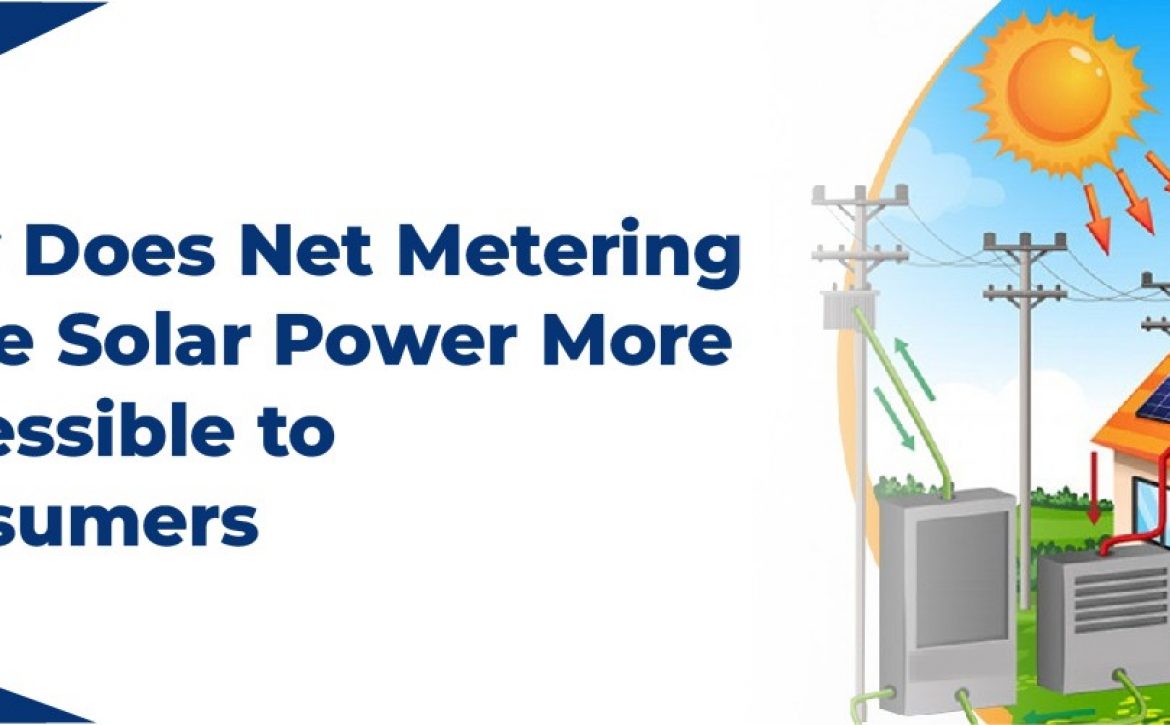
    Net metering is what allows a rooftop solar system to actually pay for itself efficiently. It lets you export any surplus electricity your system generates during the day back to the grid, earning credits against the power you draw from the grid at night or on cloudy days.

    Why Net Metering Matters

    • Maximises the value of every unit your system produces
    • Reduces your net monthly electricity bill
    • Improves overall return on investment
    • Cuts down dependence on grid power during peak hours


    Read also: How Does Net Metering Make Solar Power More Accessible to Consumers

    Common Mistakes to Avoid While Applying

    Many Haryana homeowners lose time — or subsidy eligibility — over avoidable errors.

    1) Undersizing or Oversizing the System

    Choosing a capacity that doesn’t match your actual consumption pattern reduces both savings and efficiency.

    2) Prioritising Price Over Component Quality

    Cheaper panels and inverters can compromise long-term output and reliability.

    3) Skipping a Proper Roof Assessment

    Shadow analysis and structural evaluation are essential before finalising system design.

    4) Delaying the Net Metering Process

    Postponing net meter installation delays your ability to start saving — and in some cases, delays subsidy disbursement.

    5) Choosing an Unverified Installer

    Always confirm that your vendor is empanelled on the national PM Surya Ghar portal to avoid application rejection.

    Why Choose Servotech for Rooftop Solar in Haryana?

    Selecting the right installation partner is just as important as claiming the subsidy itself.

    Servotech Renewable Power System Ltd. offers complete rooftop solar solutions for residential consumers in Haryana, including:

    • Site assessment and shadow analysis
    • Custom system design based on your consumption
    • High-efficiency solar panels and advanced solar inverters
    • Professional, ALMM-compliant installation
    • Assistance with subsidy documentation
    • Net metering coordination with UHBVN/DHBVN
    • End-to-end project support and after-sales service

    With a strong presence across North India, Servotech helps Haryana homeowners navigate the subsidy process while ensuring a system that’s built to perform reliably for decades.

    Frequently Asked Questions (FAQs)

    1. What is the Solar Subsidy in Haryana?

    It’s the financial assistance available to eligible residential consumers under the PM Surya Ghar Muft Bijli Yojana for installing a rooftop solar system, disbursed as a direct bank transfer after commissioning.

    2. Who is eligible for solar panel subsidy in Haryana?

    Residential homeowners with an active domestic connection from UHBVN or DHBVN, adequate rooftop space, and installation through an empanelled vendor are generally eligible.

    3. How much subsidy can I get for a 3kW solar system in Haryana?

    A 3kW system is eligible for the maximum central subsidy of approximately ₹78,000 under the PM Surya Ghar scheme.

    4. What is the 5kW solar system price in Haryana with subsidy?

    The final cost depends on equipment, brand, and installation complexity, with the government subsidy capped at the 3kW slab amount even for larger systems.

    5. Which DISCOM covers my area — UHBVN or DHBVN?

    UHBVN covers northern and central Haryana; DHBVN covers southern Haryana, including Gurugram and Faridabad.

    6. Can commercial properties claim this subsidy?

    No, the residential subsidy under PM Surya Ghar is intended for domestic consumers. Commercial installations follow separate policies.

    7. What documents are needed to apply?

    Aadhaar Card, electricity bill, address proof, bank account details, rooftop ownership proof, and passport-size photograph are typically required.

    8. Is net metering compulsory for the subsidy?

    Yes, the installed system needs to be grid-connected and eligible for net metering to qualify for subsidy disbursement.

    9. Can apartment owners install rooftop solar in Haryana?

    Yes, subject to rooftop availability and any applicable housing society or RWA approvals.

    10. How long does the subsidy take to arrive after installation?

    Typically 30 to 45 days after successful DISCOM inspection and commissioning on the national portal.

    11. What role does HAREDA play in the subsidy process?

    HAREDA is the state nodal agency coordinating rooftop solar promotion and subsidy-related processes in Haryana, alongside UHBVN and DHBVN.

    12. Why do some subsidy applications get rejected?

    Common reasons include non-ALMM-listed equipment, incorrect sanctioned load details, incomplete documentation, or use of an unregistered installer.

    13. How long do solar panels typically last?

    High-quality panels generally offer a functional lifespan of 25 years or more with minimal maintenance.

    14. Does Haryana get enough sunlight for solar to be worthwhile?

    Yes. Haryana receives strong solar irradiance for most of the year, making rooftop solar highly effective for residential use.

    15. Where can I estimate the right system size for my home?

    You can use Servotech’s Solar Calculator to get a quick, consumption-based capacity estimate before applying.

    Read also: Solar Subsidy in Rajasthan Explained: Eligibility, Benefits & How to Apply

    Conclusion

    The Solar Subsidy in Haryana has made rooftop solar a genuinely accessible option for residential consumers across the state. Through the PM Surya Ghar Muft Bijli Yojana, homeowners in cities like Gurugram, Faridabad, Panipat, and Karnal can significantly lower their upfront investment while building toward long-term electricity savings and greater energy independence.

    That said, the real value of this subsidy depends on choosing the right system capacity, using quality components, and working with an experienced installation partner who can navigate the documentation and net metering process smoothly.

    With Haryana’s strong solar potential and a well-established central subsidy framework, there has rarely been a better time for homeowners in the state to make the switch to rooftop solar.

    Read More
    Solar
    May 7, 2026by servotech team13 Comments
    872 Likes

    Top Solar Inverter Manufacturers in India (2026)

    India’s solar industry is growing rapidly, and solar inverters have become one of the most important components of any solar power system. Whether it’s a residential rooftop setup, a commercial project, or an industrial solar plant, choosing the right solar inverter manufacturer directly impacts system efficiency, power generation, and long-term savings. Solar power is the key constituent of the renewable energy sector. Extensive experiments and studies have confirmed that the sun radiates more than enough energy to meet daily electricity needs in a sustainable manner. All we need to do to reap its full benefits is to use intelligent energy solutions like solar panels, batteries, and inverters.

    But with dozens of brands available in the market, one common question users ask is:
    Which are the best solar inverter manufacturers in India?

    To help you make an informed decision, here’s a carefully curated list of the top solar inverter manufacturers in India (2026) based on technology, product quality, innovation, reliability, and market presence.

    What Does a Solar Inverter Do?

    A solar inverter converts the DC electricity generated by solar panels into usable AC electricity for homes, businesses, and industries.

    Apart from power conversion, modern solar inverters also help with:

    • System monitoring
    • Performance optimization
    • Grid synchronization
    • Battery integration
    • Energy management

    In simple terms, a solar inverter acts as the “brain” of a solar power system.

    Top 10 Solar Inverter Manufacturers in India

    Solar inverter undoubtedly proves an important equipment to run electronic goods at home & office. Here is the list of the top solar inverter manufacturers in India which will help you to choose certified inverter manufacturers and make a better purchase.

    1. Servotech Renewable Power System Ltd.

    Servotech logo

    Servotech Renewable Power System Ltd. is one of the well-established solar company in India, offering advanced solar inverter solutions for residential, commercial, and industrial applications. The company manufactures high-efficiency solar inverters designed to deliver reliable performance, energy optimization, and long-term durability.

    Servotech is one of the most competent & efficient solar inverter company in India. It continuously contributes to clean energy generation with some of its finest products like solar inverters. Their solar inverters are available in three different categories including Off-grid Solar Inverters (MPPT & PWM), On-grid Solar Inverters, and Hybrid Solar Inverters to meet customers’ specific needs. 

    Servotech Renewable Power System Ltd. offers holistic solutions to harvest the complete benefits of renewable energy to contribute to a clean & green environment. It also maintains a PAN-India presence with over 1000 dealers and it is continuously increasing its channel partner distribution network at all strategic domestic and global locations. Servotech actually maintains a progressive approach to serving customers and is aggressively working to make its presence felt in all major cities in the coming times.   

    Click here to Buy Servotech Solar Inverters

    Servotech Solar Inverters

    2. Tata Power Solar

    Tata Power Solar is one of India’s most trusted solar brands, known for its high-quality solar products and strong nationwide presence. The company offers reliable solar inverter solutions backed by years of industry experience.

    3. Luminous Power Technologies

    Luminious Logo

    Luminous is widely recognized for its power backup and solar products. Its solar inverter range is especially popular among residential users due to affordability and widespread service support. Confidently explore the wide range of on-grid and off-grid Luminous solar inverters. This manufacturer maintains a progressive approach toward improving the performance of inverters. Therefore, its R&D teams continuously experiment with innovative concepts and strategically implement new inverters to make them more promising. 

    4. Microtek

    Microtek logo

    Solar inverters of this one of the most trusted brands in the market ideally help to escape from hefty electricity bills while fully utilizing solar energy. Its on-grid and off-grid solar inverters come with high durability as well as require low maintenance to serve for years without causing any issues.

    5. Sungrow India

    Sungrow India Logo

    Sungrow is one of the world’s leading inverter manufacturers and has a strong presence in India’s commercial and industrial solar market.

    6. Delta Electronics India

    Delta Logo

    Delta provides advanced solar inverter technologies known for efficiency, durability, and smart energy management features.

    7. Growatt India

    Growwatt Logo

    Growatt has rapidly gained popularity in India for its smart and cost-effective solar inverter solutions designed for residential and commercial use.

    8. UTL Solar

    UTL Solar logo

    Solar inverters of this one of the most renowned brands in the market continuously deliver commendable performance for long years. Its range of on-grid and off-grid solar inverters comprises the best options for every need. So, remain assured of purchasing the most suitable one with ease.       

    9. Eastman Solar

    Eastman India Logo

    Eastman provides a range of solar inverters and energy solutions with a growing footprint in both domestic and international markets.

    10. Su-Kam Power Systems

    Su-Kam Power Systems logo

    Su-Kam solar inverters function according to the latest technologies and concepts of the energy sector. Therefore, they perfectly work in homes & commercial spaces while delivering stable current to safely run different types of electronic devices.   

    11

    Read also: Top 10 Solar Battery Manufacturers in India

    11. Livguard

    Livguard logo

    Solar inverters of this leading brand are widely famous for their high-efficiency rates and durability rate. Therefore, they prove the best option to install at homes or workplaces. As a responsible and certified manufacturer, Livguard takes the best care for each customer and offers a long range of inverters to meet individual needs in a professional manner.   

    12. Goldi Solar

    Goldi Solar Logo

    Gujarat-based Goldi Solar offers meticulously manufactured on-grid solar inverters with different capacities to help customers reap the full benefits of solar energy. These efficient solar inverters are high in performance and durability. 

    13. Eapro Global

    Eapro Global Logo

    The R&D team of Eapro manufactures all on-grid and off-grid solar inverters with the systematic execution of upgraded algorithms. Accordingly, users always experience the finest outcomes with stable electricity supply after installing at residential, commercial, and industrial holdings.

    Servotech Offer

    14. Lento India

    Lento Logo

    All on-grid and off-grid Lento solar inverters are widely famous in the market for their no-error manufacturing and delivering high performance with stable electric current. Explore the wide range of Lentor inverters to find the most suitable inverter within minutes.    

    15. Smarten Power Systems

    Smarten Power Systems Logo

    Technically advanced on-grid and off-grid Smarten solar inverters are equipped with the finest compatibility features and technical concepts. Sincere R&D teams have intelligently utilized advanced engineering concepts during their manufacturing. So, they perfectly work for a long even with low maintenance.

    Types of Solar Inverters Available in India

    Before choosing a solar inverter, it’s important to understand the major types available in the market.

    On-Grid Solar Inverter

    These inverters work with the electricity grid and are ideal for reducing electricity bills.

    Off-Grid Solar Inverter

    Designed for areas with frequent power cuts, off-grid inverters work with battery storage systems.

    Hybrid Solar Inverter

    Hybrid inverters combine grid connectivity and battery backup, making them suitable for modern energy requirements.

    How to Choose the Right Solar Inverter Manufacturer

    Choosing the right inverter brand depends on several factors:

    1) System Requirement

    Residential, commercial, or industrial usage.

    2) Inverter Efficiency

    Higher efficiency means better energy conversion.

    3) Warranty & Service Support

    A strong service network ensures long-term reliability.

    4) Smart Features

    Modern inverters offer mobile monitoring, AI-based optimization, and remote diagnostics.

    5) Battery Compatibility

    Important for hybrid and off-grid systems.

    Quick Comparison of Leading Solar Inverter Brands

    CompanyBest Known forIdeal Use
    ServotechSmart solar solutionsResidential & Commercial
    LuminousService networkHome use
    SungrowHigh efficiencyCommercial projects
    HuaweiSmart inverter technologyAdvanced systems
    SMA SolarPremium performanceIndustrial applications

    FAQs

    Which is the best solar inverter manufacturer in India?

    Several companies like Servotech, Tata Power Solar, Sungrow, and Luminous are considered among the top solar inverter manufacturers in India based on technology and reliability.

    Which type of solar inverter is best?

    Hybrid solar inverters are becoming increasingly popular because they support both grid power and battery backup.

    How long does a solar inverter last?

    Most solar inverters last around 10–15 years depending on maintenance and usage conditions.

    Is a solar inverter necessary for solar panels?

    Yes, solar panels generate DC electricity, and a solar inverter is required to convert it into usable AC power.

    Conclusion

    Solar inverter unquestionably proves the most important device of any domestic/commercial solar power plant. Always use the best quality solar inverter because it plays a key role in reaping the benefits of a stable power supply and saving big against expensive power bills with free electricity. Inverters come with different specifications and capacities. Therefore, always consult a skilled and experienced technician to purchase and install a suitable inverter.

    Read also: List of Top 10 Solar Panel Manufacturers in India

    Read More
    Solarsolar inverter
    February 2, 2026by servotech team2 Comments
    424 Likes

    Top Hybrid Solar Inverter Manufacturers in India 2026

    As India accelerates toward its 2030 renewable energy targets, the solar landscape in 2026 has undergone a massive shift. We have officially moved past the era where solar was a “daytime-only” luxury. Today, rising electricity tariffs, volatile grid stability, and the nationwide adoption of Electric Vehicles (EVs) have transformed energy from a monthly bill into a strategic asset. In this landscape, the Hybrid Solar Inverter has emerged as the undisputed “Brain” of the modern Indian home and business. Hybrid Solar Inverter—a smart, bidirectional powerhouse that manages solar panels, battery storage, and the utility grid simultaneously.Unlike traditional on-grid systems that shut down during power cuts, or off-grid systems that isolate you from the utility network, a Hybrid Solar Inverter offers the best of both worlds. It is a sophisticated, bidirectional power management system that orchestrates energy flow between three critical sources: the sun, the battery, and the utility grid. Millions of Indians are now looking for “Energy Autonomy”—the ability to generate, store, and manage their own power 24/7. In 2026, choosing a hybrid inverter is no longer just about saving money; it’s about securing an uninterrupted lifestyle and future-proofing your property against the evolving energy crisis. Planning to install a hybrid solar system? This article provides a definitive list of the top Hybrid Solar Inverter Manufacturers in India for 2026.

    Click here to Become our Distributor

    Read also: Top On-Grid Solar Inverter Manufacturers in India 2026

    List of Top 10 Hybrid Solar Inverter Manufacturers in India for 2026

    Here is the list of the top Hybrid Solar Inverter Manufacturers in India for 2026:

    1. Servotech Renewable Power System

    Servotech has emerged as the undisputed leader in the Indian hybrid market by combining “Make in India” manufacturing with global-tier technology. They have simplified the complex world of hybrid energy by launching two dedicated, high-performance series tailored for different scales of usage.

    • For Residential: Sparkle Series The Sparkle Series is designed to be the “Smart Heart” of a modern home. It features a transformerless, compact design that supports both Lithium and Lead-Acid batteries. With a built-in 100A MPPT solar charger and a wide PV input range, it ensures that even on cloudy days, your home stays powered. Its “Lithium Battery Activation” feature makes it future-ready for those upgrading to high-efficiency storage.
    • For Commercial: Fusion Series. For businesses, schools, and hospitals, the Fusion Series is a heavy-duty bidirectional solution. Ranging from 5kVA to 300kVA, it handles massive inductive loads and offers “Batteryless Operation”—allowing businesses to run on direct solar during the day even if they haven’t invested in a battery bank yet.

    Key Highlight: All Servotech hybrid inverters are Wi-Fi enabled, allowing you to monitor your savings and battery health in real-time via a mobile app.

    Visit the Website: https://www.servotech.in/solar-inverter

    2. Luminous Power Technologies

    A household name in India, Luminous continues to be a top contender in 2026. Their hybrid range is known for its ruggedness and extensive service network, which reaches even the remotest corners of the country. Their systems are particularly favored by residential users who want a balance of affordability and advanced energy management features.

    Visit the Website: https://www.luminousindia.com/sub-category/solar-inverters

    3. Microtek International

    Microtek has captured a significant market share by focusing on “Value for Money” hybrid solutions. Their 2026 lineup features high-surge capacity inverters that are ideal for areas with frequent voltage fluctuations. While they are often seen as a budget-friendly option, their latest hybrid models include intelligent grid-export functions that are fully compliant with the latest DISCOM regulations.

    Visit the Website: https://www.microtek.in/

    4. Tata Power Solar

    As a subsidiary of the Tata Group, this brand carries a legacy of trust. Tata Power Solar focuses on premium, high-efficiency hybrid systems often bundled with their own high-performance solar modules. They are the preferred choice for large-scale residential townships and government-backed green building projects across India.

    Visit the Website: https://www.tatapowersolar.com/

    5. Growatt India

    Growatt is a global giant that has localized its operations heavily in India. Their hybrid inverters are famous for their high conversion efficiency (up to 98.4%) and sleek, modern aesthetics. They lead the way in AI-integrated monitoring, providing predictive maintenance alerts before a fault even occurs.

    Visit the Website: https://growatt.tech/product-category/growatt-hybrid-inverter/

    6. Solis

    Solis has captured a significant share of the Indian market with its highly reliable 5G and 6G hybrid platforms. Their inverters feature a wide DC input range, which allows for more flexible solar panel stringing—a major advantage for Indian roofs with complex shadows.

    Visit the Website: https://www.solisinverters.com/us/inverter

    7. Havells India

    Under its Enviro range, Havells offers premium hybrid inverters that comply with the latest BIS and international safety standards. Their products are favored by premium residential projects for their sleek design and seamless integration with smart home ecosystems.

    Visit the Website: https://www.servotech.in/solar-inverter

    8. UTL Solar

    UTL is highly popular in Tier-2 and Tier-3 cities due to its robust “Heliac” and “Gamma” series. They were among the first to successfully market Transformerless Hybrid Inverters in India, which significantly reduced the weight and cost of solar installations.

    Visit the Website: https://www.upsinverter.com/utl/solar-inverter/

    9. Sungrow India

    Sungrow is a heavyweight in the commercial and industrial (C&I) segment. In 2026, their hybrid string inverters are the go-to choice for large warehouses and factories in India. They are renowned for their rugged build quality and advanced safety features like AFCI (Arc-Fault Circuit Interrupter).

    Visit the Website: https://www.sungrowpower.com/

    10. Eastman Solar 

    Eastman has surged in the 2026 rankings with its OptiGrid series. Known for their “industrial-grade” build quality, Eastman hybrid inverters are favored for their extreme durability in harsh Indian weather. These inverters (ranging from 3kW to 10kW) are famous for their 10-year warranty and high surge capacity, which is ideal for starting heavy motor loads like water pumps or air conditioners. They offer a 150% peak overload capacity in backup mode and feature IP65 protection, making them dust and waterproof.

    Visit the Website: https://eastmansolar.in/

    Why Hybrid is the Future of India (2026 Trends)

    The transition to hybrid systems in 2026 is driven by three major factors:

    1. Time-of-Use (ToU) Tariffs: Smart hybrid inverters like the Servotech Fusion Series can store power when electricity is cheap and discharge it during peak hours when rates are high.
    2. Net Metering 2.0: Unlike older systems, modern hybrid inverters can intelligently decide whether to charge the battery or export power to the grid based on real-time electricity prices.
    3. LFP Battery Integration: 2026 marks the standard adoption of Lithium Iron Phosphate (LFP) batteries, which require the sophisticated “Smart BMS” communication found in top-tier hybrid inverters.
    Fill the Enquiry Form

    Conclusion

    If you are looking for a brand that offers a dedicated solution for both your home and your office, Servotech takes the lead with its Sparkle and Fusion series. Their focus on indigenous manufacturing ensures that spare parts and service are always a phone call away—a crucial factor often overlooked when buying imported brands.

    Read also: Top 6 Hybrid Inverter Brands in India

    Read More
    Solarsolar inverter
    January 28, 2026by Prabhutva Tiwari0 Comments
    430 Likes

    Top On-Grid Solar Inverter Manufacturers in India 2026

    The Indian energy landscape is undergoing a monumental shift. As of 2026, the nation is no longer just “transitioning” to renewable energy; it is leading the global charge. With the government’s aggressive push toward achieving 500 GW of non-fossil fuel capacity, solar energy has moved from the rooftops of a few to the essential infrastructure of the many. At the heart of this revolution lies a critical piece of technology, the On-grid Solar Inverter.

    Choosing the right inverter is the difference between a mediocre setup and a high-yield power plant. On-grid systems, also known as grid-tie systems, are the most popular choice for residential and commercial sectors due to their ability to feed excess power back into the grid through net metering. However, as the market matures, the competition among Solar grid-tie Inverter manufacturers in India has intensified, with technology now focusing on AI-driven monitoring, higher efficiency, and extreme weather resilience.

    Click here to Become our Distributor

    List of Top Solar On-grid Inverter Manufacturers in India 2026

    If you are looking to invest in a sustainable future, here is the definitive list of the top on-grid solar inverter manufacturers in India for 2026.

    1. Servotech Renewable Power System Ltd.

    Standing at the pinnacle of the industry in 2026 is Servotech. As a prominent NSE-listed player, Servotech has redefined what it means to be a “Make in India” success story. Their on-grid inverters are celebrated for their exceptionally high efficiency—often exceeding 98%—and their ability to perform in India’s diverse and often harsh climatic conditions.

    Servotech Renewable Power System stands as a leading solar inverter companies in India, known for its advanced technology and reliable performance. Servotech has secured its position as the leader of grid-tie solar inverter manufacturers in India by integrating advanced DSP (Digital Signal Processing) technology and AI-based remote monitoring into its units. Their commitment to R&D and indigenous manufacturing ensures that their products are not just world-class but also optimized for the Indian grid’s specific voltage fluctuations.

    • Key Highlight: High surge protection and IP65/66 ratings for maximum durability.
    • Best For: Residential, Commercial, and Large-scale Industrial projects.

    Official Website: https://www.servotech.in 

    2. Tata Power Solar

    A legacy brand that needs no introduction, Tata Power Solar continues to be a dominant force in 2026. Their strength lies in their massive service network and the trust associated with the Tata brand. Their on-grid inverters are known for their ruggedness and suitability for various scales of installations, from small homes to massive solar farms.

    Official Website: https://www.tatapowersolar.com/

    3. Luminous Power Technologies

    Luminous has evolved from a battery giant into one of the most trusted Solar grid-tie Inverter manufacturers in India. In 2026, their “Solarverter” and “NXi” series are the top choices for residential users. Their products are favored for their user-friendly interfaces and excellent after-sales support across tier-2 and tier-3 cities.

    Official Website: https://www.luminousindia.com/

    4. Microtek Solar Solutions

    A household name for decades, Microtek offers some of the most reliable and budget-friendly on-grid inverters in the market. Their 2026 lineup focuses on high-efficiency MPPT technology that ensures maximum power harvest even during partially cloudy days, making them a staple for Indian middle-class households.

    Official Website: https://www.microtek.in/

    5. Sungrow India

    Sungrow has maintained a steady market share by offering cutting-edge technology at competitive price points. As a global leader with a dedicated plant in India, they specialize in both central and string inverters, often boasting a maximum efficiency of up to 99%.

    Official Website: https://ind.sungrowpower.com/

    6. Solis India

    Solis has become a favorite in 2026 for those seeking high-tech “Smart” features. Their inverters are incredibly lightweight and compact, featuring advanced safety mechanisms like AFCI (Arc Fault Circuit Interrupter), which reduces fire risks—a major selling point for premium residential projects.

    Official Website: https://www.solisinverters.com/

    7. Havells India (Enviro Range)

    Havells entered the solar space with a bang, and their Enviro range of on-grid inverters is now a top-tier contender. Being a massive Indian conglomerate, their BIS-certified products offer a blend of aesthetic design and high-performance engineering that appeals to modern architecture.

    Official Website: https://havells.com/business/discover-solar-solutions

    8. Growatt New Energy

    Growatt has captured the “Smart Home” segment in 2026. Their sleek single-phase and three-phase inverters are famous for their cloud-connectivity features, allowing homeowners to manage their entire solar ecosystem from a smartphone with ease.

    Official Website: https://en.growatt.com/

    9. Waaree Energies

    As one of India’s largest solar module manufacturers, Waaree offers integrated on-grid solutions that are perfectly synced with their high-efficiency panels. Their inverters are built to last and are a common sight in large-scale government and private EPC (Engineering, Procurement, and Construction) projects.

    Official Website: https://www.waaree.com/

    10. UTL Solar (Fujiyama Power Systems)

    UTL Solar has emerged as a powerhouse in 2026, particularly favored for residential rooftop installations under government subsidy schemes. Known for their patented rMPPT technology, UTL’s on-grid series, such as the ShineX and Sigma Plus, offer some of the highest energy yields in the industry. Their inverters are designed with the “Indian consumer first” philosophy, featuring robust protection against low-voltage fluctuations.

    Official Website: https://www.upsinverter.com/

    Why Grid-Tie Solar Inverter Technology is the Future

    As we navigate 2026, the “On-grid” or “Grid-tie” model has become the standard for urban India. The primary reason is the Return on Investment (ROI). By eliminating the need for expensive battery banks, these inverters significantly lower the initial setup cost.

    When you choose a partner from the top Grid-tie Solar Inverter manufacturers in India, you aren’t just buying hardware; you are buying an efficiency guarantee. Modern inverters now come equipped with:

    • Anti-Islanding Protection: Ensuring safety for utility workers during grid maintenance.
    • MPPT (Maximum Power Point Tracking): To squeeze every drop of energy out of your solar panels.
    • Cloud Connectivity: Allowing for real-time performance diagnostics.
    Fill the Enquiry Form

    Conclusion: Making the Right Choice

    The solar industry in 2026 is about more than just panels; it is about the “brain” of the system—the inverter. While several companies offer capable hardware, Servotech stands out as the number 1 choice due to its perfect balance of indigenous innovation, global quality standards, and an aggressive focus on future-ready tech.

    Read also: List of Top Solar Inverter Manufacturers in India

    Read More
    Solarsolar inverter
    September 26, 2025by servotech team0 Comments
    512 Likes

    How Does Net Metering Make Solar Power More Accessible to Consumers

    As solar adoption rises across the world, one key factor that has made it more consumer-friendly is net metering. This policy mechanism not only reduces energy bills but also encourages individuals and businesses to actively participate in renewable energy generation. But what exactly is net metering, and why is it such a game-changer for accessibility?

    What is Net Metering?

    Net metering is a billing arrangement that allows consumers with rooftop solar panels to send the excess electricity they generate back to the grid. In return, they receive credits that offset the electricity they draw from the grid at night or during low-sunlight hours.

    Key Features of Net Metering

    • Credits for surplus electricity exported to the grid
    • Reduced energy bills for consumers
    • Seamless grid integration of renewable power
    • Encouragement for self-consumption and sustainability

    Read more: 2KW On-Grid Solar System Price in India with Government Subsidy

    How Net Metering Improves the Affordability of Solar Power

    1. Lowering Monthly Electricity Bills

    By exporting unused power to the grid, consumers earn credits that reduce their monthly bills. Over time, this creates significant savings, making solar an economically viable option for households and businesses.

    2. Shorter Payback Periods

    Net metering reduces the payback period of solar investments. Instead of waiting 8-10 years, consumers can recover costs faster, boosting confidence in solar adoption.

    3. Encouraging Financing Options

    Banks and financial institutions are more than willing to finance solar projects where net metering policies exist, as guaranteed bill savings strengthen repayment ability.

    4. Enhancing Energy Accessibility for Households

    In cities, space constraints often mean rooftop solar may not meet 100% of household demand. Net metering allows families to maximize benefits by balancing consumption with grid supply.

    • Helping Rural and Semi-Urban Areas

    For semi-urban and rural regions, where power cuts are common, net metering allows communities to generate solar energy while still relying on the grid as backup.

    • Promoting Inclusive Participation

    Whether small homeowners or large industries, net metering installation ensures everyone can participate in renewable energy generation, creating a level playing field in the clean energy transition.

    The Environmental Impact of Net Metering

    Reducing Carbon Footprints

    By incentivizing solar adoption, net metering directly contributes to reducing reliance on fossil fuels. Even small households together create a significant environmental impact.

    Supporting Grid Stability with Renewable Inputs

    Instead of overloading the grid during peak hours, distributed solar generation helps balance energy demand and supply, making electricity more sustainable and reliable.

    Challenges in Net Metering Implementation

    While net metering is highly beneficial, certain challenges still exist:

    • Lack of uniform policies across states or regions
    • Resistance from traditional utilities due to revenue concerns
    • Technical challenges in grid management with large-scale distributed generation

    Despite these hurdles, the overall benefits continue to outweigh limitations, making it a cornerstone of solar policy.

    Case Study: Net Metering in India’s Solar Push

    India, one of the top five solar producers globally, has seen rapid adoption of solar power in various states. Rooftop solar installations in Delhi, Gujarat, and Maharashtra have grown significantly due to supportive net metering frameworks. This shows how policy innovation can directly accelerate consumer adoption.

    The Future of Net Metering and Solar Accessibility

    As solar panels become cheaper and energy demand grows, net metering will play an even bigger role in democratizing renewable energy. Governments are likely to refine policies to ensure a balance between consumer benefits and utility sustainability.

    Conclusion

    Net metering has transformed solar power from an expensive, niche technology into an accessible and practical solution for everyday consumers. By lowering costs, ensuring fair returns, and promoting sustainability, it has made clean energy adoption more widespread. With stronger policies, better awareness, and ongoing innovation, net metering will continue to drive the global shift towards renewable energy, empowering both consumers and communities to embrace solar power.

    Read more: The Procedure of Net Metering for On-Grid Solar Systems

    Read More
    Solarsolar inverter
    July 24, 2025by servotech team0 Comments
    665 Likes

    Top 6 Hybrid Inverter Brands in India

    In a country like India, where reliable power can often be a luxury rather than a given, the dream of uninterrupted electricity often feels just out of reach. But what if you could not only harness the sun’s abundant energy but also store it, ensuring your lights stay on, your fans keep spinning, and your business keeps running, even when the grid decides to take a break? That’s the powerful promise of a hybrid solar inverter – a game-changer for homeowners and businesses seeking true energy independence. What’s more, these intelligent devices don’t just offer peace of mind during outages; they actively work to significantly slash your electricity bills, making solar power an even smarter investment. As you navigate the exciting world of solar, choosing the right hybrid inverter is paramount, and to help you cut through the noise, we’ve compiled a list of the top 6 hybrid inverter brands making a real difference in India today.

    Read more: What Makes a Solar Inverter ‘Smart’ And Why You Need One Now?  

    What is a Hybrid Inverter?

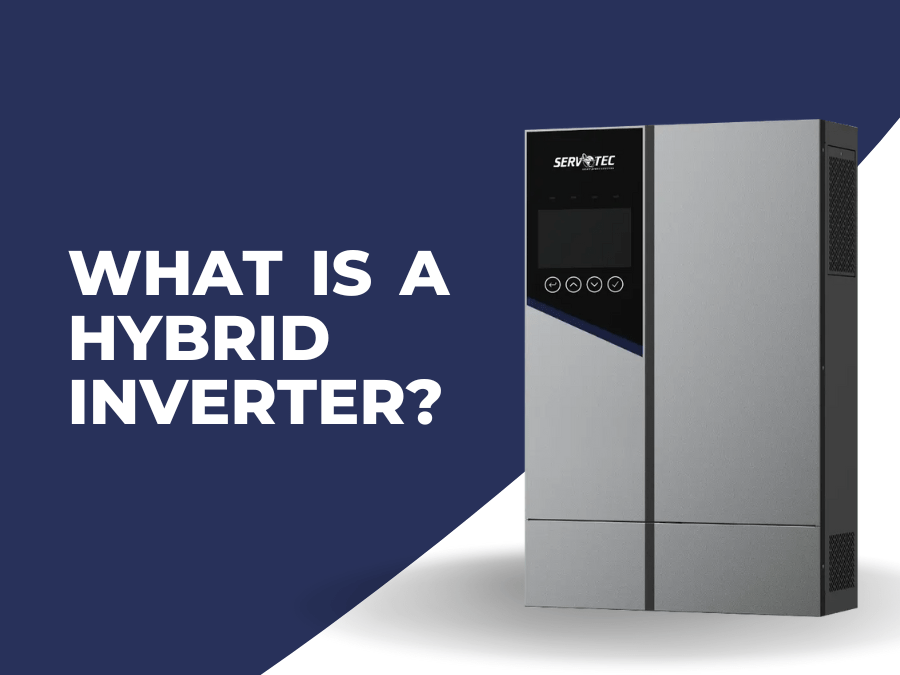
    At its core, an inverter is the “brain” of any solar power system. It’s the device that converts the Direct Current (DC) electricity generated by your solar panels into Alternating Current (AC) electricity, which is what all your home appliances and the national grid use.

    A hybrid inverter takes this a step further. It’s a sophisticated device that combines the functions of a traditional solar inverter, a battery charger, and a grid-tie inverter all into one integrated unit. This means it can intelligently manage power flow from multiple sources:

    • Solar Panels: Directly convert sunlight into usable electricity.
    • Batteries: Store excess solar energy for later use.
    • Utility Grid: Draw power from or feed excess power back to the grid.

    Essentially, a hybrid inverter acts as a smart energy manager, optimizing where your power comes from at any given moment to ensure efficiency and continuity.

    How Does a Hybrid Inverter Work?

    The magic of a hybrid inverter lies in its ability to seamlessly switch and prioritize power sources. Here’s a simplified breakdown:

    1. Daytime – Sunny: Solar panels generate DC electricity. The hybrid inverter converts this to AC power to directly run your home appliances. If there’s surplus power, it intelligently directs it to charge your connected battery bank. If batteries are full, the excess power can be exported to the grid (if net metering is enabled), earning you credits.
    2. Daytime – Cloudy/Low Solar: If solar generation isn’t enough to meet your home’s demand, the hybrid inverter can draw power from the grid or from your battery storage to make up the deficit.
    3. Nighttime: With no solar generation, the hybrid inverter primarily draws power from your charged batteries. Once the battery power is depleted, it seamlessly switches to draw power from the utility grid.
    4. Power Outage (Grid Failure): This is where hybrid inverters truly shine. When the grid goes down, a traditional on-grid inverter would shut off for safety reasons. A hybrid inverter, however, can disconnect from the grid and continue to power your essential loads using stored battery power and any available solar generation, providing crucial backup.

    Save up to 80% on your Electricity Bills.

    With Servotech’s Efficient Solar Solutions

    Get Quote

    Why Choose a Hybrid Inverter Over Normal Solar Inverters?

    The choice between a hybrid inverter and a traditional on-grid or off-grid solar inverter boils down to your energy goals and needs. Here’s why hybrid inverters often come out on top, especially in the Indian context:

    • Seamless Backup Power: Unlike standard on-grid solar inverters that shut down during power cuts, hybrid inverters, combined with batteries, provide automatic and uninterrupted power supply, safeguarding your home or business from blackouts.
    • Maximized Solar Self-Consumption: Hybrid inverters allow you to store excess solar energy generated during the day for use at night or during peak demand hours. This reduces your reliance on grid electricity and significantly lowers your electricity bills.
    • Reduced Electricity Bills: By intelligently managing energy flow and prioritizing solar and stored battery power, hybrid inverters minimize your consumption from the grid, leading to substantial savings on your monthly bills. You harness more of your own free solar energy.
    • Energy Independence: Gain greater control over your energy usage and reduce your dependence on unpredictable grid supply and fluctuating electricity prices.
    • Smart Energy Management: Many hybrid solar inverters come with advanced monitoring capabilities, allowing you to track your energy production, consumption, and battery status via mobile apps or online platforms. This data helps you optimize your energy usage patterns.
    • Flexibility and Future-Proofing: They offer the flexibility of both grid-tied operation (selling excess power) and off-grid capabilities (backup power). If you start with a basic solar setup, a hybrid inverter allows for easy addition of battery storage later without replacing your entire system.

    Benefits of Hybrid Inverters beyond Just Power Backup

    The advantages of a hybrid inverter extend beyond just ensuring you have lights during a power cut. They represent a significant step towards a more sustainable and financially savvy energy future:

    • Significant Cost Savings: The ability to store and use your own solar power when grid electricity is expensive (e.g., peak hours) or unavailable is the primary driver of bill reduction. You generate free energy and consume it smartly.
    • Environmental Impact: By maximizing the use of clean solar energy and reducing reliance on fossil-fuel-generated grid power, you significantly lower your carbon footprint and contribute to a greener planet.
    • Enhanced Grid Stability (for India): For households facing frequent voltage fluctuations or load shedding, hybrid inverters provide a buffer, ensuring stable power delivery to your appliances.
    • Increased Property Value: Homes equipped with modern solar solutions, especially those with battery backup via hybrid inverters, are increasingly attractive to potential buyers, adding significant value.
    • Peak Shaving: For commercial establishments or homes with high peak-hour consumption, hybrid inverters can draw from batteries during these times, avoiding higher tariffs and reducing demand charges.

    Top 6 Hybrid Inverter Brands in India

    Now that you understand the immense value of hybrid inverters, let’s explore some of the leading brands that are empowering homes and businesses across India.

    1. Servotech Renewable Power System

    Servotech Logo

    Servotech Renewable Power System stands out as a prominent Indian manufacturer offering robust and technologically advanced solar solutions. Their commitment to quality, innovation, and after-sales service has quickly positioned them at the forefront of the hybrid inverter market in India.

    • Key Features & Offerings: Servotech’s sparkle series hybrid inverters are known for their high efficiency, wide operating voltage range, and intelligent battery management systems. They offer a range of capacities suitable for both residential and commercial applications. Many models come with advanced features like MPPT (Maximum Power Point Tracking) technology for optimal solar utilization, WiFi/IoT monitoring for remote management, and multiple charging modes to prioritize solar or grid. Their focus on durability and performance makes them a reliable choice for the demanding Indian climate.
    • Why choose Servotech: Strong Indian brand presence, robust build quality, excellent after-sales support network, and innovative features tailored for diverse Indian energy needs. They are a go-to for those seeking a reliable, high-performance hybrid solution.

    2. Luminous Power Technologies

    Luminious Power Technologies logo

    A household name in India for power backup solutions, Luminous has successfully diversified into the solar segment with a strong portfolio of hybrid inverters.

    • Key Features & Offerings: Luminous hybrid inverters are renowned for their reliability, user-friendly interface, and widespread service network. They offer models with intelligent load sensing, multiple battery compatibility (lead-acid and lithium-ion), and prioritization settings for solar, battery, or grid power.
    • Why choose Luminous: Brand trust, extensive service network across India, and a wide range of products suitable for various budgets and energy requirements.

    3. Microtek

    Microtek logo

    Microtek is another well-established brand in the Indian power electronics sector, known for its inverters and UPS systems. Their entry into solar with hybrid inverters has been well-received.

    • Key Features & Offerings: Microtek hybrid inverters often boast high efficiency ratings and advanced battery charging algorithms to extend battery life. They focus on providing stable output and often include protection features against overload, short circuit, and reverse polarity.
    • Why choose Microtek: Strong brand recognition, reliable performance, and a focus on essential features that cater to the average Indian household.

    4. V-Guard

    V-Guard, a prominent player in the Indian electrical goods market, offers a range of solar solutions, including hybrid inverters. They are known for their quality and durability.

    • Key Features & Offerings: V-Guard’s hybrid inverters are designed to handle fluctuating grid conditions common in India. They typically come with features like intelligent battery charging, LCD displays for monitoring, and robust build quality to ensure longevity.
    • Why choose V-Guard: Trusted brand for consumer electronics, durable products, and a growing presence in the renewable energy sector.

    5. Su-Kam Power Systems

    Sukam logo

    Su-Kam was a pioneer in the Indian power backup industry and continues to innovate in the solar space. Their hybrid inverters are designed for efficiency and performance.

    • Key Features & Offerings: Su-Kam’s hybrid inverters often incorporate advanced DSP (Digital Signal Processing) technology for pure sine wave output, ensuring compatibility with all types of appliances. They focus on maximizing solar energy harvesting and providing efficient battery management.
    • Why choose Su-Kam: Legacy in power backup, emphasis on advanced technology, and a reputation for high-quality products.

    6. Livguard Solar

    Livguard Solar logo

    Livguard, a relatively newer but rapidly growing brand, has made a significant impact in the solar energy segment with its range of inverters and batteries.

    • Key Features & Offerings: Livguard’s hybrid inverters are designed with modern aesthetics and smart features. They often include built-in MPPT charge controllers, customizable priority settings (solar, battery, grid), and advanced monitoring options.
    • Why choose Livguard: Modern design, smart features, and competitive pricing make them an attractive option for new solar installations.

    Looking for Reliable Solar Solutions

    Talk to Our Solar Experts

    Get Quote

    Making the Right Choice for Your Home

    Choosing the best hybrid inverter depends on several factors, including your average power consumption, the frequency of power cuts in your area, your budget, and your future energy expansion plans. While all the brands listed above offer excellent solutions, it’s always advisable to:

    • Assess your energy needs: Calculate your daily power consumption and identify critical loads you want to power during outages.
    • Consider battery compatibility: Ensure the inverter supports the type and capacity of batteries you plan to use.
    • Check for certifications and warranty: Look for products with relevant Indian and international certifications and a comprehensive warranty.
    • Read reviews and seek local advice: Gather insights from other users and consult with local solar installers for recommendations tailored to your specific location.

    Investing in a hybrid solar inverter is an investment in energy independence, peace of mind, and significant long-term savings on your electricity bills. By choosing a reputable brand from this list, you’re taking a smart step towards a sustainable and empowered future for your home or business in India.

    Read more: List of Top Solar Inverter Manufacturers in India  

    Read More
    Solar
    July 5, 2025by servotech team0 Comments
    676 Likes

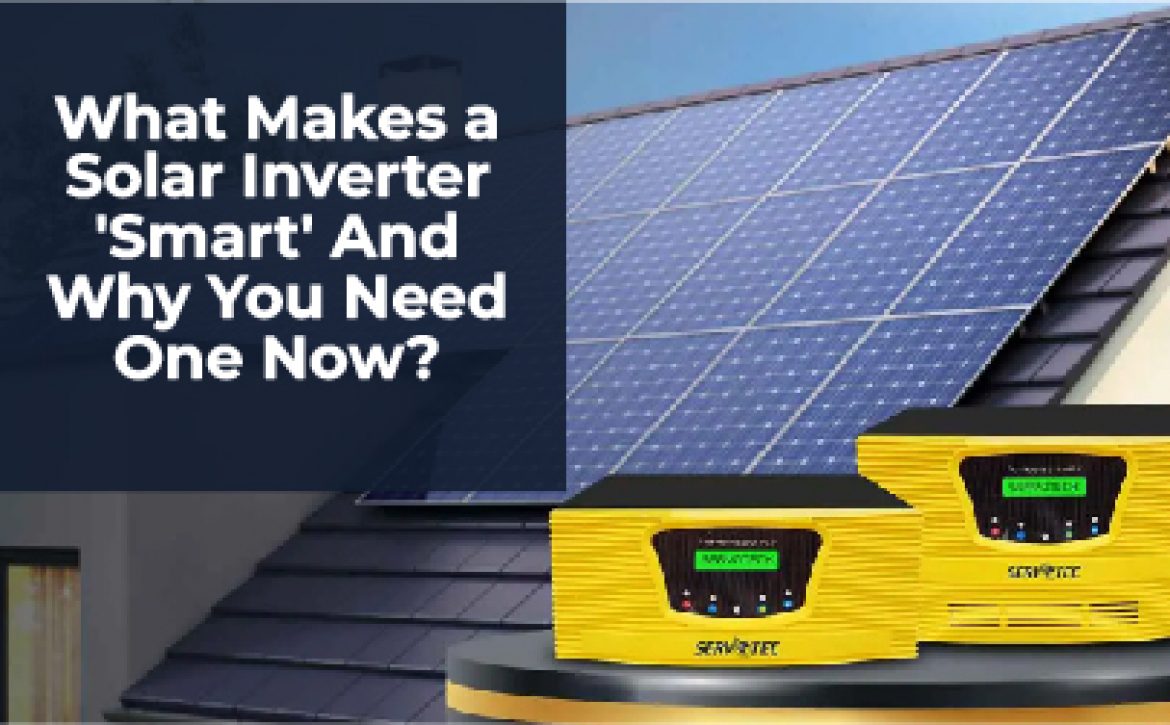
    What Makes a Solar Inverter ‘Smart’ And Why You Need One Now?

    While talking about a solar setup, most people think of Solar Panels; however, a solar inverter is the real brain behind a solar setup. While solar panels convert sunlight into electricity, the setup is only complete with a solar inverter that converts the DC into AC to use and power appliances, homes, workspaces, buildings, and whatnot. Today, Solar Inverters have evolved and become ‘smarter’, offering intelligent control and optimization of power. In this blog, we’ll dive into the smarter aspect of the modern solar inverter and why it’s time we switch to smart solar inverters.

    What is a Solar Inverter and How Does it Work?

    The solar inverter is a basic yet crucial part of any solar system. It converts DC electricity from the solar panels into AC electricity to power your space. A solar inverter is practically the brain of any solar setup. In its absence, any solar setup is useless. Solar inverters have evolved with time, and today, with the development of smart tech, inverters have become 

    What Exactly Makes A Solar Inverter ‘Smart’?

    A traditional inverter just converts power. A smart inverter, on the other hand, does that and a lot more. Here’s what sets a traditional Solar Inverter apart from a Smart Solar Inverter:

    1) Real-Time Monitoring

    Smart inverters come with apps and display panels that allow you to monitor power production, consumption, and battery status in real-time, directly from your phone or computer. No more guesswork. You know exactly how much energy you’re generating, using, or feeding into the grid.

    2) Grid Interaction

    Unlike conventional inverters that shut down during a grid outage, smart solar inverters can communicate with the grid, manage loads, and even support backup power when paired with batteries and a complete solar setup. Some can even send excess power back to the grid in a more regulated and efficient manner, supporting net metering or grid stabilization.

    3) Load Management

    Smart inverters can prioritize energy flow based on usage. That means you can program it to power your most critical appliances first, store excess energy in batteries, and use the stored energy from batteries at peak hours to multiply your overall savings.

    4) Fault Detection & Alerts

    Smart inverters come with built-in diagnostic tools capable of instantly detecting faults like underperformance, cable disconnections, panel shading, or any other failures and send alerts so you can fix them before they affect your savings.

    5) Integration with Battery Systems (BESS)

    If you look at any smart solar inverter company/manufacturer like Servotech Renewable, you’ll notice their smart inverters are designed to work seamlessly with Battery Energy Storage Systems (BESS). This means better energy backup, smarter usage during peak hours, and complete energy independence. 

    Why Choose A Smart Solar Inverter for Home?

    We’re not in the 90s anymore, when inverters were just meant to store power for power outages. With the development of solar systems, the expectations have completely changed, and so have the challenges, from rising electricity costs to unpredictable power cuts and the growing demand for sustainable energy, and a smart solar inverter is the perfect solution to all these challenges.

    Here’s why upgrading to a smart inverter is not just a good idea, but a necessity:

    1. Make Every Unit Count

    A smart inverter ensures maximum efficiency, meaning you get more out of your solar panels. With better data, optimization, and faster diagnostics, you make sure no unit of solar power goes to waste.

    2. Be Future-Ready

    Whether you want to add EV chargers, home automation, or a battery backup, smart inverters are built for integration. Solar inverters come in all shapes and sizes, serving different purposes. Mainly, there are 3 types of solar inverters: hybrid solar inverters, on-grid solar inverters, and off-grid solar inverters, each meant to serve a different purpose. While choosing a solar inverter, it’s important to choose the right one that lasts long and works seamlessly with your solar setup. 

    3. Support a Smarter Grid

    Smart inverters can respond to utility signals, like adjusting output when the grid is under pressure. That means your system contributes to grid health while you enjoy clean energy.

    Common Myths About Smart Solar Inverters

    Myth 1: Smart inverters are too expensive.

    Reality: The installation cost may be slightly higher, but it’s completely justified when you look at the efficiency gains, maintenance savings, and overall savings one can make with a smart solar inverter.

    Myth 2: Old Inverters save just as much energy

    Reality: A traditional inverter might be holding your system back. Upgrading to a better one, such as a solar inverter from Servotech, will upgrade your overall system, support batteries, and increase the overall system value.

    Myth 3: They’re too complex to use.

    Reality: Smart inverters are built for simplicity, so you don’t have to stress. Most offer user-friendly apps and auto-settings that manage everything without manual input.

    What to Look for in a Smart Solar Inverter

    Not all inverters marketed as “smart” are created equal. Here’s what you should check before investing:

    • Remote monitoring via mobile/web
    • Battery compatibility (especially with Li-ion/BESS)
    • Time-of-use programming
    • Real-time alerts and diagnostics
    • Modular design for scalability
    • Brand reliability and local support

    How is Servotech Leading the Smart Solar Inverter Revolution

    At Servotech Renewable Power System Ltd., we design and manufacture smart solar inverters that are not just efficient but also customized for India’s unique power needs, from urban rooftops to rural off-grid areas. With Servotech inverter solutions, households, businesses, and even EV charging stations can power their operations intelligently, sustainably, and affordably.

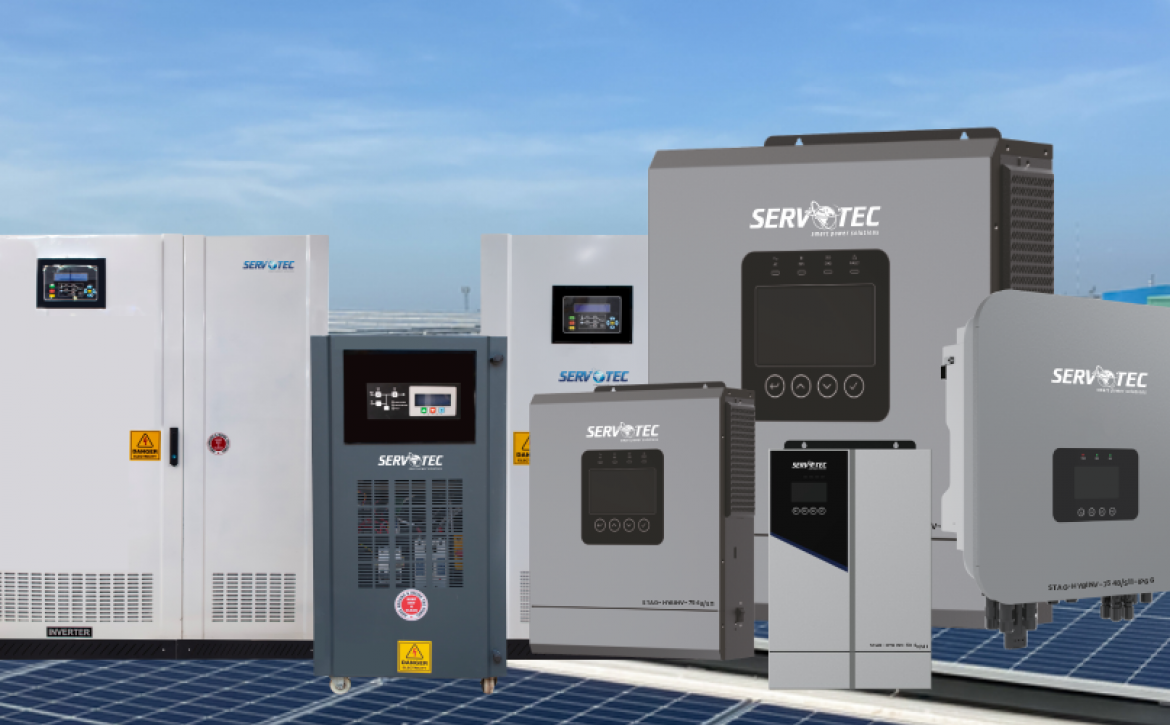
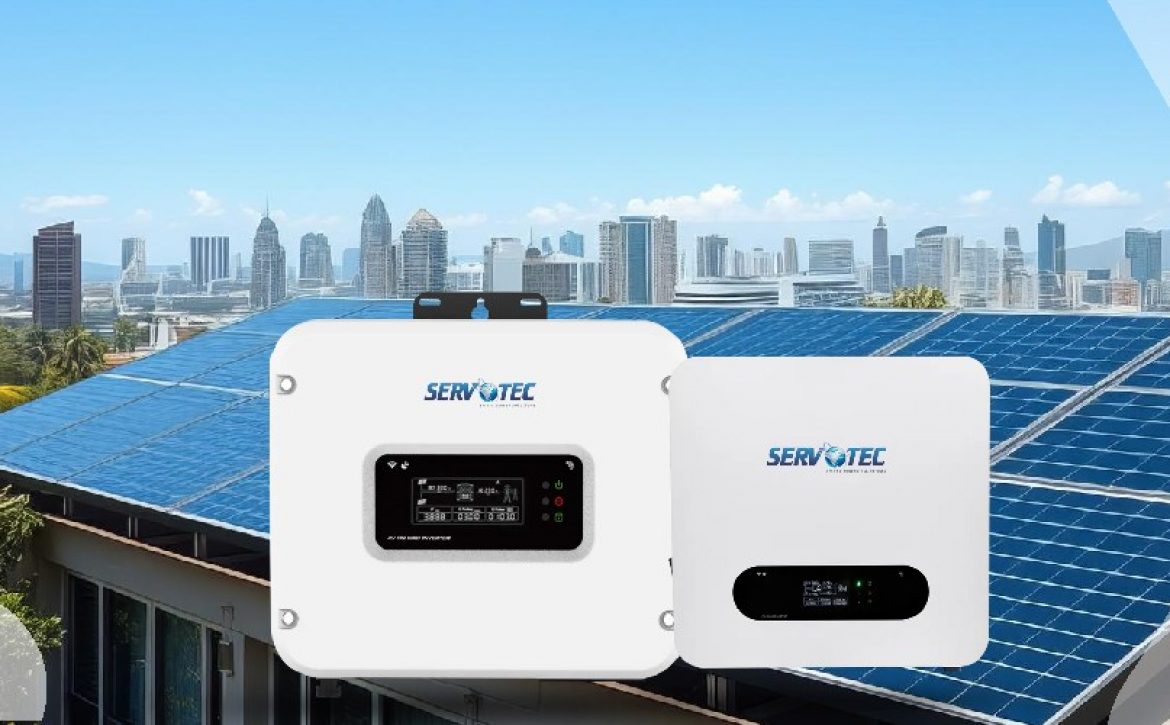
    Servotech offers a wide range of Solar Inverters, all of which are mentioned below with their key features:

    1. Sparkle Series: Hybrid Solar Inverter

    • Range – 2kW to 7.5kW (1 Phase)
    • Range – 10kW to 22.5kW (3 Phase)
    • Built-in 100A Solar Charger
    • Wide MPPT Range 40-500V
    • Works with Generator
    • Support Lithium/ Lead-acid Battery
    • Detachable Dust Cover
    • Lithium Battery Activation
    • WiFi Monitoring

    2. Solvion Series: On-Grid Solar Inverter

    • Range Available – 1kW to 100kW
    • Load Consumption Monitoring
    • IP65 Protection
    • Power Export Limit
    • Big LCD Display

    3. Microsync Series: On-grid Micro Inverter

    • Power capacity – 800W and 1600W
    • Convenient multi-angle adjustment
    • Aluminium alloy bracket
    • Wi-Fi connectivity for remote management by phone
    • Safe and Simple Installation.

    4. Servlith Series: Energy Storage Systems

    • Range – 1.2kWh to 15kWh (Domestic User) 5.1kW (E-Rickshaw)
    • Suitable for photovoltaic energy storage
    • High charge and discharge currents of up to 100A/200A, suitable for solar energy storage systems.
    • Ultra-long cycling life
    • 5000 battery cycles, with a 5-year warranty and a designed lifespan of over 10 years.
    • Equipped with a display screen with communication pofis (CAN/RS485/RS232).
    • Wall-mountable design
    • Built-in protections against overcharge, over-discharge, over-temperature, over-current, Short-circuit, etc.
    • Communication friendly

    5. Elegant Plus: Off-Grid Solar Inverter

    • Intelligent Modes
    • Pure Sine Wave
    • True CV CC PWM
    • LCD Display
    • Advanced DSP Technology
    • AI Charge Sharing

    6. FLARE: Off-Grid Solar Inverter

    • Configurable User Settings
    • Pure Sine Wave
    • True MPPT
    • Remote Monitoring IoT
    • Advanced DSP Technology
    • Intelligent Modes
    • AI Charge Sharing

    7. Fusion: Hybrid Solar Inverter

    • Bidirectional Inverter: Capable of converting solar energy to usable electricity and managing power from the grid.
    • Flexibility in Design: Adaptable to various solar modules and power needs.
    • Grid Utilization: Efficiently uses and manages power from both solar panels and the grid as needed.
    • Batteryless Operation: Operates seamlessly without a battery bank, enhancing cost-effectiveness.
    • IGBT-Based Rectifier: Utilizes Insulated Gate Bipolar Transistor technology for improved efficiency and performance.
    • Advanced Multiple DSP: Incorporates advanced Digital Signal Processing for precise control and enhanced system stability.
    • Supports Multiple Inputs: Can handle inputs from various renewable sources like solar panels, wind turbines, etc.
    • Monitoring Features: Equipped with monitoring capabilities for real-time performance tracking and system health.

    Bottomline

    The energy needs are increasing with each passing day, grids are strained, and sustainability is no longer optional. A smart solar inverter is your gateway to energy freedom and financial savings. If you’re planning to go solar, or already have, it’s time to power your system with intelligence. Upgrade to Servotech smart solar inverter today, and make your solar investment truly future-ready.

    Read More
    Solar
    June 10, 2025by servotech team0 Comments
    671 Likes

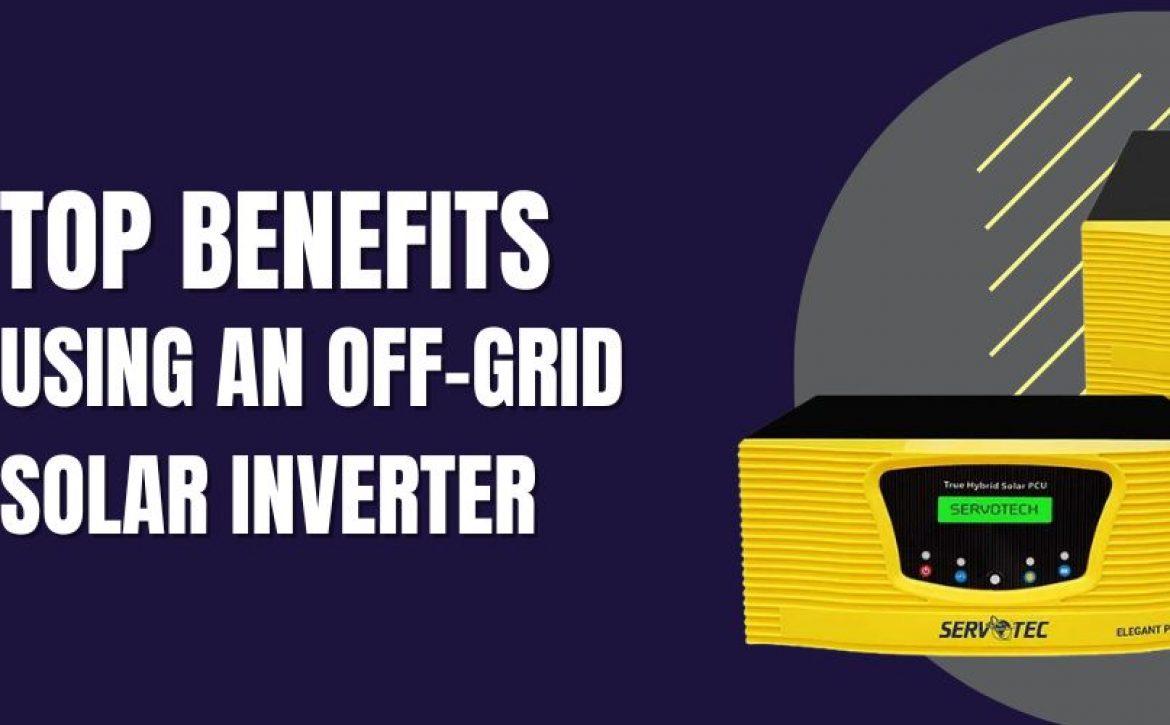
    Top 7 Benefits of Using an Off-Grid Solar Inverter for Sustainable Power

    With the rising demand for renewable energy and increasing concerns about energy security, off-grid solar systems are gaining immense popularity. At the heart of these systems lies the off-grid solar inverter, a device that plays a crucial role in converting solar energy into usable electricity without relying on the main grid.

    An off-grid solar inverter converts the DC (direct current) power generated by solar panels into AC (alternating current) electricity, which can be used to run home appliances, tools, and devices. Unlike on-grid or hybrid systems, off-grid systems operate independently and require a reliable battery bank for energy storage. This blog explores the key benefits of off-grid solar inverters, their ideal use cases, and what to consider before choosing one. Whether you’re living in a remote area or simply looking for energy autonomy, this blog will help you understand why using an off-grid solar system could be the best decision for your energy needs.

    What is an Off-Grid Solar Inverter?

    An off-grid solar inverter is a device used in standalone solar power systems that are not connected to the national electricity grid. It manages the flow of electricity between solar panels, batteries, and appliances.

    How it Differs from On-Grid and Hybrid Inverters

    • On-Grid Inverter: Works only when connected to the grid. It shuts down during power outages.
    • Hybrid Inverter: Combines features of both on-grid and off-grid, allowing limited backup.

    Off-Grid Inverter: Operates independently with battery storage, making it ideal for areas with unreliable or no grid connection.

    Key Benefits of Using an Off-Grid Solar Inverter

    1. Energy Independence

    One of the most significant benefits of off-grid solar inverters is achieving total energy independence. You no longer need to rely on utility companies or worry about electricity bills. This is especially valuable in areas with rising energy costs or frequent power cuts.

    • Create and store your own electricity
    • Gain complete control over energy usage
    • Say goodbye to fluctuating grid prices

    2. Reliable Power in Remote Areas

    If you live in a rural location, a mountain cabin, or an island community, an off-grid solar inverter offers a dependable power source where traditional grid electricity may not be available. It enables self-sufficiency and helps avoid costly infrastructure expansion.

    • Perfect solar inverter for remote areas
    • No need to wait for grid extension
    • Suitable for farms, campsites, and isolated villages

    3. No Dependency on the Electricity Grid

    Grid failures, load shedding, and voltage fluctuations are common issues in many parts of the world. With an off-grid system, your home or business continues to function smoothly without being affected by external grid problems.

    • Avoid blackouts and downtime
    • Excellent for disaster-prone zones
    • Greater reliability during extreme weather

    4. Backup Power During Outages

    Whether due to natural disasters or scheduled maintenance, power outages can disrupt daily life. Off-grid inverters provide seamless backup power, ensuring your essentials—like lights, fridge, AND internet- stay powered.

    • Automatic switchover to stored solar energy
    • Ideal for medical equipment or security systems
    • Peace of mind during emergencies

    5. Cost Savings Over Time

    Though the initial investment may be higher, off-grid solar power benefits include long-term cost savings. Avoid monthly electricity bills and reduce diesel generator costs.

    • No recurring power bills
    • Lower maintenance costs compared to diesel gensets
    • Attractive return on investment over 5–7 years

    6. Environmental Friendly Energy Solution

    Reducing carbon emissions is a major reason to go solar. Off-grid systems run entirely on clean energy, minimizing your environmental footprint and helping combat climate change.

    • Zero emissions and noise pollution
    • Promote sustainable living
    • Support green energy initiatives

    7. Customizable Systems Based on Needs

    Off-grid solar inverters can be tailored to meet specific energy requirements, making them highly flexible. From small homes to large agricultural setups, systems can be designed with varying panel sizes, battery capacities, and inverter ratings.

    • Scalable systems for growing energy needs
    • A wide range of the best solar inverters for off-grid use
    • Integrate with energy-efficient appliances

    Who Should Use an Off-Grid Solar Inverter?

    An off-grid inverter is ideal for:

    • Rural and remote households where grid access is limited or unreliable.
    • Farms and agricultural setups for powering water pumps, lighting, and equipment.
    • Off-grid cabins or vacation homes for weekend getaways or eco-lodges.
    • Commercial businesses in remote areas, such as telecom towers, warehouses, or remote offices.
    • Disaster-prone areas where grid restoration after storms or earthquakes takes time.

    If any of the above apply to you, it’s time to explore the benefits of off-grid solar inverters and consider transitioning to a self-reliant power solution.

    Things to Consider Before Choosing an Off-Grid System

    Before installing an off-grid solar system, keep the following in mind:

    Battery Storage Capacity

    Your batteries must store enough energy to last through cloudy days and nights. Choose lithium-ion or deep-cycle batteries for long-lasting performance.

    • Consider options allowing energy expansion in the future
    • Ensure proper battery maintenance

    Solar Panel Compatibility

    Ensure the inverter is compatible with your chosen solar panels and can handle the total wattage of your solar system.

    • Match the panel output with the inverter input
    • Use quality solar panels for the best performance

    Power Requirements

    Assess your household’s energy needs in terms of daily kWh usage to select an appropriately sized inverter.

    • Calculate appliance wattage
    • Include a margin for peak loads

    Maintenance and Monitoring

    Regular maintenance ensures longevity and efficiency. Look for systems that offer remote monitoring for easy troubleshooting.

    • Clean panels and check battery health
    • Use smart monitoring apps

    Conclusion

    As the world moves towards sustainable living, off-grid solar inverters are becoming a smart, long-term investment. They provide energy independence, reliable power in remote areas, and a clean alternative to fossil fuels. With customizable setups and a decreasing cost curve, more homeowners and businesses are realizing the benefits of off-grid solar power for both their wallets and the planet. Looking to go off-grid? Explore our top-rated off-grid solar inverters today and take control of your energy future.

    Read More
    Solar
    October 21, 2024by servotech team0 Comments
    3.43K Likes

    Installing a solar system is just the first step

    Raman Bhatia, Founder and Managing Director, of Servotech Renewable Power System, talks about innovative approaches to advancing energy efficiency in the solar sector, from embracing the ‘Make in India’ initiative to pioneering new technologies.

    Q1: Can you provide an overview of Servotech Power Systems’ contributions to energy efficiency in the solar sector?

    Throughout its journey with a strong motto of providing high-quality solar solutions, Servotech made noteworthy contributions towards energy efficiency in the solar sector, through innovative technologies and solutions. By developing high-efficiency solar solutions that are both sustainable and reliable, Servotech has played its part in making solar energy a household name. The company has expanded its reach across various sectors. Servotech’s residential solar solutions empower homeowners to reduce their carbon footprint and electricity bills. The company provides solar solutions for industries, helping them reduce energy costs, improve their environmental quotient, and comply with sustainability regulations. Servotech caters to the commercial sector by offering rooftop and ground-mounted solar power plants helping them reduce electricity costs and enhance their brand image, Lastly, the company has been actively involved in executing solar projects for government institutions, aiding in the country’s renewable energy goals and by providing efficient and reliable solar solutions, we contribute to
    the government’s efforts in promoting clean energy adoption.

    Q2: What role does the ‘Make in India’ initiative play in your strategy to promote energy efficiency and sustainable solutions?

    Make in India, a wonderful initiative by our government has definitely pushed manufacturers across all sectors, especially our sector, which is the renewable energy sector towards Indigenous manufacturing. By manufacturing solar components locally, we significantly reduce the carbon footprint associated with transportation and logistics. Local production often leads to cost reductions in solar products which makes solar energy more affordable for consumers, encouraging wider adoption and contributing to energy efficiency. The Make in India initiative also helps create employment opportunities in the solar sector, leading to skill development and a larger workforce dedicated to renewable energy. Domestic manufacturing reduces reliance on imports and strengthens the supply chain, ensuring uninterrupted production and reducing vulnerabilities to global disruptions.

    Q3: How has Servotech adapted its solar solutions to meet the evolving energy efficiency standards?

    Well, it has been more than two decades now. During this long journey, we have constantly worked on ourselves, renovated, and innovated ourselves to keep up with the evolving energy efficiency standards in terms of product development, innovation, and R&D. We have consistently incorporated the latest advancements in solar technology that includes the use of higher efficiency solar cells, advanced inverters, and optimized system components. We introduced innovative solar products and solutions that meet the evolving energy efficiency standards. This involves continuous research and development to create more efficient and sustainable products. We prioritize product performance and rigorous testing and quality control measures ensure that our products meet or exceed industry benchmarks and this relentless pursuit of excellence has positioned us as a leader and has helped us in delivering efficient and sustainable solar solutions.

    Q4: Could you elaborate on the significance of the engineering and design process in achieving energy efficiency in your Solar EPC projects?

    The engineering and design phase in solar EPC projects lays the foundation for optimal performance. It involves a careful analysis of site conditions, including solar radiation, shading, and environmental factors. By carefully selecting high-performance components and designing the system for optimal orientation and tilt, engineers maximize energy capture. Additionally, this phase focuses on minimizing energy losses through efficient wiring, component placement, and system integration. A well-engineered design ensures the solar system operates at peak performance, delivering substantial energy savings and a strong return on investment.

    Q5: What measures does Servotech implement during the procurement and project execution phases to ensure optimal energy efficiency in its solar power projects?

    Constructing a solar system involves a lot of phases with procurement and project execution being the most important ones. During the procurement phase, we prioritize the development of high-efficiency solar modules, solar inverters, and other components. Rigorous quality assurance processes and performance testing are conducted to verify that all components meet or exceed industry standards and are compatible with project requirements. In the project execution phase, Servotech conducts detailed site assessments to determine the optimal system orientation, tilt angle, and shading analysis. Strict adherence to installation guidelines and best practices ensures proper system integration and performance. Post-installation, the system undergoes comprehensive testing to verify energy efficiency and performance. Monitoring systems are often incorporated to track performance and identify areas for improvement.

    Q6: How does your operation and maintenance service contribute to maintaining and enhancing the energy efficiency of installed systems?

    Installing a solar system is just the first step; operating and maintaining it properly is equally important to ensure the system runs efficiently over the long term and for that we conduct regular inspections to detect and address issues like module degradation and inverter malfunctions early, preventing energy losses. Our team ensures optimal performance through routine cleaning and maintenance, which maximizes sunlight absorption and energy generation. Continuous performance monitoring using advanced data analytics allows us to optimize system settings, while preventive and corrective maintenance activities minimize downtime and equipment failures. By utilizing techniques such as module-level monitoring and inverter tuning, Servotech ensures that solar systems operate at peak efficiency, delivering maximum energy output and long-term cost savings.

    Q7: In your view, how important are radiation data analytics and project feasibility studies in the planning of energy-efficient solar projects?

    Radiation data analytics and project feasibility studies are absolutely critical for the successful planning of energy-efficient solar projects. Accurate radiation data allows for precise predictions of energy generation, system sizing, and financial returns. By analyzing radiation patterns, engineers can optimize system design, including orientation and tilt angles, to maximize energy capture. Feasibility studies help identify potential risks, such as shading or grid constraints, enabling proactive solutions. These studies also assess financial viability, considering ROI, payback periods, and incentives, ensuring projects are economically sound enabling data-driven decision-making throughout the project lifecycle.

    Q8: Looking ahead, what are the key trends and innovations in energy efficiency that Servotech Renewable Power System plans to focus on in the near future?

    Energy efficiency is a dynamic realm with the constant emergence of trends and innovations. The company recognizes the value these trends and innovations will add to the growth of energy efficiency in the solar sector. Our innovative product solar-powered EV charging carport integrates solar power with EV charging, which is an innovative take on how we can charge our EVs and also save energy from renewable sources. Additionally, Servotech plans to invest in enhancing the quality of bifacial solar panels to increase energy generation. We are investing in research and development of major solar developments and understand the importance of energy storage in enhancing grid stability and optimizing energy utilization and grid optimization. In fact, we are developing an energy storage system that will accelerate the adoption of renewable energy in low-electricity areas.
    Exploring digitization of energy efficiency, we are focused on developing advanced monitoring and control systems to optimize system performance and predict maintenance needs. Lastly, to meet the growing demand for clean energy, we are exploring the integration of solar power with other renewable energy sources like wind and hydro to create hybrid power systems.

    This Interview was originally published in Indian Cement Review: https://indiancementreview.com/2024/09/23/installing-a-solar-system-is-just-the-first-step-2/

    Read More
    Solar
    October 10, 2023by servotech team2 Comments
    800 Likes

    Everything You Need to Know About Solar Inverters

    Imagine harnessing the power of the sun to light up your home, charge your devices, and even run your appliances. That’s the magic of solar energy, and at the heart of this renewable energy revolution lies a crucial player: solar inverter. In this blog, we’re going to dive deep into everything you need to know about solar inverters, from their fundamental function to the latest technological advancements, you will know it all!

    What is a Solar Inverter?

    Solar Inverters


    A solar inverter is a device that converts the direct current (DC) generated by solar panels into alternating current (AC), which is suitable for powering household appliances, businesses, and the electrical grid. In simpler terms, the solar inverter is a device that makes the sun’s energy suitable for everyday electrical needs.

    Features of Solar Inverters

    Solar Inverters come in various types and models, each with its own set of features. However, here are some common features you might find in modern solar inverters:

    1) Efficiency: Solar inverters have efficiency ratings that indicate how effectively they convert DC electricity into AC electricity. Look for inverters with high-efficiency ratings to minimize energy losses.

    2) Monitoring and Data Logging: Advanced solar inverters often come with built-in monitoring systems that allow you to track the performance of your solar power system. You can monitor energy production, and system health, and even receive alerts in case of issues.

    3) Remote Control: Some inverters can be remotely controlled and configured through smartphone apps or web-based interfaces, making it easier to monitor and manage your solar power system.

    4) Cooling and Ventilation: Some inverters use active cooling systems, like fans, to maintain optimal operating temperatures. Proper ventilation and cooling are essential for the inverter’s longevity.

    5) Load Management: Certain inverters have load management capabilities, allowing you to prioritize certain loads or appliances when there’s limited solar power availability.

    6) Anti-Islanding Protection: Solar Inverters incorporate safety features such as anti-islanding protection. This prevents the inverter from sending electricity back to the grid during a power outage, protecting utility workers and the stability of the grid.

    Read also: The Procedure of Net Metering for On-Grid Solar Systems

    Types of Solar Inverters

    There are several types of solar inverters available to suit different solar panel system configurations and requirements. Here are the most common types:

    i) On-Grid Inverters:

    On-grid solar inverters are specifically designed to power appliances while also allowing the surplus electricity generated to be sent to the grid. However, it’s important to note that these inverters rely on the availability of sunlight to operate effectively. In cases of power cuts, your appliances will continue to receive the necessary power, but the grid will not be able to receive any excess electricity.

    ii) Off-Grid Inverters

    Off-grid solar inverters come in two main types: MPPT Solar inverters and PWM Solar Inverters. These inverters are designed to power your appliances while also allowing the surplus electricity generated to be stored in the battery. What sets off-grid inverters apart is their ability to operate even in the absence of sunlight, because of the energy stored in the battery. So, during power cuts, your appliances can continue to function hassle-free, drawing power from the battery.

    iii) Hybrid Inverters:

    Hybrid Solar Inverters fulfill the functions of both on-grid and off-grid solar inverters. They power the appliances and efficiently store any excess electricity in the battery. Once these tasks are fulfilled, hybrid inverters redirect the remaining electricity back to the grid.

    How does a Solar Inverter Work?

    solar inverter work


    The working of the solar inverter is explained in the form of the steps given below:

    i) DC Electricity Generation: Solar panels capture sunlight and convert it into DC electricity.

    ii) DC to AC Conversion: The DC electricity generated by the solar panels is not suitable for household appliances, which operate on AC electricity. This is where the solar inverter comes into play.

    iii) Inverter Input: The DC electricity from the solar panels is fed into the solar inverter. The inverter is connected to the solar panel array, and it typically has a maximum DC input voltage and current rating that must not be exceeded.

    iv) Conversion Process: Inside the solar inverter, there are electronic components, including transistors and capacitors, that perform the conversion. The main process involves switching the DC input on and off rapidly, creating a waveform that approximates a sinusoidal AC waveform.

    v) Synchronization with the Grid (On-Grid Inverters): In the case of On-grid solar inverters, they power the appliances while also allowing the surplus electricity generated to be sent to the grid.

    vi) AC Output: The solar inverter then produces AC electricity with the appropriate voltage, frequency, and waveform. This AC electricity is sent to the building’s main electrical panel to power appliances, lights, and other electrical loads, and the excess electricity is sent back to the grid in grid-tied systems.

    Price Range of the Solar Inverter

    The price of the solar inverter varies depending on the capacity of the inverter.

    Hybrid Inverter- For a hybrid inverter the price starts from INR 1,00,000 for 5 kva inverter and goes up to INR 10,00,000 for a 100 kva inverter
    Off-grid Inverter– For an off-grid inverter the price starts from INR 7000 for 1 kva inverter and goes up to INR 2,00,000 for a 15 kva inverter
    On-grid Inverter– For an on-grid inverter the price starts from INR 50,000 for 2 kva inverter and goes up to INR 7,00,000 for 250 kva inverter.

    Read also: List of Top Solar Inverter Manufacturers in India

      Connect Now!

      Our expert will contact you soon.

      About us
      Awards & FelicitationsOur CapabilitiesOur CompanyOur LeadershipOur ProjectsTestaments
      Follow us
      Products
      EV ChargerLEDsPower & Backup
      Subsidiary Company
      Servotech EV Infra Pvt. Ltd. Servotech Sports and Entertainment Pvt. Ltd. Rebreathe Medical Devices India Pvt. Ltd. Hertz & Pixelz Pvt. Ltd.
      Media
      BlogsEventsMedia CoveragesMedia KitPress Release
      Quick Links
      Store LocatorSolar CalculatorEV Charging AppVendor RegistrationSite Map
      Write to us
      Sales
      servotech@servotechindia.comexportsales@servotechindia.comchannelsales@servotechindia.com
      Public Relations
      pr@servotechindia.com
      Marketing
      marketing@servotechindia.com
      ebiz@servotechindia.com
      Careers
      hr@servotechindia.com
      Contact us

      For Sales Enquiry: 011 41183116

      For EV Chargers sales: 9717691800

      For Service: 011 41183119

      Email : customercare@servotechindia.com

      Corporate Office

      806, 8th Floor, Crown Heights, Hotel Crown Plaza, Sector 10, Rohini New Delhi 110085

      Registered & Kundli Plant Address

      KHATA NO. 1970, KHEWAT NO. 1672, KHASRA NO. 21/20/2/2, REVENUE ESTATE, KUNDLI, P.S.Rai, Sonipat, Sonipat 131029, Haryana, India

      Safiabad Address

      Killa No.14, 6/1/2(0-3), 6/2/3(5-13, Safiabad, Pana Paposhian, Tehsil, Rai, Sonipat, Haryana 131029

      Follow us

      Awards & FelicitationsOur CapabilitiesOur CompanyOur LeadershipOur ProjectsTestaments

      EV ChargerLEDsPower & BackupSolar Products

      Servotech EV Infra Pvt. Ltd. Servotech Sports and Entertainment Pvt. Ltd. Rebreathe Medical Devices India Pvt. Ltd. Hertz & Pixelz Pvt. Ltd.

      BlogsEventsMedia CoveragesMedia KitPress Release

      Store LocatorSolar CalculatorEV Charging AppVendor RegistrationSite Map

      Sales
      servotech@servotechindia.comexportsales@servotechindia.comchannelsales@servotechindia.com
      Public Relations
      pr@servotechindia.com
      Marketing
      marketing@servotechindia.com
      ebiz@servotechindia.com
      Careers
      hr@servotechindia.com

      For Sales Enquiry: 011 41183116

      For EV Chargers sales: 9717691800

      For Service: 011 41183119

      Email : customercare@servotechindia.com

      Corporate Office

      806, 8th Floor, Crown Heights, Hotel Crown Plaza, Sector 10, Rohini New Delhi 110085

      Registered & Kundli Plant Address

      KHATA NO. 1970, KHEWAT NO. 1672, KHASRA NO. 21/20/2/2, REVENUE ESTATE, KUNDLI, P.S.Rai, Sonipat, Sonipat 131029, Haryana, India

      Safiabad Address

      Killa No.14, 6/1/2(0-3), 6/2/3(5-13, Safiabad, Pana Paposhian, Tehsil, Rai, Sonipat, Haryana 131029

      Copyright 2026 © Servotech Renewable Power System Limited: Privacy Policy. Brand Guidelines. Our Capability. Legal Disclaimer. Terms of use

      Top